
Sugar Maple
Acer saccharum
A stately northern maple known for syrup and for brilliant orange and red fall color.
- Type
- Hardwoods
- Leaves
- Lobed leaves
- Region
- Northeast, Midwest & Plains
- Typical size
- 60–75 ft tall, with a trunk 2–3 ft across
- Range
- The Northeast, the Great Lakes states, and south through the Appalachians
- Look for it
- Fall, when leaves turn orange, red, and gold
How to identify it
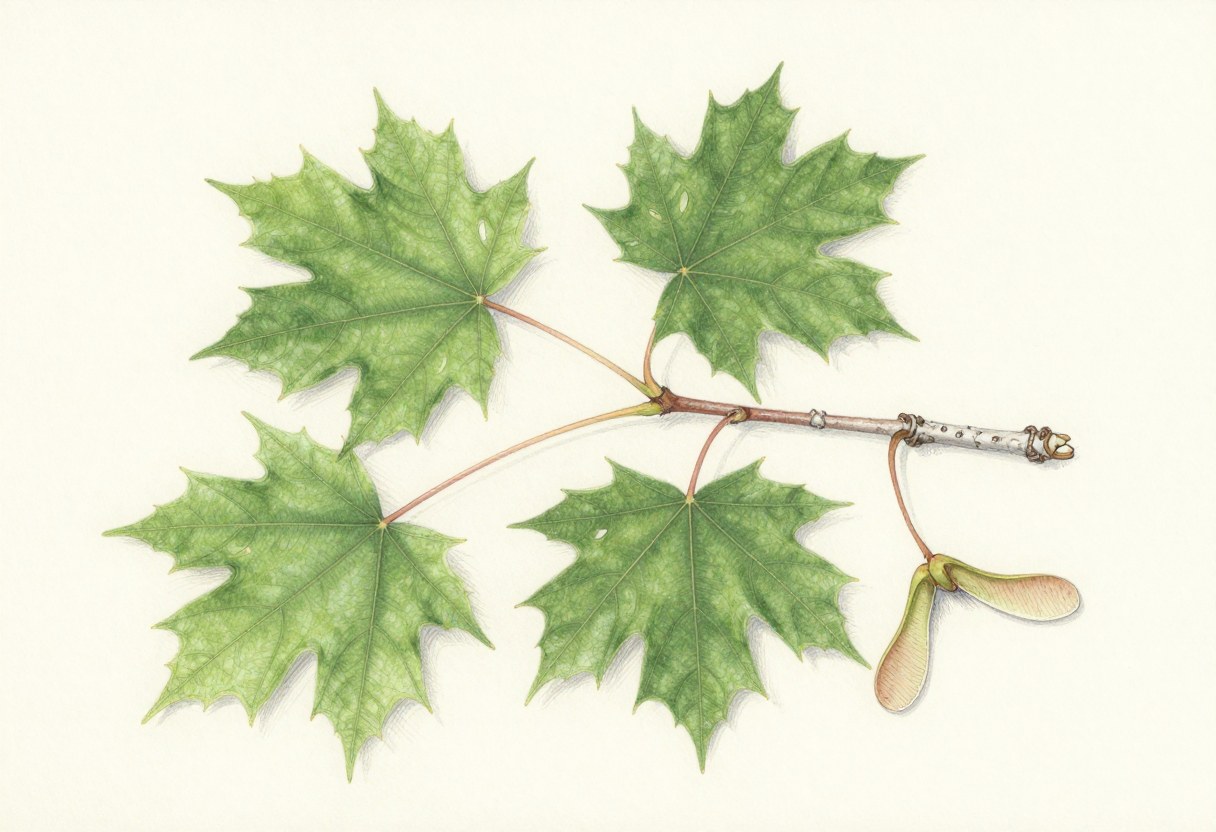
- Leaves have five lobes edged with only a few large pointed teeth, and rounded, U-shaped notches between the lobes.
- Leaves and branches grow in opposite pairs.
- Bark is gray and furrowed, with long, shaggy ridges on older trees.
- Seeds are paired, winged samaras.
Often confused with
- Red maple: leaf notches are V-shaped with toothed edges, and the leaf stalks are red.
- Norway maple: an introduced maple with milky sap in the leaf stalks and coarser leaves.
Why it matters outdoors
- Sap is boiled down to make maple syrup in late winter.
- Hardwood that makes good firewood.
- Deer browse the seedlings and young shoots, and beech and maple woods are common deer habitat.
Field notes
Sugar maples dominate many northern hardwood forests. They cast heavy shade, so little grows beneath mature trees except more maples.
Opposite branching is a good identification clue: maples, ash, and dogwood put their leaves and branches in pairs, while oaks and hickories do not.
Related guides
This guide helps you recognize trees and avoid harmful plants. It does not teach foraging, and nothing here is advice to eat or use a wild plant. Identification from a drawing can be wrong, so check with a regional field guide or a local expert, such as your state forestry or extension service.