
Red Maple
Acer rubrum
One of the most widespread trees in the East, with red leaf stalks, red buds, and red fall color.
- Type
- Hardwoods
- Leaves
- Lobed leaves
- Region
- Northeast, Southeast, Midwest & Plains
- Typical size
- 40–70 ft tall, with a trunk 1–2 ft across
- Range
- Across the eastern United States, from swamps to dry ridges
- Look for it
- Early spring, when red flowers and seeds appear, and fall, when leaves turn red
How to identify it
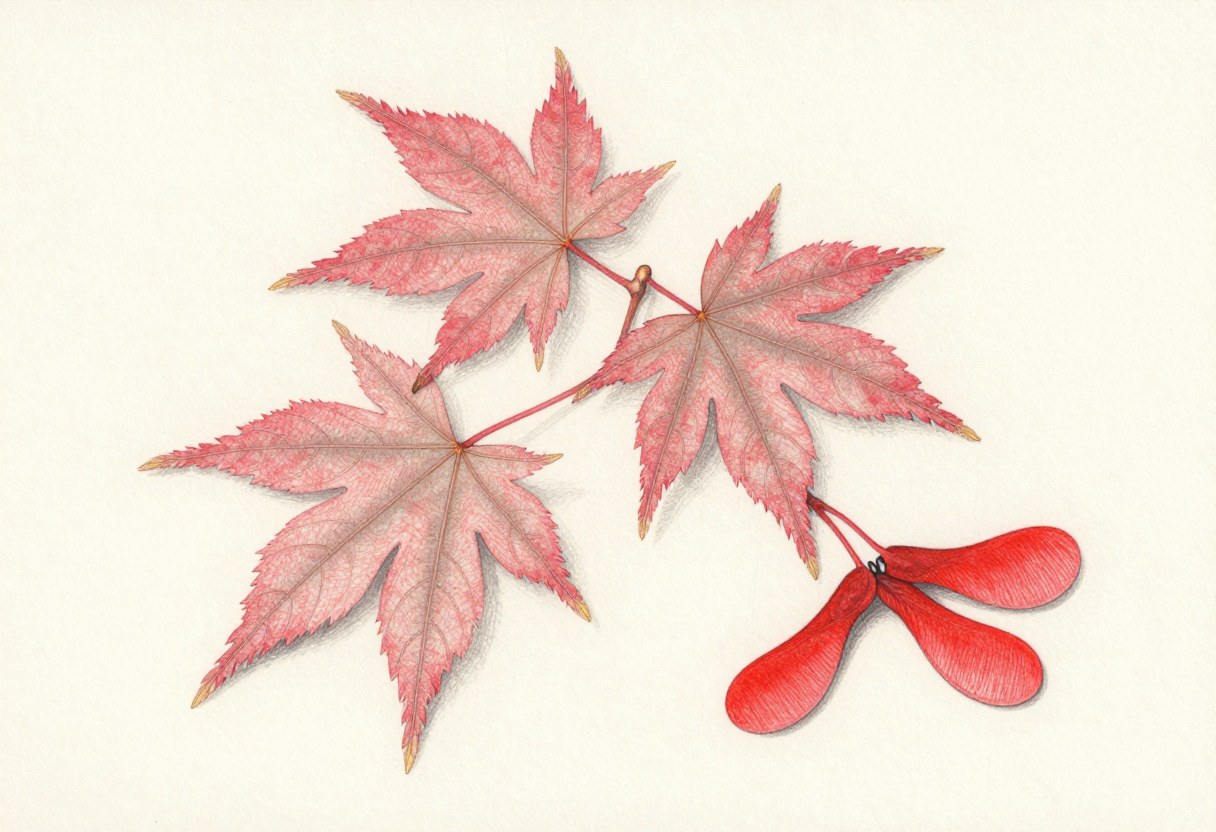
- Leaves have three to five lobes with toothed edges and V-shaped notches.
- Leaf stalks, twigs, and buds are red.
- Opposite branching, like all maples.
- Seeds are red, paired samaras that ripen in spring.
Often confused with
- Sugar maple: leaf notches are rounded, edges are smoother, and the leaf stalks are green.
Why it matters outdoors
- Deer browse twigs and sprouts, and maple stands are common deer habitat.
- Medium-quality firewood.
- One of the first trees to color in fall, which makes it easy to spot from a distance.
Field notes
Red maples tolerate wet and dry soils, which is why they grow almost everywhere in the East. They are one of the few trees you can find in both swamps and on rocky ridges.
Red stalks, twigs, and buds are a dependable clue, even in winter.
Related guides
This guide helps you recognize trees and avoid harmful plants. It does not teach foraging, and nothing here is advice to eat or use a wild plant. Identification from a drawing can be wrong, so check with a regional field guide or a local expert, such as your state forestry or extension service.