
Poison Oak
Toxicodendron pubescens and T. diversilobum
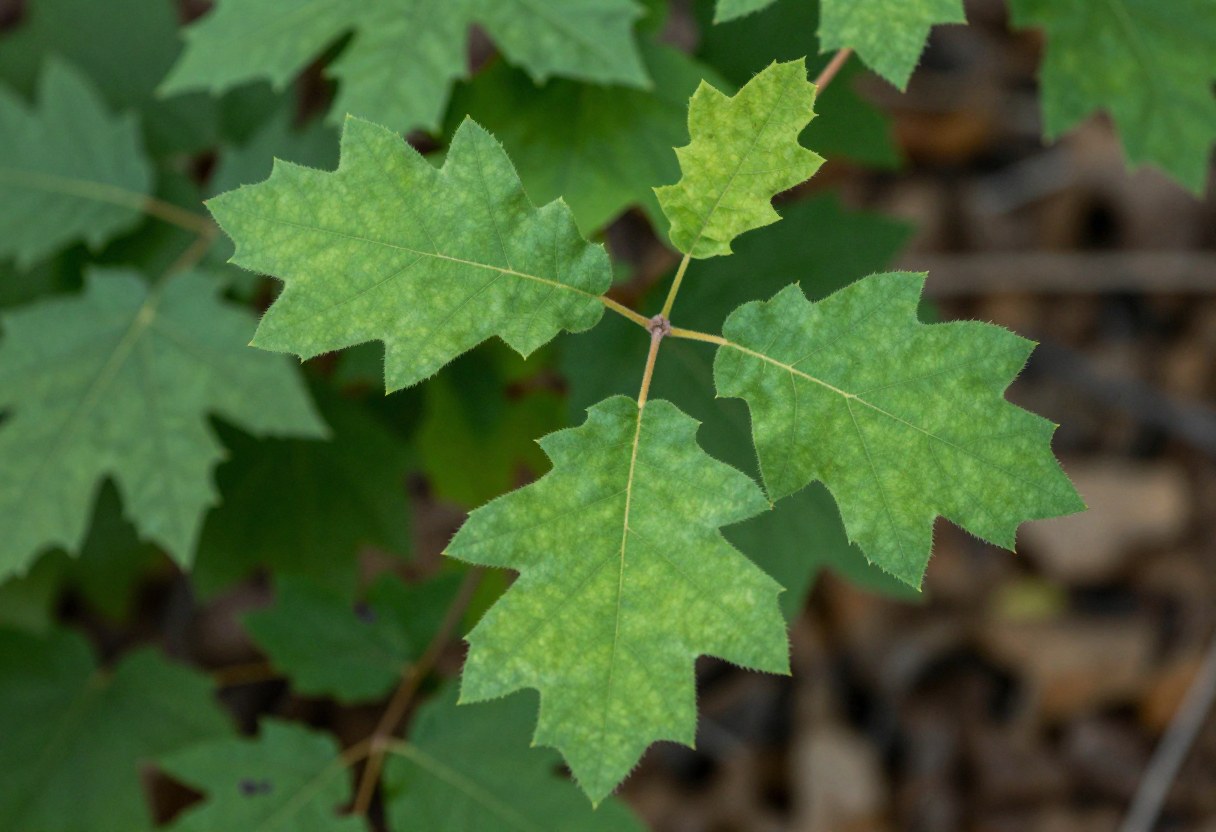
A shrub or vine with three lobed leaflets that look like oak leaves, found on the West Coast and across the Southeast. Like poison ivy, it can cause a rash.
- Type
- Plants to Avoid
- Leaves
- Compound leaves
- Region
- Rockies & West, Southeast
- Typical size
- A low shrub or climbing vine, from knee-high to 10 ft or more
- Range
- The Pacific coast states and the southeastern United States, in woods and brush
- Look for it
- Spring through fall; leaves turn red or orange in fall
Safety: Urushiol is present year-round, even on bare stems. Avoid touching the plant, wash skin and gear after exposure, and seek medical care for a severe rash, a rash on the face or eyes, or breathing trouble.
How to identify it
- Leaves have three leaflets, each with rounded lobes that resemble small oak leaves.
- Leaflets may be hairy and dull in the southeast, or glossy in the West.
- Stems may be a shrub or a climbing vine.
- Whitish berries appear in late summer.
Often confused with
- Poison ivy: has three leaflets with mostly smooth edges or a few notches, rather than oak-like lobes.
Why it matters outdoors
- The oil, urushiol, causes the same rash as poison ivy and spreads from gear, clothes, and pets.
- Never burn poison oak: the smoke can cause severe lung irritation.
- Wash exposed skin soon with soap and cool water, and wash clothing and gear.
Field notes
Poison oak is a hazard in much of the West and the Southeast. In the West it often forms thick brush along trails and streams.
Its three lobed leaflets and the same oily irritant make it a close relative of poison ivy.
Related guides
This guide helps you recognize trees and avoid harmful plants. It does not teach foraging, and nothing here is advice to eat or use a wild plant. Identification from a drawing can be wrong, so check with a regional field guide or a local expert, such as your state forestry or extension service.