
Poison Ivy
Toxicodendron radicans
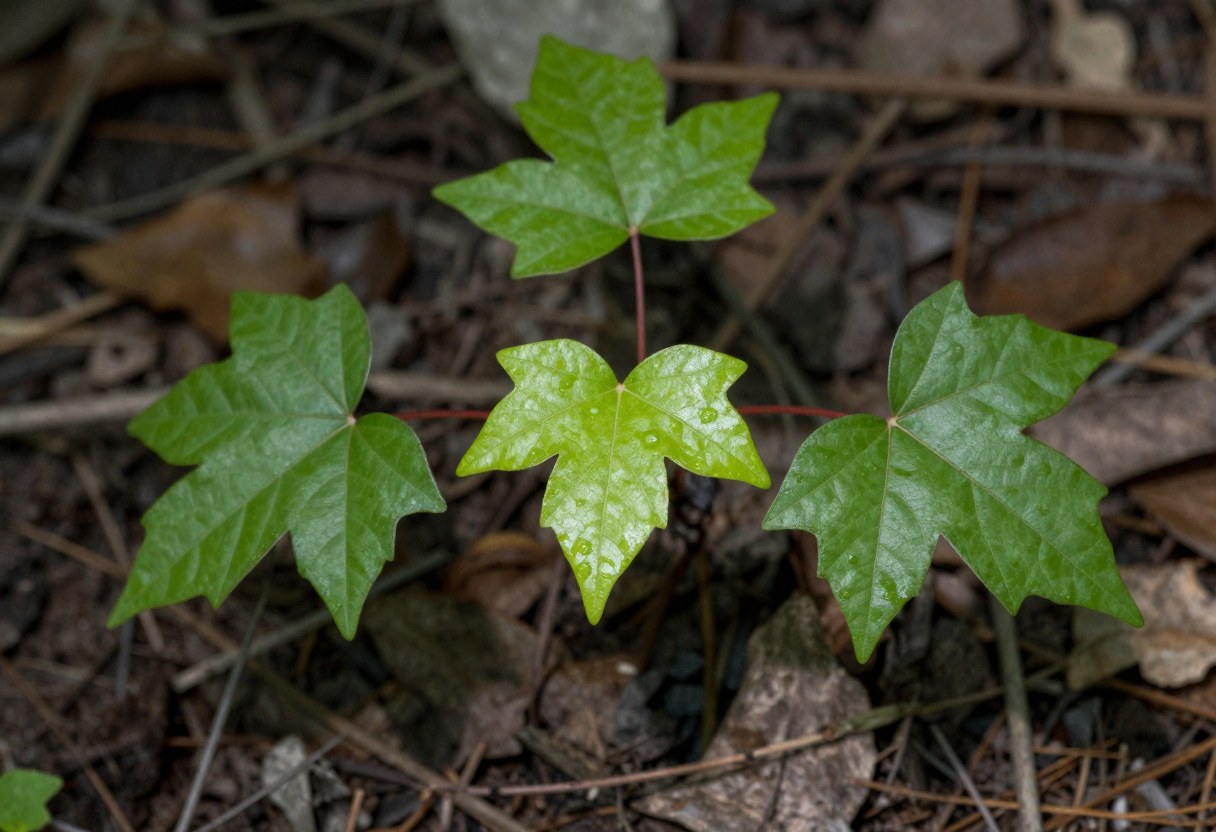
A common vine and shrub with leaves in groups of three. Touching it can cause an itchy, blistering rash.
- Type
- Plants to Avoid
- Leaves
- Compound leaves
- Region
- Northeast, Southeast, Midwest & Plains, Rockies & West
- Typical size
- A trailing plant, low shrub, or climbing vine up to 50 ft or more up a trunk
- Range
- Found across most of the country, in woods, trail edges, fencerows, and yards
- Look for it
- Spring through fall; leaves turn red in autumn, and the bare vine still carries the oil in winter
Safety: Urushiol oil is on the leaves, stems, and roots, even when the plant is dead and in winter. Avoid touching it, wash skin and gear after exposure, and see a doctor for a severe rash, a rash on the face or eyes, or if you have trouble breathing.
How to identify it
- Leaves of three: each leaf has three leaflets, with the middle leaflet on a longer stalk than the two side leaflets.
- Leaflets are pointed, glossy or dull, with smooth edges or a few uneven notches or lobes.
- Climbing vines are covered in fine, hairy aerial roots, like a hairy rope.
- White or cream berries appear in late summer.
Often confused with
- Virginia creeper: a harmless vine with five leaflets in each leaf.
- Box elder seedlings: have three leaflets, but the leaves grow opposite each other and have coarse teeth.
Why it matters outdoors
- The oil, called urushiol, causes a rash on most people and stays on clothes, gear, dogs, and tools for a long time.
- Never burn poison ivy: the smoke can cause severe lung irritation.
- Wash exposed skin soon with soap and cool water, and wash clothing and gear.
Field notes
Poison ivy is one of the most common reasons for an itchy trip home from a hike or hunt. The plant is easy to avoid once you know it: look for three leaflets and a hairy vine.
The oil can spread from a pet's fur, a boot, or a tool, so wash gear as well as skin.
Related guides
This guide helps you recognize trees and avoid harmful plants. It does not teach foraging, and nothing here is advice to eat or use a wild plant. Identification from a drawing can be wrong, so check with a regional field guide or a local expert, such as your state forestry or extension service.