
Hiking With Your Dog: What to Know Before You Go
Where dogs are allowed, how to condition and equip them, and the heat, water, wildlife, and etiquette issues that decide whether a dog hike goes well.
Published October 12, 2026
A Great Trail Partner, With a Few Ground Rules
Plenty of dogs are happier on a trail than anywhere else, and a fit, well-behaved dog is a great hiking partner. But dogs can't tell you they're overheated, footsore, or thirsty until it's already a problem, and a dog that's fine at the trailhead can become an emergency three miles in. The hikers who have the best experiences are the ones who treat a dog like any other member of the party — someone whose fitness, gear, water, and safety need to be planned for, not assumed.
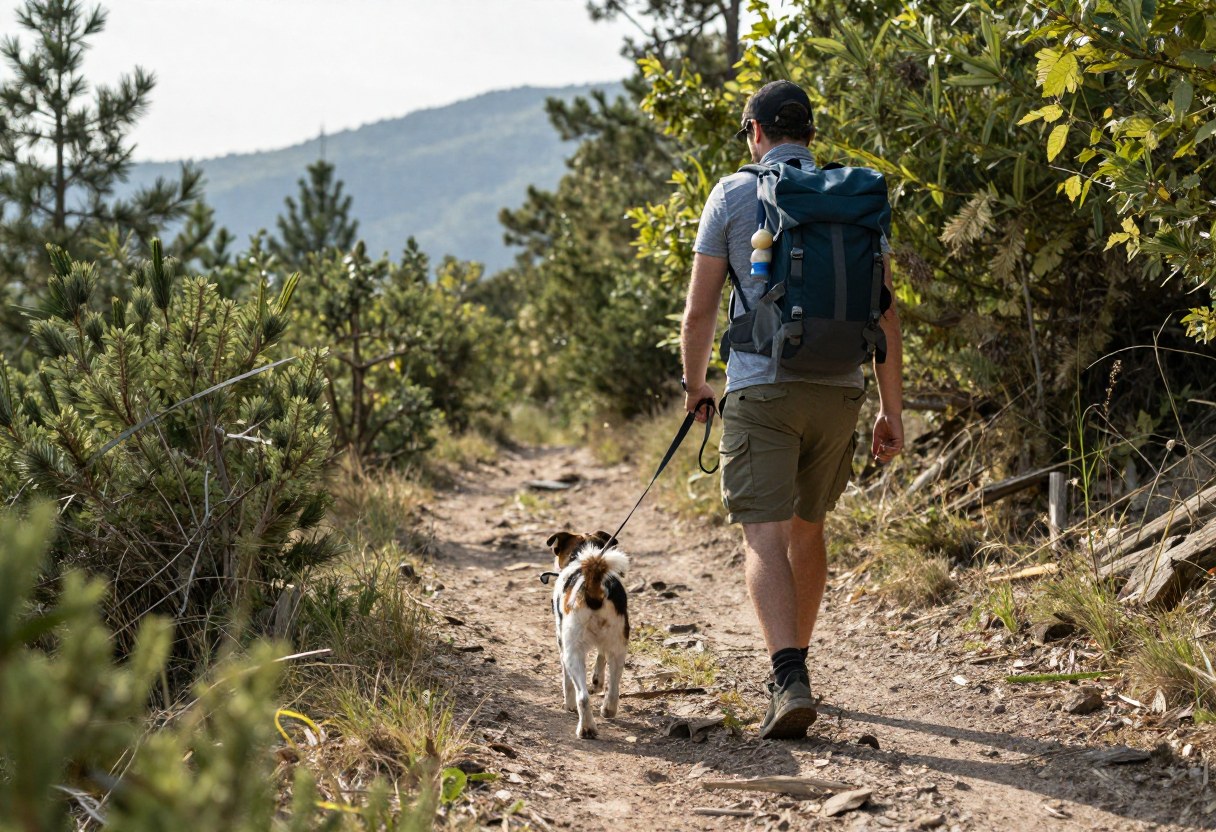
1. First, Is the Trail Dog-Friendly?
- Dog rules vary enormously by land manager. Many national parks prohibit dogs on most trails (often allowing them only on roads, campgrounds, and a few designated paths), while national forests, many state parks, and local trails are often dog-friendly. Always check the specific trail's rules before you drive there.
- Leash requirements are common even where dogs are allowed, and a leash is frequently mandatory by law. Even where it isn't, a leash protects your dog from wildlife, steep drop-offs, and other hikers.
- Some areas close trails seasonally to protect nesting birds or sensitive wildlife, or restrict dogs where there are livestock. Check for current closures and alerts.
- Consider the trail itself. Rock scrambles, ladders, exposed ledges, long stretches of hot rock, or heavy-traffic trails can be a poor match for some dogs — and some trails involve stream crossings that are too swift for smaller dogs.
2. Is Your Dog Ready? Fitness and Age
- Build up gradually, the same as you would for yourself. A dog that spends most days on the couch shouldn't be taken on a 10-mile hike. Start with short walks and slowly increase distance and elevation over weeks.
- Puppies shouldn't do long or strenuous hikes while their bones are still developing. The right age depends on breed and size, so ask your vet — large breeds can take well over a year to finish growing.
- Older dogs and dogs with joint, heart, or breathing issues need a vet's input before taking on tougher trails, and often do better on shorter, flatter hikes.
- Flat-faced (brachycephalic) breeds such as bulldogs and pugs overheat easily and generally aren't good candidates for strenuous or hot-weather hikes.
- Basic obedience matters on a trail. A reliable recall, "leave it," and "stay" can prevent run-ins with wildlife, other dogs, and hikers.
3. Heat Is the Biggest Danger
- Dogs cool themselves primarily by panting, which is much less efficient than human sweating, and they can overheat far faster than you'd expect. Heat stroke can be fatal.
- Hike in the cooler parts of the day in warm weather — early morning or evening — and choose shaded routes near water where possible.
- Watch for the signs of overheating: heavy, rapid panting, excessive drooling, bright red gums, lagging behind, stumbling, or vomiting. If you see them, stop immediately, get your dog into shade, offer water, and cool them with water (not ice-cold) on the belly and paws. Seek veterinary care promptly — heat stroke can worsen after a dog looks like it's recovered.
- Don't assume the ground is cool. Hot rock, sand, and pavement can burn paw pads. If it's uncomfortable for your bare hand to hold on the surface for several seconds, it's too hot for your dog.
Don't Skip This: On a warm day, your dog will keep following you long after it should have stopped. Don't rely on your dog to tell you it's too hot — make the decision for them, and turn around early.
4. Water and Food
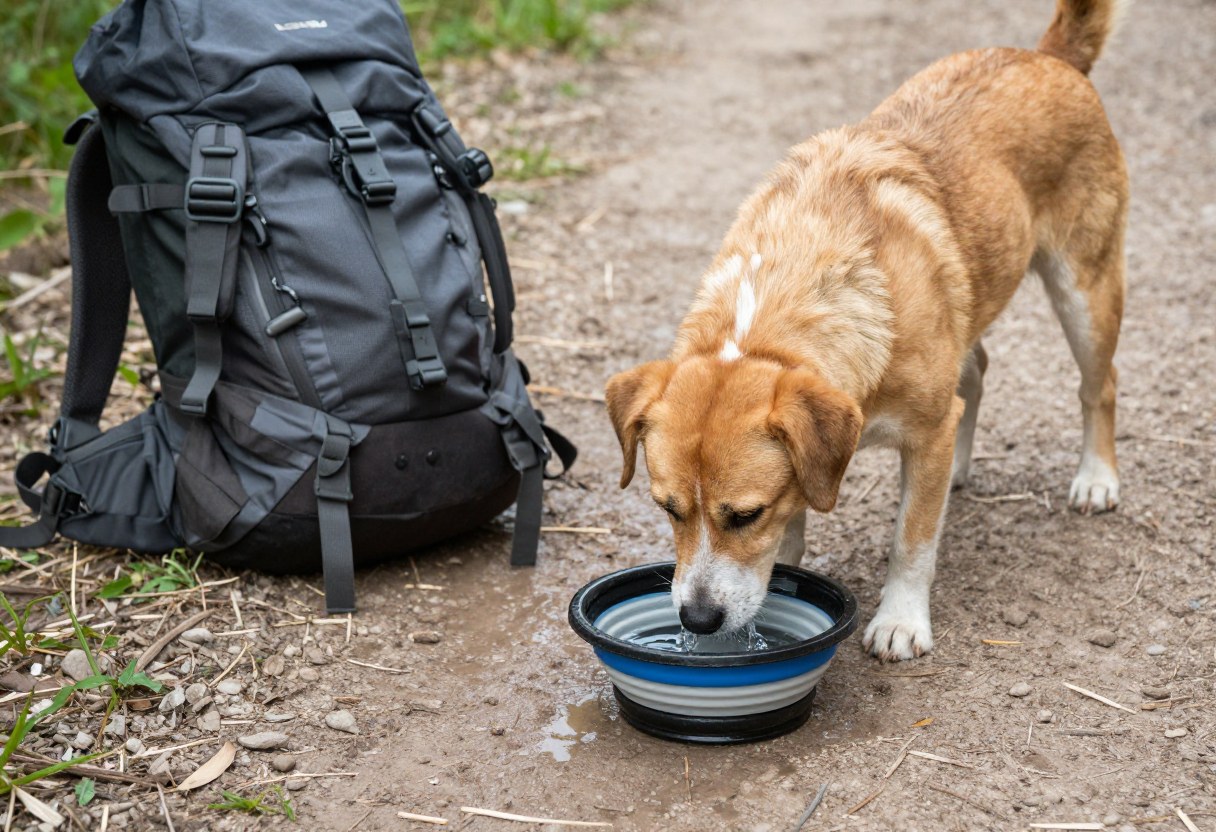
- Carry water for your dog, not just yourself, and offer it frequently. A good rule of thumb is to offer water at every rest stop. A collapsible bowl or a bottle designed for dogs makes this easy.
- Don't let your dog drink from stagnant ponds or slow, murky water. Dogs can pick up giardia and other parasites, and in some areas blue-green algae blooms can be deadly. If you're filtering water for yourself, our guide to water filtration and purification covers the options — and a dog should drink water you'd trust.
- Bring extra food and a few high-energy treats. Active dogs burn more calories, and a long hike may call for more than their regular meal.
5. Gear
- A sturdy collar or harness with ID tags and a six-foot leash, with a microchip as backup. A well-fitted harness is often more comfortable for hiking, especially on steep trails.
- A collapsible water bowl and plenty of water.
- Waste bags — more on that below.
- A dog first aid kit, with items such as tweezers for ticks and splinters, vet wrap, gauze, antiseptic, and styptic powder. Our hiking safety guide covers the human side of trail first aid, which overlaps considerably.
- Booties for rough terrain or hot ground, if your dog will tolerate them. Introduce them at home first.
- A dog pack, for fit dogs on longer hikes. Dogs can typically carry roughly 10 percent of their body weight, but only once they're fully grown and conditioned, and only with a properly fitted pack. Many hikers skip it entirely.
- A light for dusk hikes — a clip-on LED collar light helps you keep track of your dog and helps others see you.
6. Wildlife, Plants, and Pests
- Keep your dog leashed around wildlife. A dog chasing a deer or confronting a moose, bear, or porcupine can end badly for everyone, and a dog that runs back to you with a bear in pursuit has just turned an animal into a threat. Our bear safety guide is worth reading if you hike in bear country.
- Know the local hazards: snakes, porcupines, skunks, and in some regions, foxtails (barbed grass seeds that can embed in ears, noses, and paws).
- Check for ticks after every hike, especially around ears, armpits, and between toes. Talk to your vet about tick and flea prevention.
- Be aware of toxic plants and mushrooms, and don't let your dog eat unknown plants or carrion.
7. Trail Etiquette
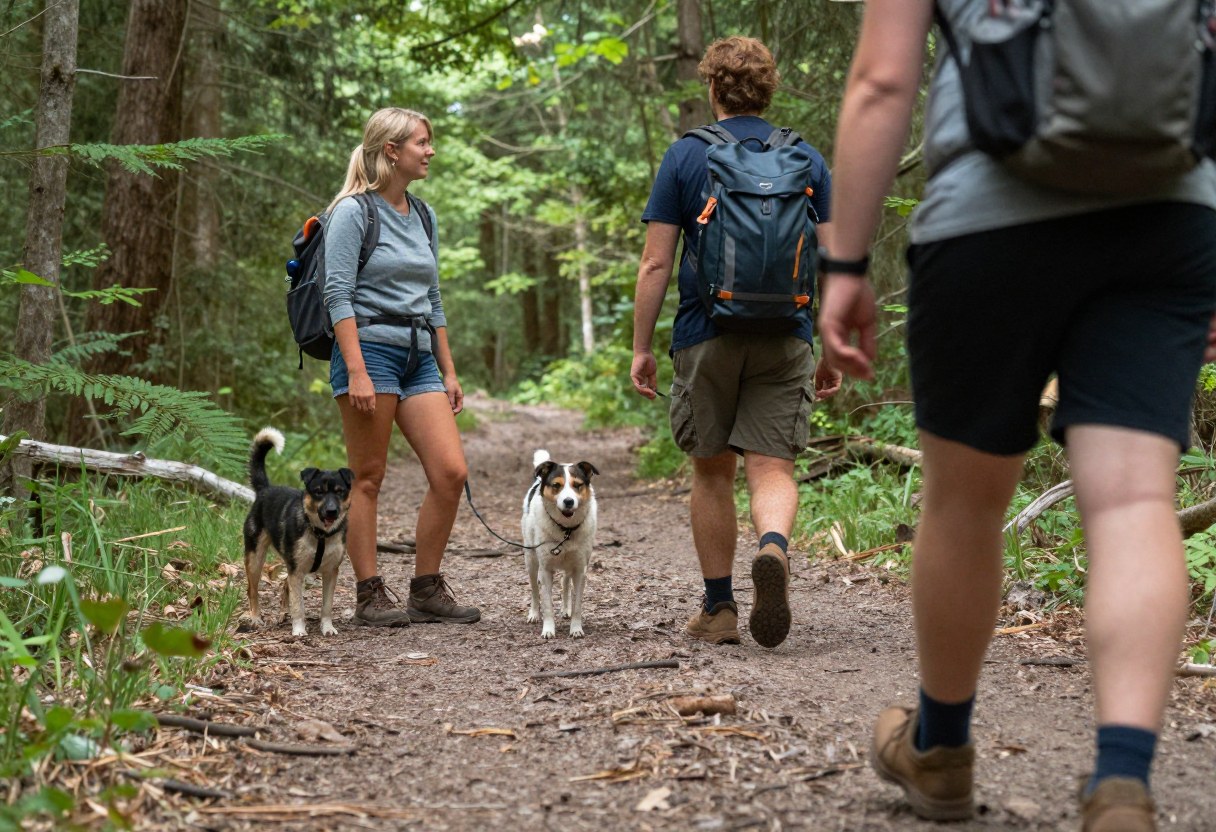
- Yield to other hikers, and keep your dog under control. Many people are nervous around dogs, and not every dog you meet is friendly. Step off the trail with your dog beside you and let others pass.
- Keep your dog from running up to other hikers or dogs, even if "he's friendly." A leashed dog is the polite default.
- Pick up after your dog and pack it out. Dog waste isn't a natural fertilizer — it can contaminate water sources and spread disease, and leaving bags beside the trail "for the way back" is a common source of litter. Carry it out, or in some places bury it in a cathole at least 6 to 8 inches deep and 200 feet from water, as our Leave No Trace guide describes — but check local rules, as many places require packing it out.
- Keep barking and noise down, especially at campsites and near other hikers.
8. After the Hike
- Check paws for cuts, abrasions, or embedded debris, and look over the whole body for ticks, burrs, and foxtails.
- Give your dog plenty of water and rest, and watch for stiffness or limping in the next day or two. Persistent limping, lethargy, or loss of appetite warrants a vet visit.
Quick Decision Checklist
- I've confirmed dogs are allowed on this trail and know the leash rules
- My dog is fit, old enough, and healthy enough for this distance and terrain
- I've checked the forecast and am hiking in a cool part of the day
- I'm carrying plenty of water, a bowl, food, waste bags, and a dog first aid kit
- My dog has ID tags, a leash, and reliable basic obedience
- I know the local wildlife and tick risks, and I'll check my dog afterward
Glossary
- Brachycephalic: A short-nosed, flat-faced dog breed (such as bulldogs and pugs) that has difficulty cooling itself and is prone to overheating.
- Heat Stroke: A dangerous, potentially fatal rise in body temperature, signaled in dogs by heavy panting, drooling, red gums, weakness, or collapse.
- Foxtail: A barbed grass seed common in the western US that can burrow into a dog's ears, nose, eyes, or paws, requiring veterinary removal.
- Pack It Out: The practice of carrying all waste, including dog waste, out of the backcountry rather than leaving it behind.
Final Takeaway
A good dog hike comes down to choosing a trail that allows dogs, building your dog's fitness gradually, protecting them from heat, carrying water and basic first aid, keeping them leashed and under control, and packing out their waste. Do those things, and your dog is a trail partner who makes every hike better.
Dog regulations, seasonal closures, and wildlife and plant hazards vary by location, and every dog's health and fitness differ — check local rules and talk to your veterinarian before taking on demanding hikes.