
Field Guide / Ticks, Spiders & Biting Pests
Yellowjacket
Vespula and Dolichovespula species
Also called: ground wasp, yellow jacket
A bold, black-and-yellow wasp that nests in the ground and in walls and defends its nest fiercely, especially in late summer.
- Kind
- Stinging Insects
- Size
- About 3/8 to 5/8 inch
- Range
- Throughout the United States
- Regions
- Northeast, Southeast, Midwest & Plains, Southwest, Rockies & West
- When active
- Spring through fall, most aggressive in late summer
- Concern
- Medically significant venom, Allergic reactions
How to identify it
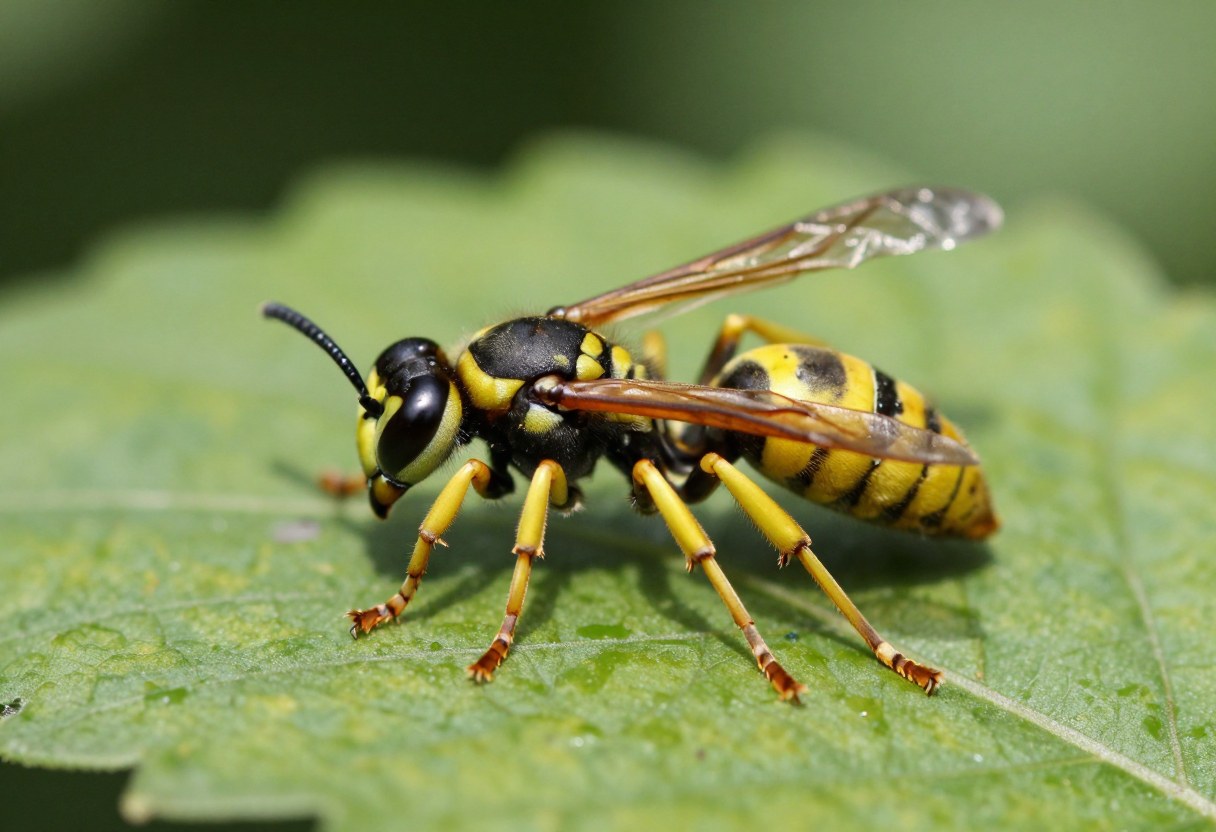
- A narrow-waisted wasp with bold black and bright yellow bands.
- The body is smooth and shiny, not hairy like a bee.
- It hovers around food, sweet drinks, and garbage.
- Colonies often nest in the ground or in hollow spaces such as walls and logs.
Health risk
Yellowjackets can sting repeatedly, and each sting is painful. Stepping on a ground nest or disturbing one with a mower can bring a swarm. They are a leading cause of serious allergic reactions to insect stings.
How to avoid it
- Do not swat or run, which can provoke stings. Walk away calmly.
- Cover food and sweet drinks, and check cans and cups before drinking.
- Keep trash covered, and clean up after meals.
- Watch for traffic in and out of a hole in the ground and avoid it.
If you are bitten or stung
- Move away from the area, since some stinging insects will sting again or call others.
- If a stinger is stuck in the skin, scrape it out quickly with a flat edge such as a fingernail or card.
- Wash the area with soap and water, and apply a cold pack or cool cloth to ease pain and swelling.
- Take an over-the-counter antihistamine or use hydrocortisone cream as the label directs, and avoid scratching.
- Watch for signs of an allergic reaction for the next several hours. If the person has a prescribed epinephrine auto-injector and a serious reaction, use it and call 911.
When to get medical care
- Get emergency care right away for hives all over the body, swelling of the face or throat, trouble breathing, dizziness, or fainting, which can signal a severe allergic reaction.
- See a doctor for many stings at once, a sting inside the mouth or throat, or a sting site that looks infected.
- If you have ever had a serious reaction to a sting, talk to a doctor about carrying epinephrine.
Call 911 for trouble breathing, swelling of the face or throat, a racing heart, dizziness, or fainting.
Often confused with
- Honey Bee: fuzzier and rounder, and it can sting only once.
- Paper Wasp: longer and slimmer, with dangling legs, and usually less aggressive.
Field notes
Yellowjacket colonies grow all season, and by late summer they are large and defensive. Many picnics and campsite meals end with a yellowjacket in a soda can.
Related guides
This page is general information from public health sources such as the CDC, not medical advice. Risks vary with where you live, your health, and any allergies, so talk to a doctor or pharmacist about repellents, allergy plans, and vaccines. Follow the label on any repellent or insecticide.