
Sauger
Sander canadensis
A slimmer, gray-brown cousin of the walleye that favors big, muddy rivers and the tailwaters below dams.
- Type
- Pike & Walleye
- Water
- Cool water
- Habitat
- Rivers, Reservoirs, Lakes
- Typical size
- 12 to 18 inches
- Range
- Native to the Mississippi River basin and the Great Lakes and Canada, with strong populations in large, turbid rivers.
- Best seasons
- Fall through spring; winter below dams
How to identify it
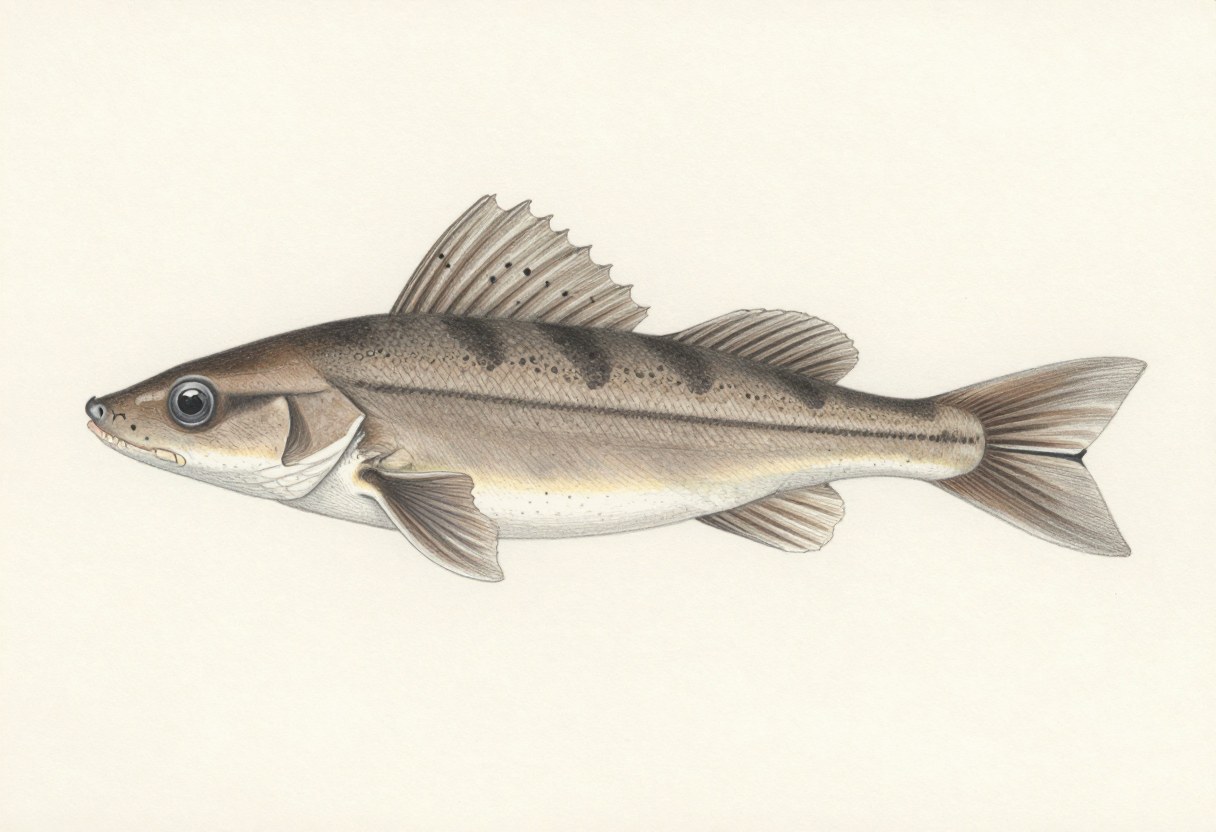
- Rows of small black spots mark the spiny dorsal fin.
- Dark saddle-shaped bars cross the back and sides.
- The tail has no white tip.
- The body is slim and gray-brown, with a pale belly.
Often confused with
- Walleye: a white tail tip, a dark blotch at the rear of the spiny dorsal, and a more golden body.
Best baits and lures
- Jigs tipped with minnows
- Nightcrawler rigs
- Blade baits
- Live minnows
Techniques
- Fish jigs on the bottom near current breaks and rock
- Work tailwaters below dams
- Fish deeper channel edges in cold water
- Keep the bait close to the bottom
Fishing notes
Saugers do best in large rivers with current and muddy water, where their light-sensitive eyes are an advantage. They hold close to the bottom near current breaks, wing dams, and the tailwaters below dams.
In cold months they concentrate below dams, where fishing can be excellent for anglers who work jigs slowly near the bottom.
Many states count sauger and walleye together in a combined limit, and sauger-walleye hybrids ("saugeyes") are stocked in some waters. Check the regulations.
Related guides
Size limits, bag limits, legal baits, and seasons vary by state and waterbody and change over time. Check your state's current regulations — our state resources directory links straight to each state's official fishing rules and license portal.