
Flathead Catfish
Pylodictis olivaris
A solitary ambush predator with a broad, flat head, living around deep wood in big rivers and reservoirs and preferring live fish.
- Type
- Catfish
- Water
- Warm water
- Habitat
- Rivers, Reservoirs, Lakes
- Typical size
- 5 to 30 lb; larger fish are possible
- Range
- Native to the Mississippi River basin and Gulf Coast rivers, and introduced in other river systems, including along the Atlantic coast.
- Best seasons
- Summer nights; warm months generally
How to identify it
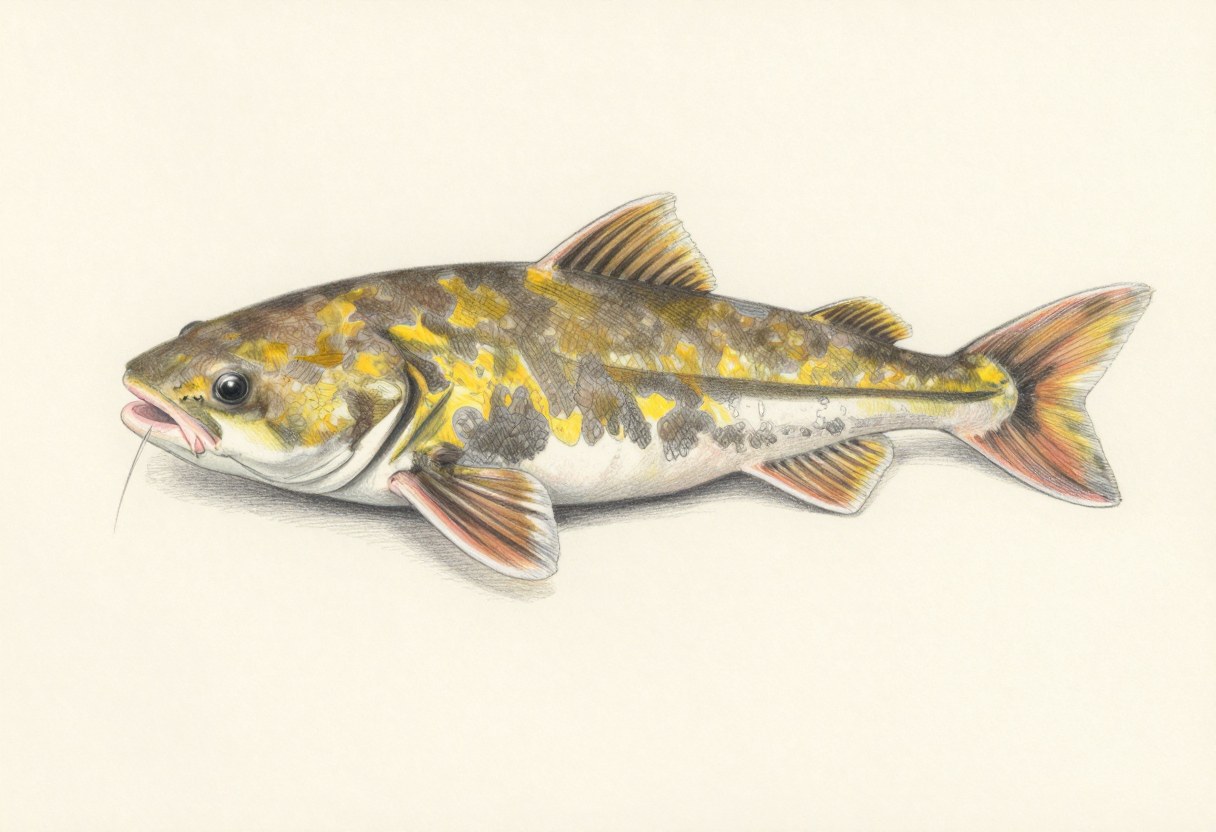
- The head is broad and flattened, with a lower jaw that sticks out past the upper.
- The body is mottled yellow-brown, and the belly is pale.
- The tail is squared or only slightly notched, not deeply forked.
- The eyes are small.
Often confused with
- Blue Catfish: a deeply forked tail, an unspotted slate-blue body, and a straight-edged anal fin.
- Channel Catfish: a deeply forked tail and a slender body, with no flattened head.
Best baits and lures
- Live sunfish or bluegill
- Live bullheads
- Fresh cut bait
- Large live shad
Techniques
- Fish live bait near deep logjams, timber, and undercut banks
- Anchor and fish at night in summer
- Use heavy tackle and strong line
- Check the local rules on live bait
Fishing notes
Unlike blue and channel cats, flatheads mostly eat live fish and generally ignore stale bait. They stay close to heavy cover, like submerged logs and rock ledges, and are often caught by anglers who fish one good piece of wood for hours.
They are most active at night, particularly in summer, and a big flathead can pull very hard.
Rules on using live fish as bait vary by state and waterbody, so check them first. Many anglers release large breeding fish.
Related guides
Size limits, bag limits, legal baits, and seasons vary by state and waterbody and change over time. Check your state's current regulations — our state resources directory links straight to each state's official fishing rules and license portal.