
Channel Catfish
Ictalurus punctatus
The most widely caught catfish in North America: a sleek, whiskered bottom feeder that bites bait readily, especially after dark.
- Type
- Catfish
- Water
- Warm water
- Habitat
- Rivers, Lakes, Ponds, Reservoirs
- Typical size
- 1 to 10 lb; larger fish are possible
- Range
- Native to the central and eastern US and southern Canada, and stocked in lakes, ponds, and rivers across most of the country.
- Best seasons
- Late spring through early fall, with the best bites in the evening and at night
How to identify it
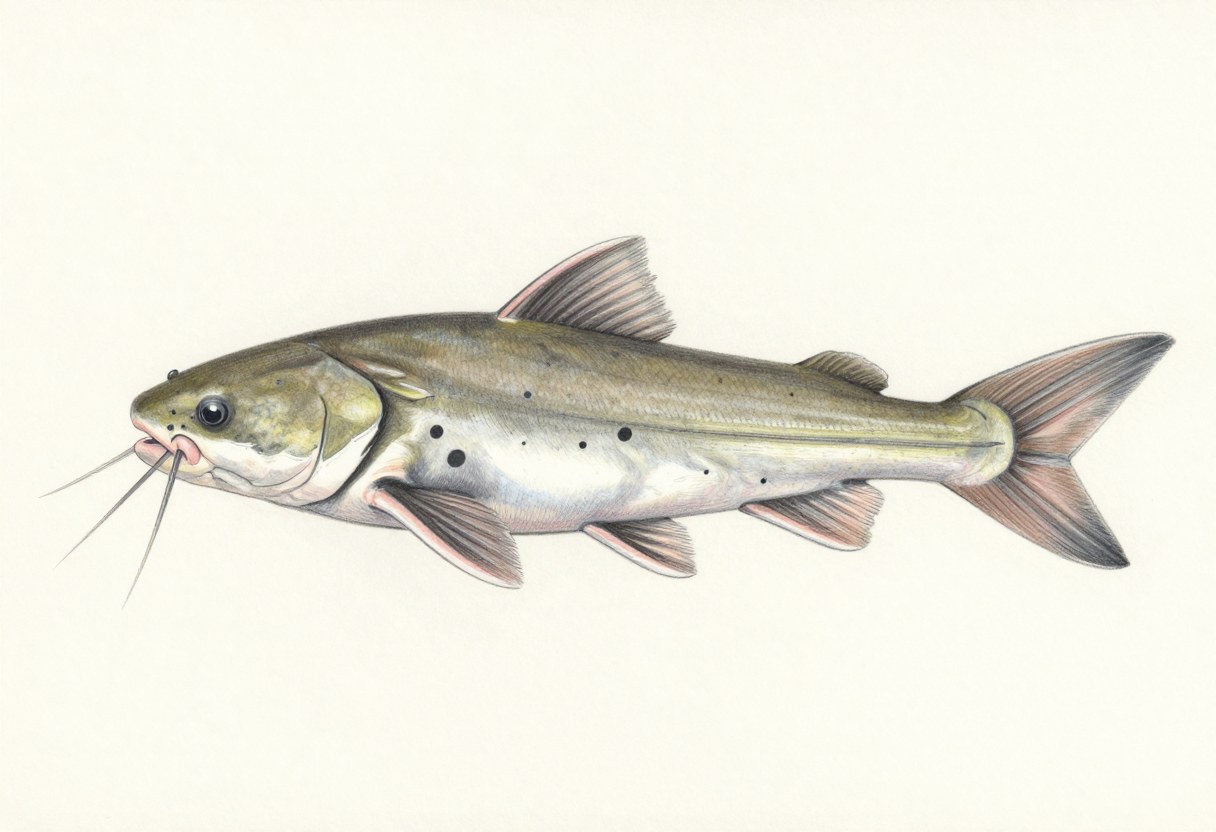
- A deeply forked tail separates it from bullheads, which have a rounded or squared tail.
- Younger fish carry scattered small dark spots on the sides; large adults often lose them.
- The anal fin has a rounded edge with roughly 24 to 29 rays, while a blue catfish's is straight-edged with more rays.
- Four pairs of whisker-like barbels surround the mouth, and sharp spines sit at the front of the dorsal and pectoral fins.
Often confused with
- Blue Catfish: no spots, a straight-edged anal fin with more rays, a more humped back, and a much larger maximum size.
- Bullheads: a rounded or squared tail instead of a forked one, and a stockier body.
Best baits and lures
- Cut bait (shad, bluegill, skipjack)
- Chicken liver
- Nightcrawlers and other worms
- Prepared stink and dip baits
- Hot dogs
Techniques
- Fish a slip-sinker bottom rig with a circle hook
- Soak bait in deep holes, river bends, and below dams
- Fish shallows and flats at night in summer
- Let the rod load up before reeling when using circle hooks
Fishing notes
Channel catfish hunt mostly by smell and taste, which is why smelly baits work so well. They feed throughout the day but are most active at dusk and after dark, when they move up from deep water into shallows and along current edges.
Handle them carefully: the stiff spines on the dorsal and pectoral fins can puncture skin and are painful. Grip a fish firmly behind the head with the spines folded down, or use a lip gripper.
Catfish are bottom feeders, so check your state's consumption advisories for the water you fish before you eat what you catch. For a full walkthrough, see our catfish fishing guide below.
Related guides
Size limits, bag limits, legal baits, and seasons vary by state and waterbody and change over time. Check your state's current regulations — our state resources directory links straight to each state's official fishing rules and license portal.