
Lake Trout
Salvelinus namaycush
A big, slow-growing char of deep, cold northern lakes, usually caught by trolling or jigging well below the surface.
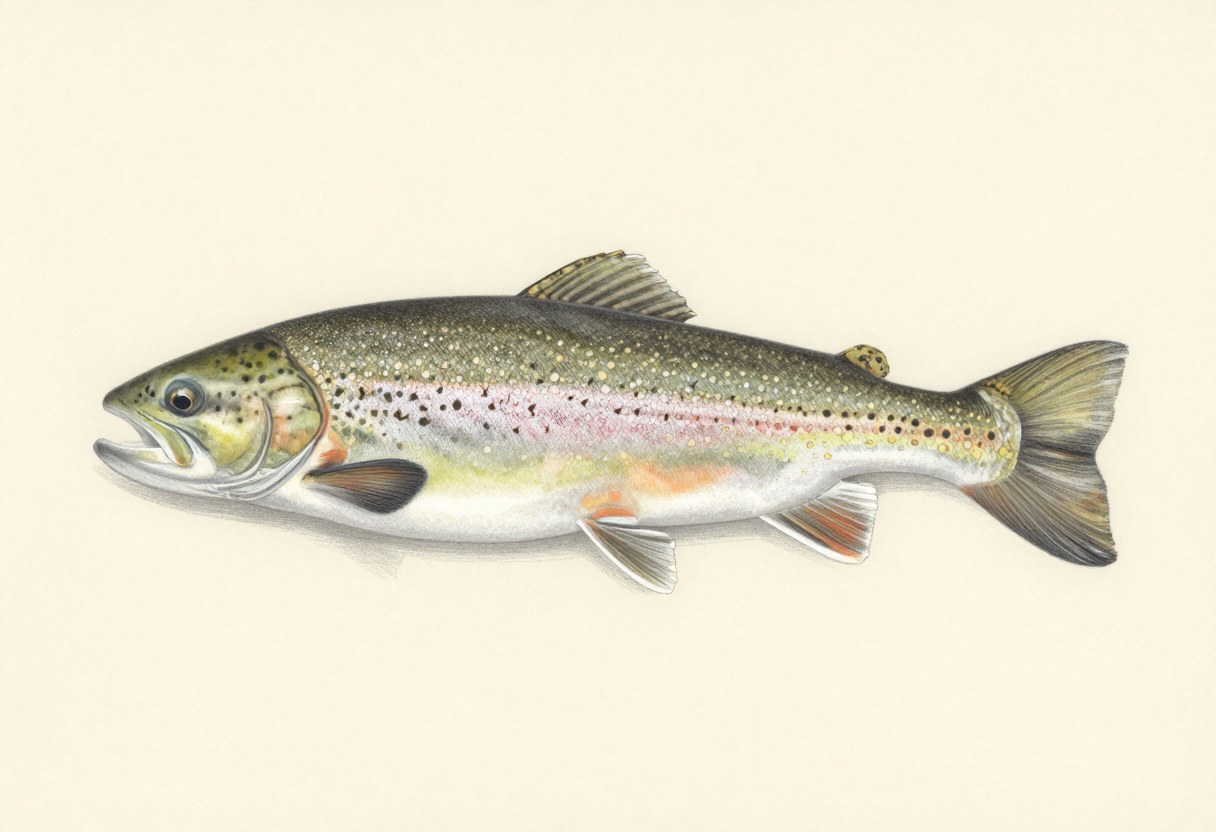
- Type
- Trout & Salmon
- Water
- Cold water
- Habitat
- Lakes, Reservoirs
- Typical size
- 2 to 10 lb; larger fish live in deep northern lakes
- Range
- Native to northern North America, including the Great Lakes, Canada, Alaska, and northern New England, and introduced in some western lakes.
- Best seasons
- Spring and fall in shallow water; deep water in summer; through the ice in winter
How to identify it
- The body is dark gray-green with pale cream spots.
- Light spots also mark the dorsal fin, and the tail is deeply forked.
- The lower fins are edged with white.
- The head is large, with a wide mouth.
Often confused with
- Brook Trout: smaller, with red spots ringed in blue, a squared tail, and wormlike markings on the back.
Best baits and lures
- Large spoons
- Jigs
- Tube jigs and soft plastics
- Cut bait
- Whole minnows
Techniques
- Troll spoons or plugs deep with downriggers or lead-core line
- Jig vertically over deep structure
- Fish shallow near rocky shorelines just after ice-out and in fall
- Jig or use tip-ups through the ice
Fishing notes
Lake trout grow slowly and live a long time, so a large fish may be decades old. They prefer water below about 50 degrees, so in summer they sit deep, often at or below the thermocline, and need heavy lures or downriggers to reach them.
In spring and fall, they move shallow and can sometimes be caught by casting from shore or from a boat near rocky points.
Because they are slow to replace themselves, many waters have size or bag limits for lake trout. Check the regulations for the lake you are fishing.
Related guides
Size limits, bag limits, legal baits, and seasons vary by state and waterbody and change over time. Check your state's current regulations — our state resources directory links straight to each state's official fishing rules and license portal.