
Perseus
The Hero
A rich autumn-to-winter constellation in the Milky Way, with the winking variable star Algol, a brilliant Double Cluster, and the Perseid meteor shower.
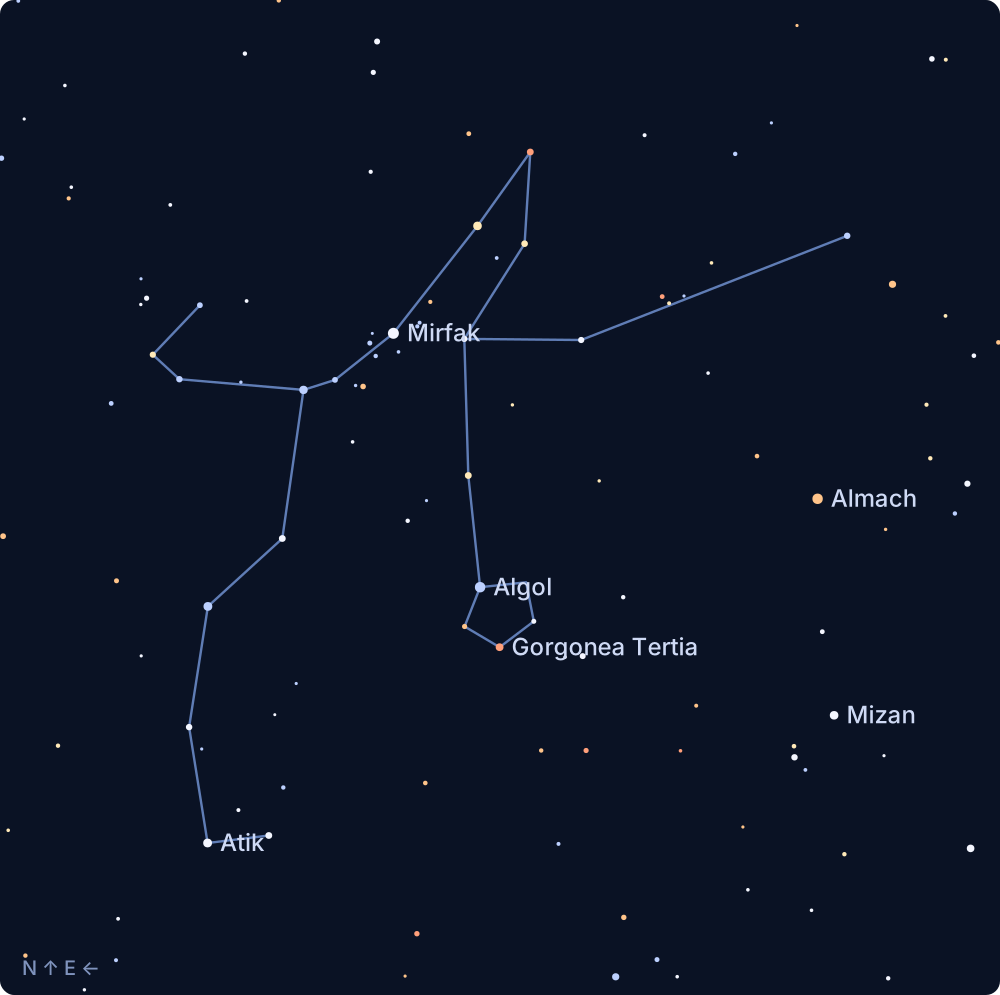
- Best season
- Winter
- Best months
- November through February, high in the sky on autumn and winter evenings
- Visibility
- Visible from everywhere in the United States
- Abbreviation
- Per
How to find it
- Look just below Cassiopeia's W for a curved chain of stars sweeping toward Mirfak, the brightest star in the hero's figure.
- Algol sits south of Mirfak, about a fist-width away at arm's length.
Brightest stars
- Mirfak (the brightest star in Perseus)
- Algol (the Demon Star, an eclipsing variable)
- Atik
What to look for
- Algol dimming. Every few days it dips noticeably for several hours, then returns to normal.
- The Double Cluster, a pair of sparkling clusters that look like a hazy patch to the naked eye.
Binocular and telescope targets
- Double Cluster: two bright open clusters side by side, spectacular in binoculars
- Alpha Persei Cluster: a loose cluster of bright stars around Mirfak, best in binoculars
- M34: a bright open cluster in northern Perseus
Using it to find other things
- Perseus sits between Cassiopeia and Taurus, so you can follow the Milky Way from Cassiopeia down toward it.
About this constellation
Perseus is in the Milky Way, so even a pair of binoculars sweeps up dozens of star clusters. The Double Cluster, between Perseus and Cassiopeia, is a favorite.
Algol is called the Demon Star because it appears to wink. It is really two stars orbiting each other, and when the dimmer one passes in front of the brighter, the system fades for a few hours. The cycle takes just under three days.
The Perseid meteor shower, in mid-August, appears to radiate from this constellation.
Related guides
Visibility depends on your latitude, the date, and the time of night. The months above assume a typical evening from the contiguous United States, so use a planetarium app to confirm what is up tonight. Never look at the Sun through binoculars or a telescope without a proper solar filter.
Star positions: Hipparcos and Bright Star catalogues via d3-celestial (BSD-3-Clause, © 2015 Olaf Frohn).