
Binoculars for Astronomy
Why binoculars are often a better first stargazing tool than a telescope, and what specs actually matter.
Published August 20, 2026
Why Binoculars Are Often the Smarter First Purchase
Many beginners assume a telescope is the natural first stargazing purchase, but experienced observers frequently recommend binoculars first — they're cheaper, require no setup or learning curve, offer a wide field of view that makes learning the sky genuinely easier, and remain useful for birding, hiking, and other outdoor activities long after you've moved on to other astronomy gear. This guide covers why binoculars work so well for astronomy and exactly what specs to look for.
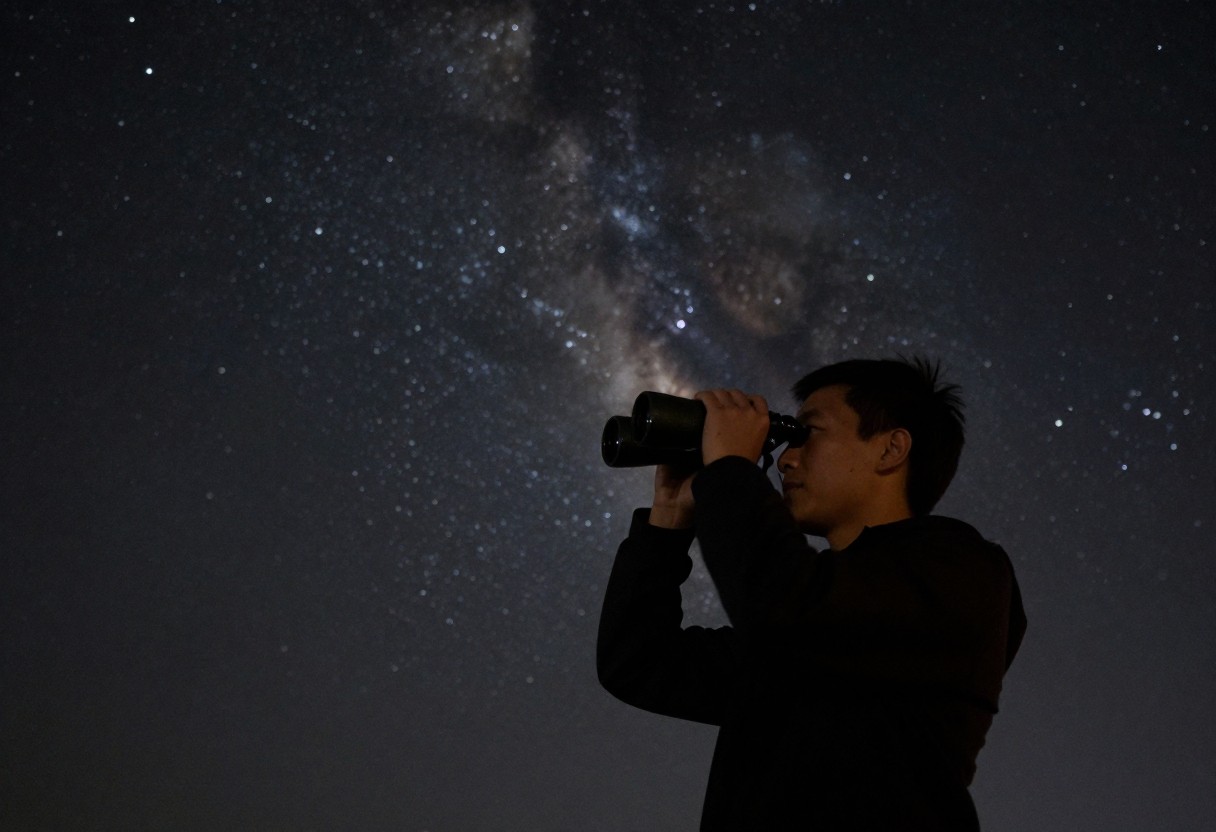
1. Why Binoculars Work So Well for Beginners
- Zero learning curve — point and look, with no collimation, alignment, or mount setup required, unlike a telescope.
- Wide true field of view makes it far easier to learn constellations and sweep across the Milky Way than the narrow, zoomed-in view of even a low-power telescope — this genuinely matters for building sky-navigation skill early on.
- Dual-purpose value — quality astronomy binoculars are equally useful for birding, hiking, hunting, and general outdoor use, meaning the purchase isn't a single-use investment the way a telescope often is.
- Grab-and-go convenience encourages more frequent use than a telescope that requires meaningful setup time, and more frequent use is genuinely one of the biggest factors in actually developing stargazing skill and enjoyment.
2. Understanding Binocular Specs: The Two Numbers
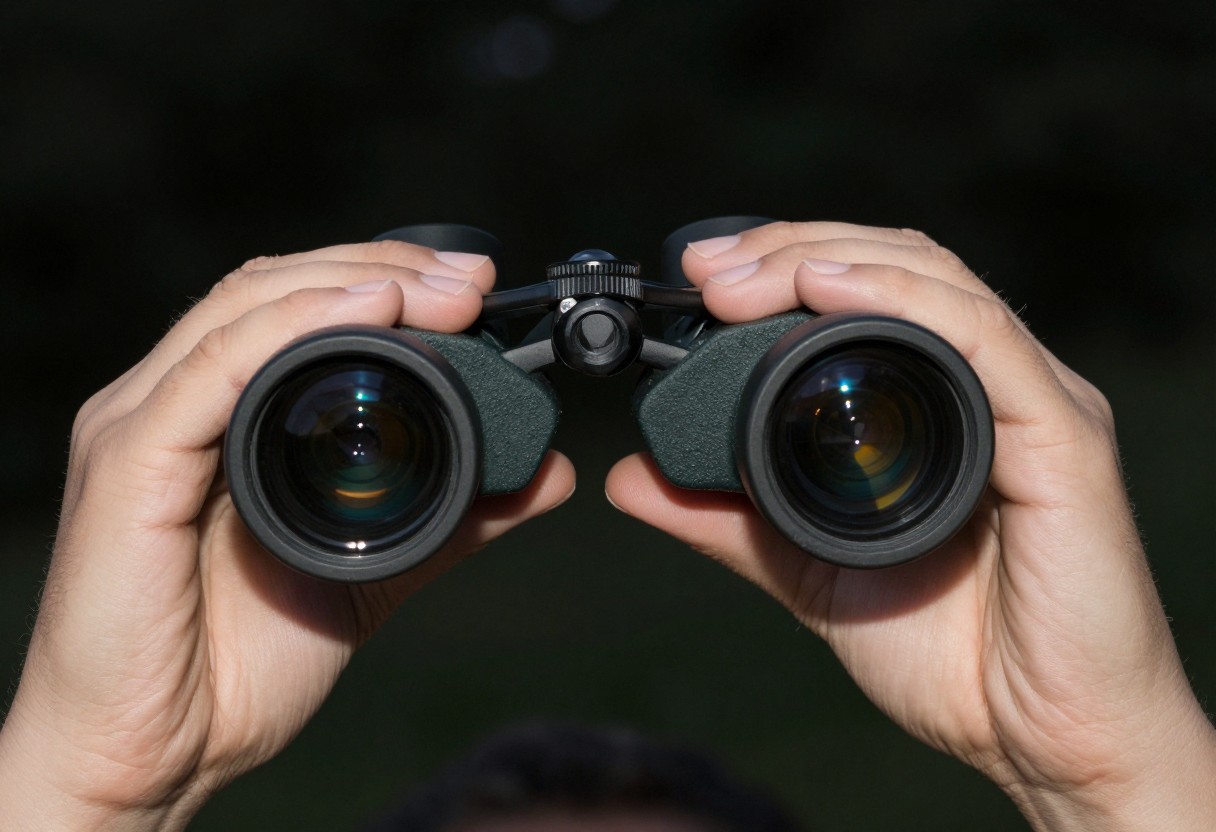
Binoculars are labeled with two numbers, like "10x50" — magnification first, then objective lens diameter in millimeters.
- Magnification (the first number) determines how much closer objects appear — higher isn't automatically better, since higher magnification also narrows your field of view and amplifies hand shake, both of which matter for astronomy specifically.
- Objective lens diameter (the second number) determines how much light the binoculars gather — a larger objective lens generally means a brighter image, which matters significantly for faint night-sky objects.
3. Exit Pupil: The Spec Most Beginners Miss
- Exit pupil (objective diameter ÷ magnification) determines how bright an image appears to your eye — a larger exit pupil delivers a brighter view, up to the point where it exceeds your eye's own dark-adapted pupil dilation (roughly 5–7mm for most adults, decreasing somewhat with age).
- 7x50 binoculars produce a 7.1mm exit pupil — technically wider than many adults' fully dilated pupils, meaning some gathered light goes unused, though the view remains excellent and very bright.
- 10x50 binoculars produce a 5mm exit pupil — a practical sweet spot for most adults, delivering a bright image while adding useful extra magnification over 7x50.
- This is why 7x50 and 10x50 are the two most commonly recommended beginner astronomy binocular configurations — both sit in a genuinely well-suited range for naked dark-adapted eyes, unlike compact binoculars with small objective lenses that struggle in low light.
4. Choosing Between 7x50 and 10x50 (and Other Options)
| Spec | Best For | Tradeoffs |
|---|---|---|
| 7x50 | Wide-field Milky Way sweeping, comet hunting, easiest steady hand-holding | Slightly less magnification/reach on smaller or fainter targets |
| 10x50 | The classic all-around recommendation — more reach on the Moon and brighter deep-sky objects | Slightly harder to hold perfectly steady handheld than 7x50 |
| 8x40 or similar compact options | More portable, still usable for astronomy | Smaller exit pupil than 50mm options, dimmer view of faint objects |
For a genuine first pair with no strong reason to prefer one over the other, 10x50 is the more commonly recommended default — a reasonable balance of brightness, reach, and hand-holdability that also perform well for general outdoor use beyond astronomy.
5. What You Can Actually See With Binoculars
- The Moon in genuinely improved detail over naked-eye viewing, including major craters and maria (the dark "seas").
- Bright star clusters like the Pleiades, which many observers find more visually striking through binoculars' wide field of view than through a telescope's narrower, more zoomed-in view.
- The Milky Way's structure, described by experienced observers as looking like "veined marble" under genuinely dark skies — a distinctly different and often more impressive experience than a telescope's narrow field allows.
- The four largest moons of Jupiter (the Galilean moons) as tiny points of light near the planet, visible even with steadily-held standard binoculars.
- Some brighter deep-sky objects (bright nebulae, star clusters, and the brightest galaxies) as fainter smudges — genuinely visible, though a telescope will always show more detail on these specific targets.
6. Using Binoculars Effectively for Astronomy
- Stabilize your hold — bracing your elbows against your body or a solid surface, or leaning against something stable, meaningfully reduces the shake that becomes more noticeable at 10x magnification during extended viewing.
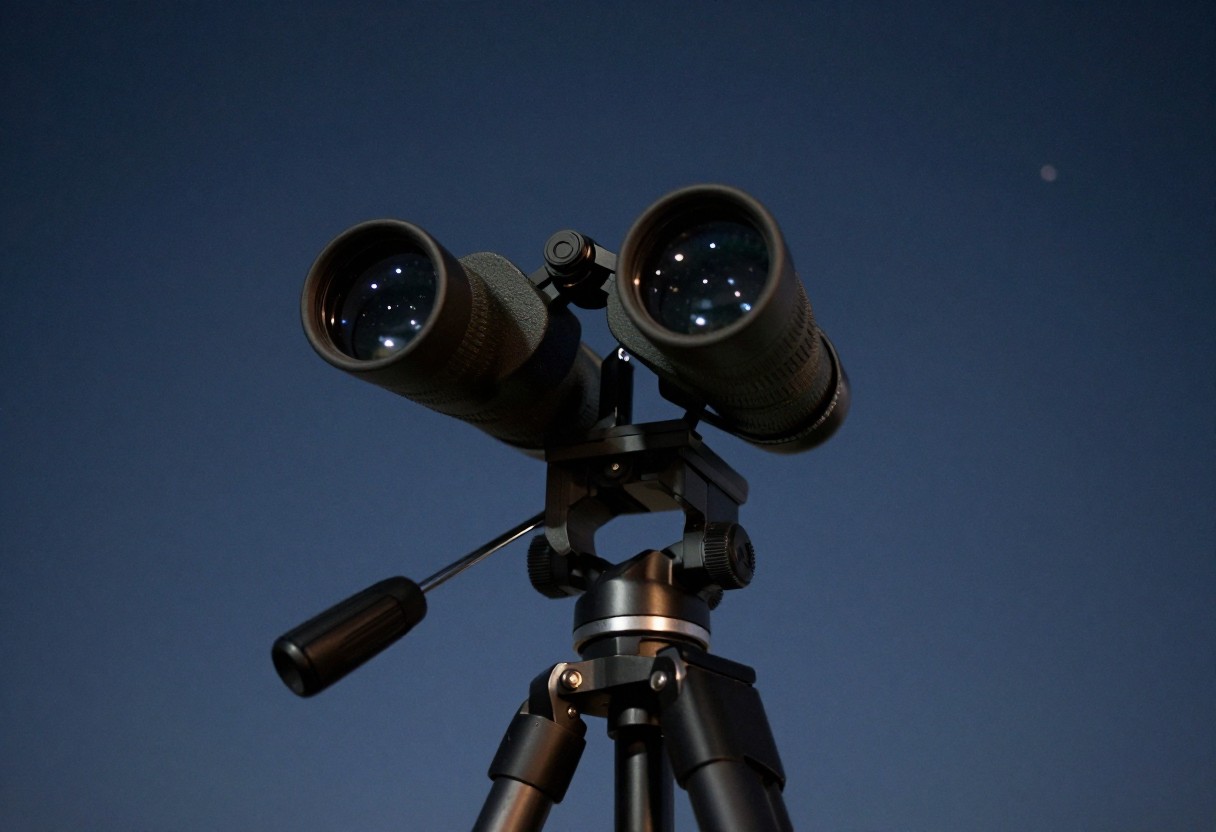
- A tripod adapter (a simple accessory that attaches most binoculars to a standard camera tripod) removes hand shake entirely and is a worthwhile low-cost upgrade if you find yourself using binoculars for astronomy regularly.
- Let your eyes adapt to darkness first (see a dedicated beginner guide for the full explanation) before judging what's visible — this matters as much for binocular observing as for naked-eye viewing.
- Sweep slowly across the Milky Way or a target star field rather than jumping the view around quickly, giving your eyes time to pick out fainter detail as you go.
7. Common Astronomy Binocular Mistakes
- Choosing compact binoculars with small objective lenses for astronomy specifically, ending up with a dim, disappointing view compared to a 50mm-class pair.
- Prioritizing very high magnification (15x, 20x) without considering how much harder that becomes to hand-hold steady, especially without a tripod adapter.
- Not letting eyes dark-adapt before judging the view, same mistake as naked-eye stargazing.
- Assuming binoculars are just a "starter" purchase to replace later — quality astronomy binoculars remain genuinely useful long-term, both for astronomy and general outdoor use, rather than something you outgrow entirely.
- Skipping a tripod adapter despite noticing meaningful hand shake during extended sessions, when it's a low-cost fix.
Quick Decision Checklist
- I understand exit pupil and am choosing a configuration (7x50 or 10x50 are the common defaults) suited to it
- I'm prioritizing a 50mm-class objective lens for astronomy use, not a compact pair with a small objective
- I have a plan to stabilize my hold, or am considering a tripod adapter if extended sessions are common
- I'm planning to let my eyes dark-adapt before judging the view, same as for naked-eye observing
- I recognize binoculars as a genuinely capable long-term tool, not just a temporary placeholder before a telescope
Glossary
- Exit Pupil: The diameter of the beam of light exiting a binocular's eyepiece, calculated as objective lens diameter divided by magnification — determines image brightness relative to your eye's own pupil dilation.
- Objective Lens: The larger, front-facing lens of a binocular, whose diameter determines light-gathering ability.
- Galilean Moons: Jupiter's four largest moons (Io, Europa, Ganymede, Callisto), visible as small points of light near the planet even through standard binoculars.
- Maria: The dark, relatively smooth plains visible on the Moon's surface, formed by ancient volcanic activity — easily distinguished from lighter, more cratered terrain through binoculars.
Final Takeaway
Binoculars are a genuinely strong first stargazing purchase, not just a compromise before a telescope — 7x50 or 10x50 configurations offer a well-matched exit pupil for dark-adapted eyes, a wide field of view that makes learning the sky easier, and dual-purpose value for other outdoor activities. Give your eyes time to dark-adapt, stabilize your hold (or add a tripod adapter for extended use), and don't underestimate how much a good pair of binoculars can show under a genuinely dark sky.
Specific binocular model recommendations and pricing change over time — check current offerings from an established optics retailer, and prioritize the specs covered here (aperture, exit pupil) over brand or marketing claims.