
How to Watch a Meteor Shower
When the major showers peak, where to set up, and the few habits that decide whether you see a handful of streaks or a night to remember.
Published October 12, 2026
Why Most People Miss the Show
A meteor shower is one of the few astronomy events that needs no telescope, no app, and no experience — and still, plenty of people step outside for ten minutes, see nothing, and decide the hype was overblown. The problem is almost never the sky. It's timing, location, and patience: a shower peaking at 3 a.m. under a bright moon from a suburban driveway is a very different experience from the same shower watched from a dark field after your eyes have adjusted. Get those three things right and a good shower can deliver a streak every minute or two.
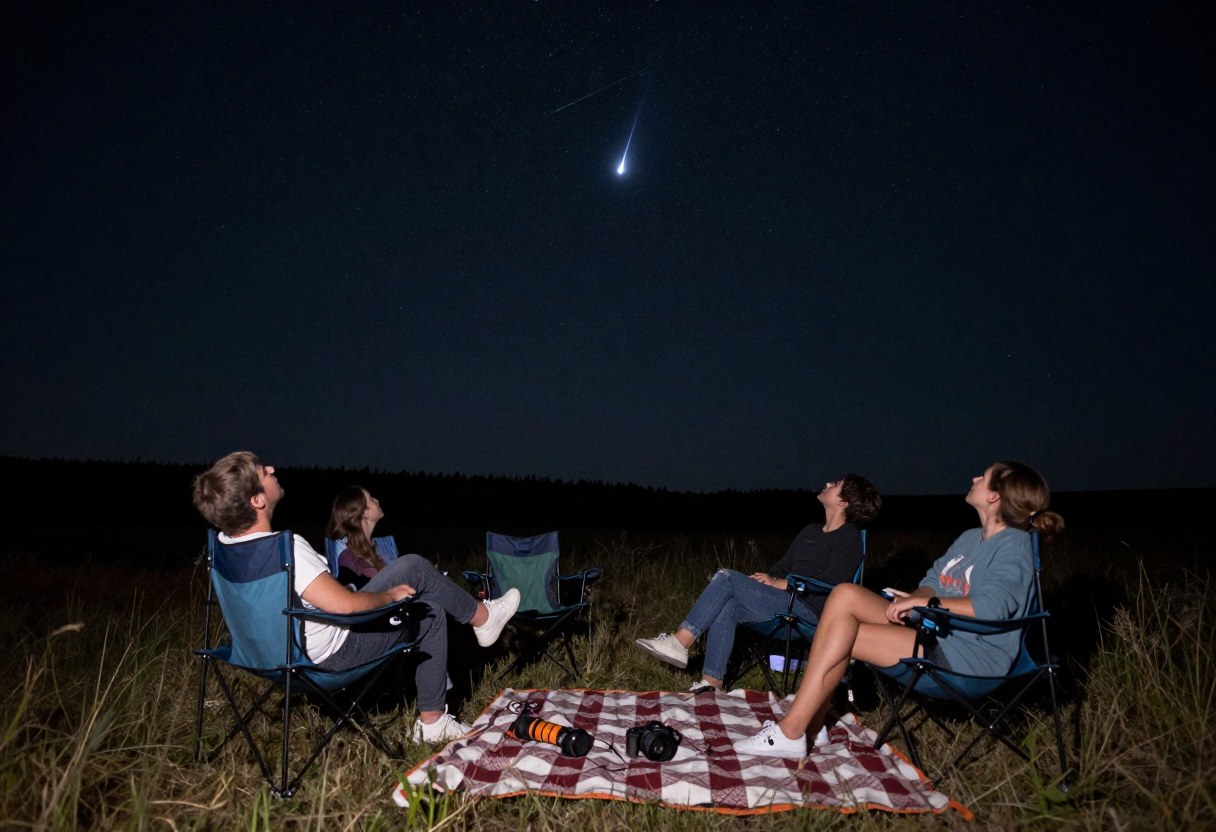
1. What You're Actually Seeing
- Meteors are tiny bits of space dust and debris — often no bigger than a grain of sand — burning up in Earth's atmosphere, roughly 50 to 70 miles up. The streak is the glowing trail of superheated air, not the particle itself.
- A shower happens when Earth passes through the debris stream left behind by a comet or asteroid. Each shower recurs around the same dates every year because Earth crosses the same stretch of orbit.
- Showers are named for the constellation their meteors appear to radiate from (the "radiant") — the Perseids from Perseus, the Orionids from Orion, the Geminids from Gemini. The radiant is just a perspective effect; meteors appear all over the sky, and you do not need to stare at the radiant.
2. The Major Annual Showers
Peak dates shift by a day or so each year, so treat these as approximate and confirm the exact peak in a current-year source such as the American Meteor Society or the International Meteor Organization.
| Shower | Approximate peak | What to know |
|---|---|---|
| Quadrantids | Early January | Very strong but with a narrow peak of just a few hours, and it's cold |
| Lyrids | Around April 22 | Modest, but with the occasional bright fireball |
| Eta Aquariids | Early May | Better from lower latitudes in the Southern US; pre-dawn viewing |
| Perseids | Around August 12 | The crowd favorite — warm nights, reliable rates, many bright meteors |
| Orionids | Around October 21 | Fast meteors from Halley's Comet debris; a long, gentle peak |
| Leonids | Around November 17 | Usually modest, with rare historic outbursts |
| Geminids | Around December 13–14 | Often the best of the year — bright, plentiful, and visible from late evening |
- The Perseids and Geminids are the best starting points for most viewers: high rates and, in the Perseids' case, comfortable summer temperatures.
- Don't write off the "minor" showers. Under a dark sky they still produce a satisfying meteor every few minutes.
3. Picking the Night: Peak, Moon, and Weather
- Peak night is best, but the nights just before and after are often close. Most showers ramp up and fall away gradually, so a cloudy peak doesn't necessarily ruin the shower.
- Check the moon phase for your shower's peak. A bright moon washes out all but the brightest meteors, and a new moon or thin crescent can double what you see. A shower that peaks on a full moon is often worth skipping in favor of a quieter, darker one.
- Check the cloud forecast, not just the rain forecast. Thin high clouds and haze quietly kill the show. A clear-sky forecast for your specific location beats driving to a spot that's socked in.
- Plan for after midnight. Late in the night, your location rotates to face forward into Earth's direction of travel, sweeping up more meteors. The hours between roughly midnight and dawn typically beat the evening — with the Geminids as a notable exception that start strong in the late evening.
4. Where to Watch
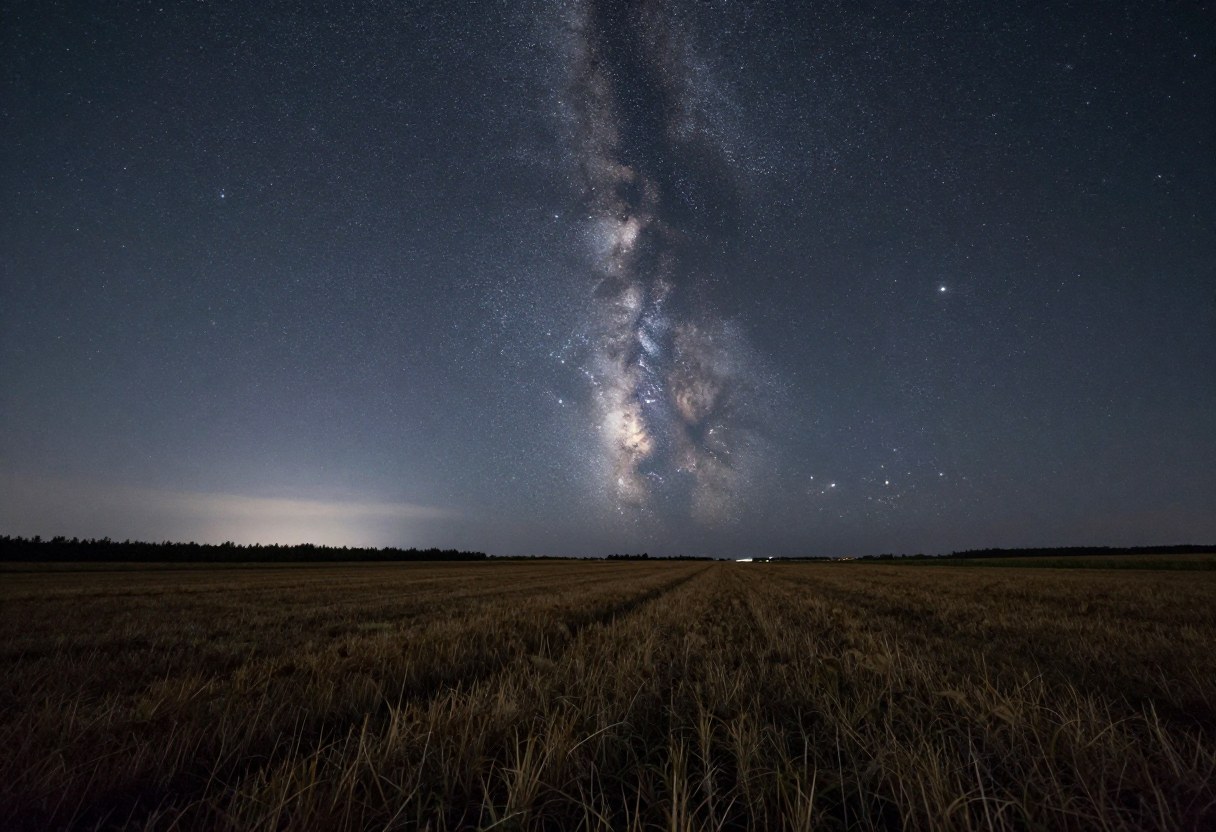
- Darkness matters more than anything else you can control. Getting away from city and suburban light can multiply the meteors you see several times over. Our guide to understanding light pollution and dark-sky locations covers how to find a dark site near you.
- Pick a spot with a wide, open view of the sky — a field, a lakeshore, a high overlook — rather than a clearing ringed by tall trees or buildings. You want as much sky as possible, since meteors appear anywhere.
- Face the part of the sky that's darkest, generally high up and away from the moon and any glow on the horizon. Looking about 45 degrees away from the radiant tends to give you longer, more dramatic meteor trails.
- Scout your site in daylight if you can, and always tell someone where you're going. A remote dark site at 2 a.m. is a place where the basics in our hiking safety guide apply just as much as on a trail.
5. Gear: Less Than You Think
- Skip the telescope and binoculars. They show a tiny patch of sky; meteors are seen with the naked eye across the whole dome.
- A reclining chair or an insulated pad and sleeping bag is the single most useful item. Lying back lets you take in the whole sky comfortably for an hour or more, and keeps your neck from paying for it.
- Dress warmer than you think you need to. You'll be sitting nearly motionless, and even summer nights cool off fast. Layering basics from our guide to layering for cold-weather adventures apply directly to a December Geminids night.
- A red-light headlamp or flashlight preserves your night vision. A single flash of white light can reset your dark adaptation, which takes the better part of half an hour to build.
- A thermos of something hot, snacks, and bug spray (in warm months) do more for your patience than any app will.
6. Dark Adaptation and Patience
- Give your eyes at least 20 to 30 minutes in real darkness. The difference in what you can see between minute 5 and minute 30 is dramatic — more stars, fainter meteors, and a far better show.
- Put your phone away, or turn the brightness to minimum with a red-screen or night mode. Checking a bright phone every few minutes is the most common way people sabotage their own night vision.
- Plan to stay at least an hour. Meteors come in clusters and lulls; you might see nothing for ten minutes and then three in thirty seconds. Leaving after fifteen minutes is how people conclude a shower was a dud.
Don't Skip This: The single biggest upgrade to a meteor shower night costs nothing: lie back, look at the whole sky instead of one spot, and give your eyes a full half hour in the dark before you decide how good the show is.
7. Understanding the Numbers
- ZHR (Zenithal Hourly Rate) is the number you'll see quoted for each shower — the theoretical hourly count under perfect conditions, with the radiant directly overhead and a flawless dark sky.
- Real-world counts are almost always lower — often a third to a half of the ZHR or less — because of moonlight, light pollution, haze, and a radiant that isn't overhead. A "ZHR of 100" will typically mean something like 20 to 40 meteors an hour from a good site.
- Use ZHR to compare showers to each other, not to promise yourself a number. Set your expectations based on your own sky and moon conditions.
8. A Note on Photographing Meteors
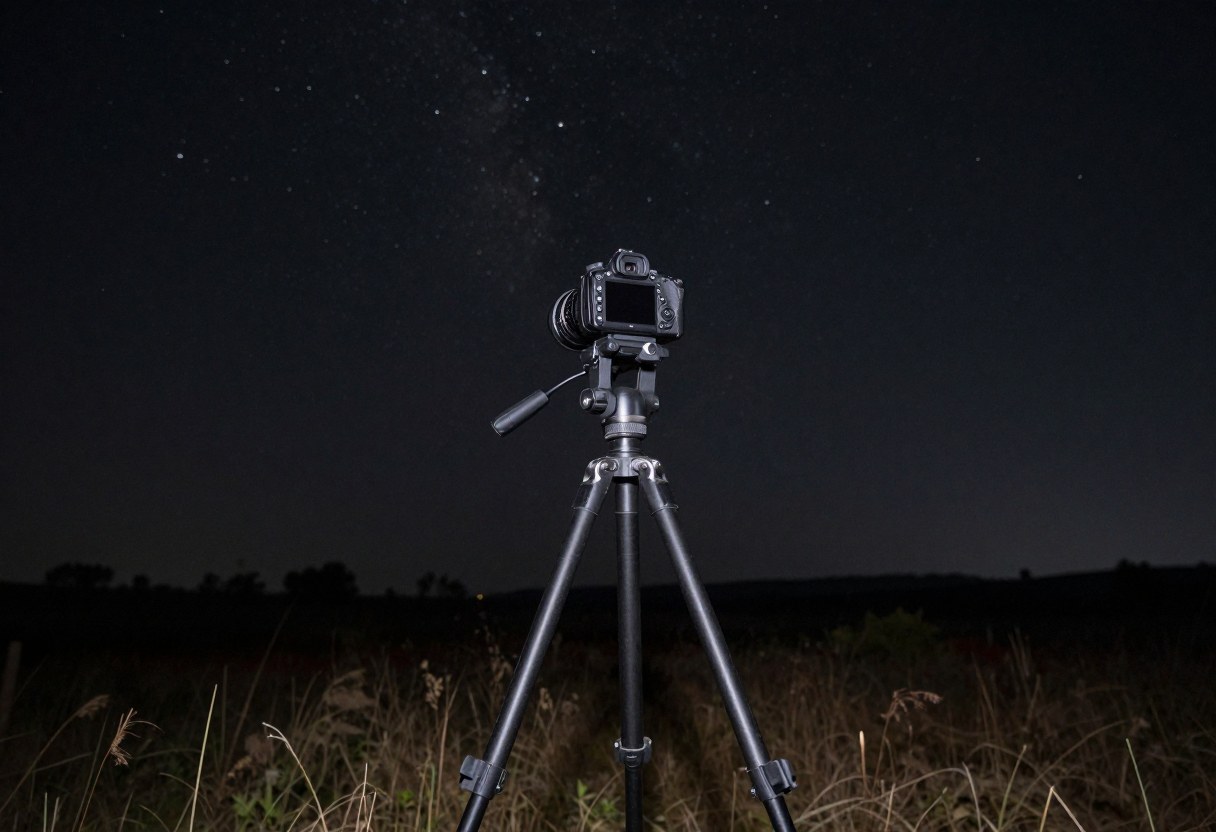
- You can capture meteors with a camera that has manual controls, a wide-angle lens, and a tripod — the same basic setup covered in our astrophotography guide for beginners.
- Point wide, set a fast aperture, a high ISO, and exposures of around 15 to 25 seconds, and shoot continuously with an intervalometer or remote. Meteors are random and brief, so you capture them by taking many frames and keeping the lucky ones.
- Enjoy the show first. Photography splits your attention, and the best moments are seen, not captured. If it's your first shower, try watching with your eyes for the first hour.
Quick Decision Checklist
- I've checked the current-year peak date and the moon phase for my shower
- I've checked the cloud-cover forecast for my specific location
- I have a dark site with a wide-open view of the sky, and someone knows where I'm going
- I have a reclining chair or pad, warm layers, and a red light
- I'm planning to stay at least an hour, starting with 20–30 minutes of dark adaptation
- I'm staying off my phone, or using red-screen mode
Glossary
- Radiant: The point in the sky from which a shower's meteors appear to originate, due to perspective — the shower is named for the constellation it sits in.
- ZHR (Zenithal Hourly Rate): The theoretical maximum meteors per hour under ideal conditions, used to compare showers rather than predict what you'll see.
- Fireball: An exceptionally bright meteor, brighter than the planet Venus, often leaving a lingering trail.
- Dark Adaptation: The process by which your eyes become much more sensitive in low light, taking roughly 20 to 30 minutes of true darkness to fully develop.
Final Takeaway
A meteor shower asks very little of you: a clear, dark, open view of the sky, a comfortable place to lie back, and enough patience to let your eyes adjust and the show build. Choose a night with a dim moon, get away from town lights, stay out for an hour or more, and a "meteor shower" stops being a vague promise and becomes something you actually see.
Shower peak dates, moon phases, and viewing conditions change every year and vary by location — check a current-year source and your local forecast before planning a trip.