
Cancer
The Crab
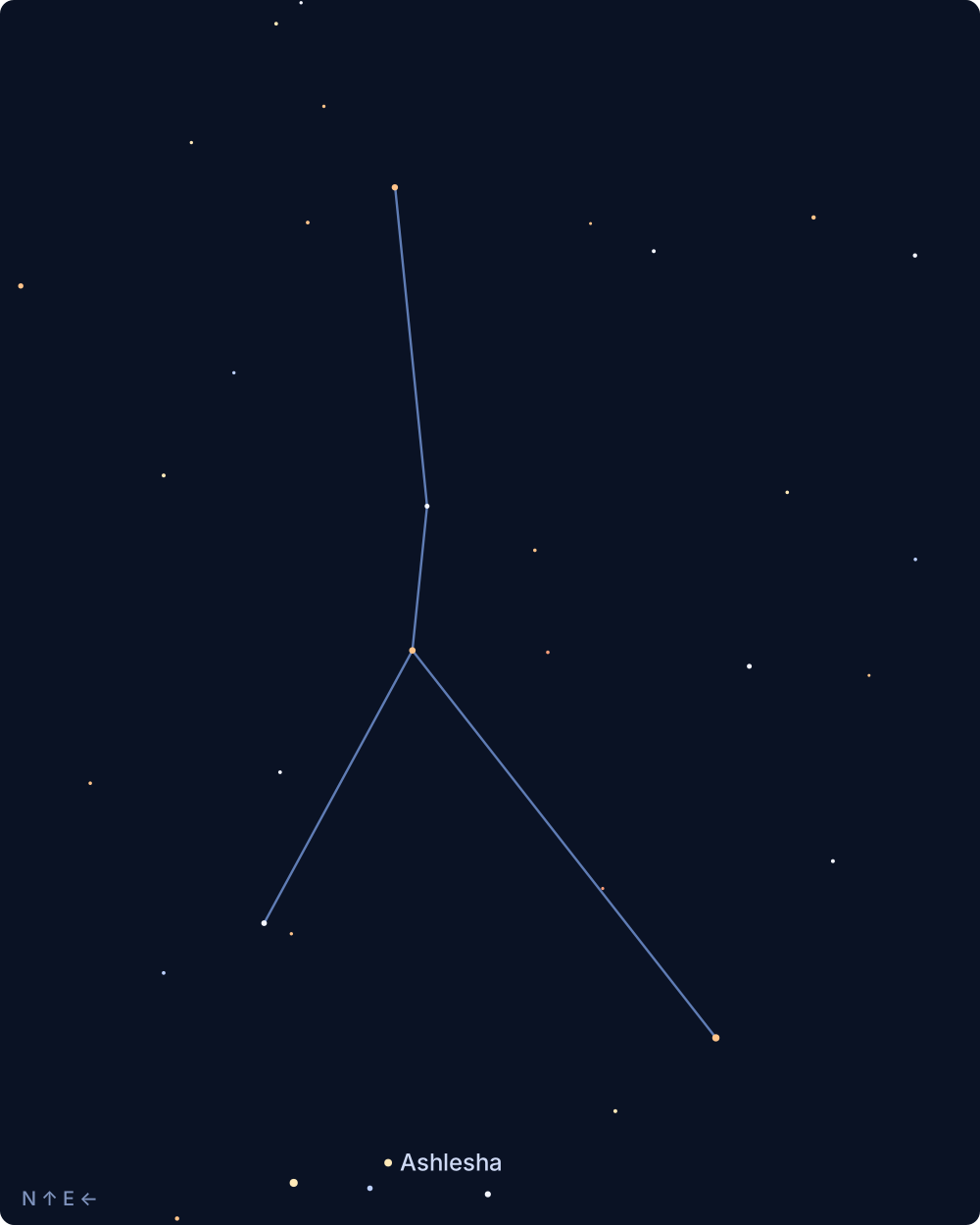
The faintest of the zodiac constellations, a dim upside-down Y, and the home of the Beehive Cluster, which shows up as a fuzzy patch to the naked eye in a dark sky.
- Best season
- Spring
- Best months
- February through April, high in the south on late winter and early spring evenings
- Visibility
- Visible from everywhere in the United States, but too faint to see from bright cities
- Abbreviation
- Cnc
How to find it
- Look for the gap between Gemini and Leo, midway between Pollux and Regulus. There are no bright stars there. That is Cancer.
- Aim binoculars at the middle of the gap. The Beehive Cluster shows as a fuzzy patch that resolves into a swarm of stars.
Brightest stars
- Al Tarf (the brightest star, but only modestly bright)
- Acubens
- Asellus Borealis and Asellus Australis (the Donkeys, on either side of the cluster)
What to look for
- The Beehive Cluster as a hazy patch with the naked eye in a dark sky, resolving into dozens of stars in binoculars.
Binocular and telescope targets
- Beehive Cluster (M44): a large open cluster with several dozen stars, a showpiece in binoculars
- M67: an old, rich open cluster that a small telescope resolves into many faint stars
Using it to find other things
- Cancer fills the gap between Gemini's Pollux and Leo's Regulus.
About this constellation
Cancer has no bright stars, so it is better known by its cluster than by its shape. The Beehive Cluster looks like a small cloud in a dark sky, and Galileo famously counted dozens of stars in it with an early telescope.
If you cannot see the cluster by eye, don't worry. A pair of binoculars will show it from nearly anywhere, and it is a fine first target for beginners.
Related guides
Visibility depends on your latitude, the date, and the time of night. The months above assume a typical evening from the contiguous United States, so use a planetarium app to confirm what is up tonight. Never look at the Sun through binoculars or a telescope without a proper solar filter.
Star positions: Hipparcos and Bright Star catalogues via d3-celestial (BSD-3-Clause, © 2015 Olaf Frohn).