
Pronghorn
Antilocapra americana
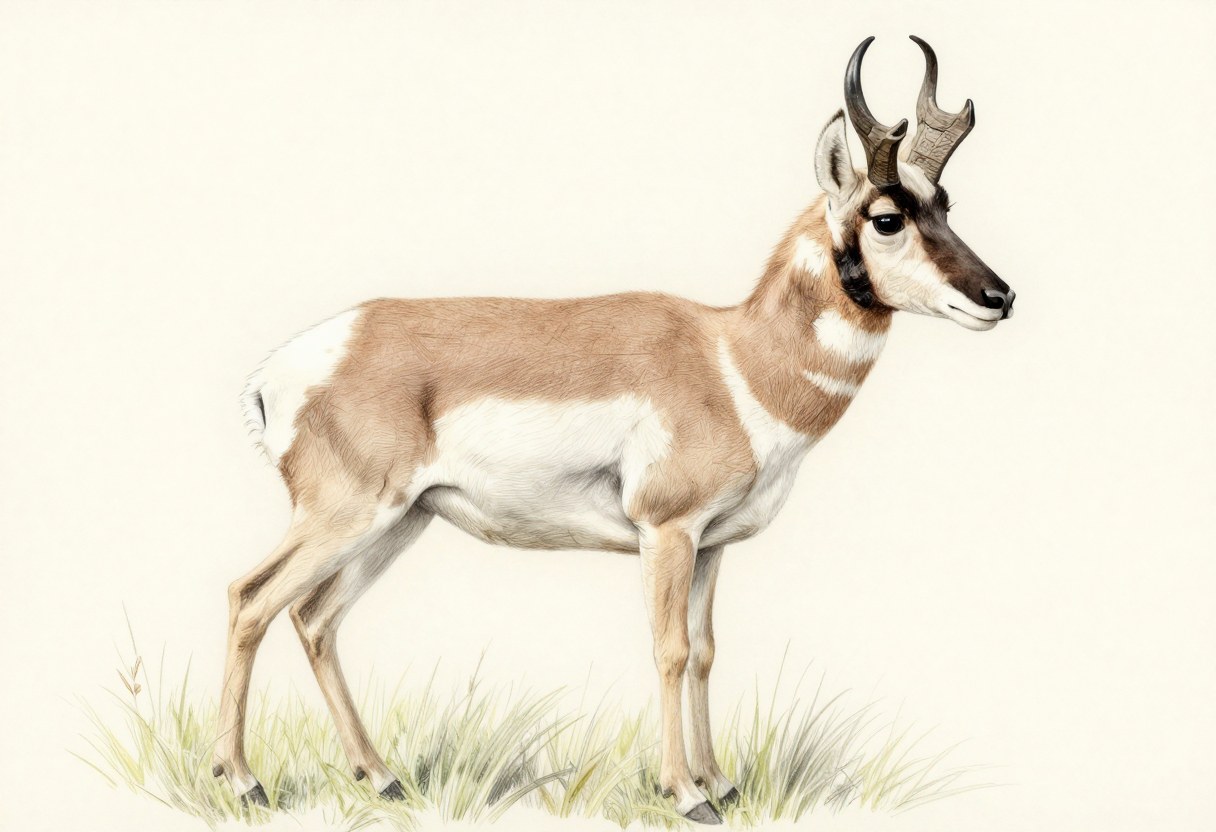
A fast, sharp-eyed animal of the open plains, often called an antelope but not related to true antelope. It is the only animal with horns that have a forward-pointing prong.
- Type
- Other Big Game
- Habitat
- Prairie & plains, Brush & desert
- Typical size
- About 90–150 lb; about 3 ft tall at the shoulder
- Range
- The Great Plains and the West, with the largest herds in Wyoming, Montana, Colorado, and New Mexico
- Seasons
- Seasons usually run in early fall, and many areas use limited tags awarded by draw
How to identify it
- A tan back and white belly, with a large white rump patch that flares when the animal is alarmed.
- Two white bands across the throat and a black patch on the face of a buck.
- Horns on both sexes, black, with a forward-pointing prong. Doe horns are short.
- No dewclaws on the legs.
Tracks and sign
- Tracks look like a small, narrow deer track and lack dewclaw marks.
- Beds scraped out on open ground with a wide view.
- Trails to water and under fences, since pronghorn prefer to crawl under fences than jump them.
Often confused with
- Mule deer: has large ears, a dark forehead, and branching antlers, and lives in rougher country.
What it eats
- Sagebrush and other shrubs
- Forbs and grasses
- Crops such as alfalfa and winter wheat
How it's hunted
- Spot-and-stalk using terrain to hide the approach
- Ambush at water holes, often from a blind in dry country
- Long-range shooting across open ground
Safety: Open country offers little cover, so long-range shots and clean misses are a risk. Be sure of your backstop. Barbed-wire fences are common, so cross them carefully and unload your firearm first.
Field notes
Pronghorn are among the fastest land animals in North America and have excellent eyesight, so hunters rely on terrain and patience.
Because they live in open country, a hunt often involves a long stalk or a long wait at a water source.
Related guides
Seasons, tag and license requirements, legal methods, and bag limits vary by state and unit and change every year. Many big-game species require a drawn or purchased tag, and some animals are protected or regulated differently in different places. Check your state's current regulations — our state resources directory links straight to each state's official hunting rules and license portal.