
Mountain Goat
Oreamnos americanus
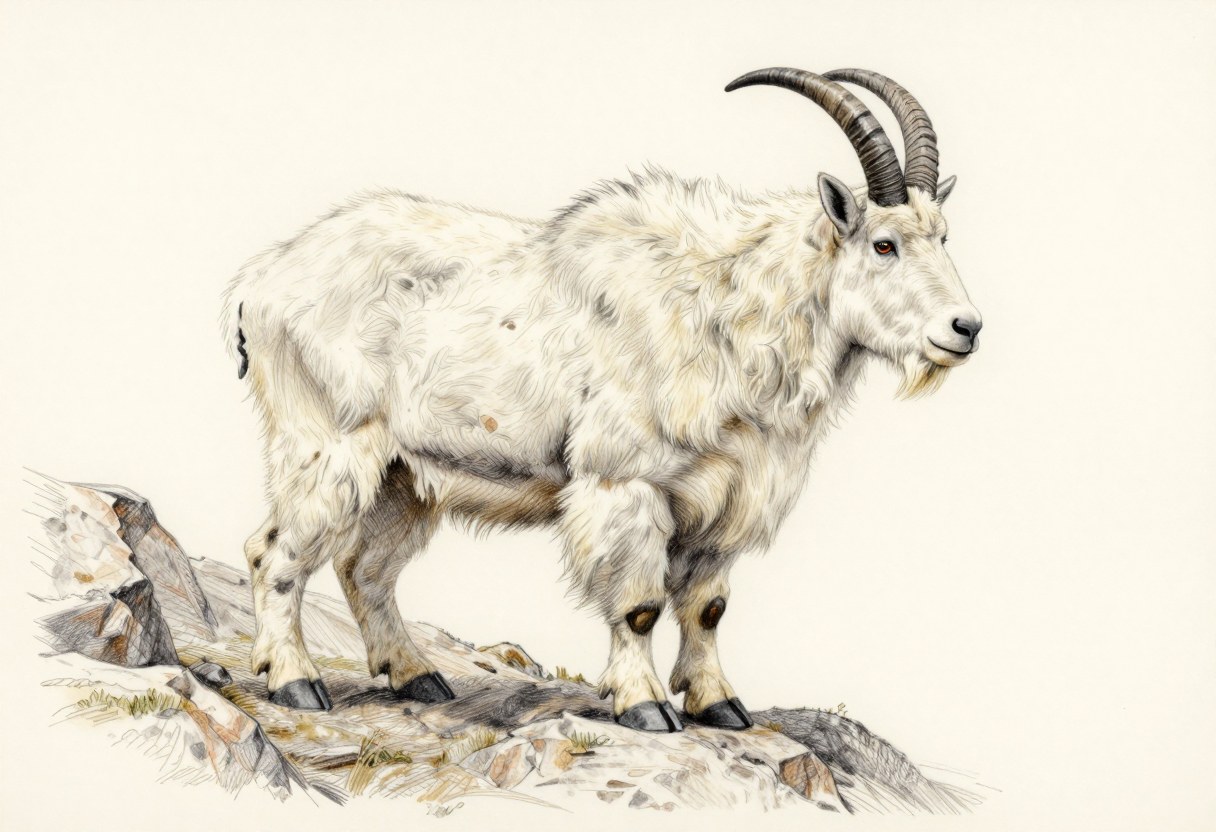
A shaggy white animal of steep cliffs and high basins, with short black horns on both sexes.
- Type
- Other Big Game
- Habitat
- Mountains
- Typical size
- About 100–300 lb
- Range
- The Rocky Mountains of Montana, Idaho, Wyoming, Colorado, and Utah, the Pacific Northwest, and Alaska
- Seasons
- Tags are limited and usually awarded by lottery, with seasons in late summer and fall
How to identify it
- A thick, shaggy white coat.
- Short, slightly curved black horns on both males and females.
- A small beard and black hooves.
- Billies and nannies look alike, so get a good look at horn thickness and body size before you shoot.
Tracks and sign
- Tracks are cloven and blocky, with rounded toes.
- Wool snagged on rocks and trees.
- Beds on ledges with a wide view.
Often confused with
- Bighorn sheep: has a tan-brown coat and curled horns, and lives on rocky slopes and desert mountains.
What it eats
- Grasses and sedges
- Forbs and shrubs
- Lichens and mosses
How it's hunted
- Glassing cliffs and basins to locate goats
- Stalking into range over steep terrain
- Packing meat out over difficult ground
Safety: Mountain goat habitat is steep and often dangerous. Falls and weather are major risks. Plan your pack-out before you shoot, since a goat can fall into terrain you cannot reach.
Field notes
Mountain goats are surefooted animals that spend their lives on cliffs and ledges. Hunts take place high and far from roads, so be fit and ready.
Because both sexes carry horns, telling a billy from a nanny takes a careful look.
Related guides
Seasons, tag and license requirements, legal methods, and bag limits vary by state and unit and change every year. Many big-game species require a drawn or purchased tag, and some animals are protected or regulated differently in different places. Check your state's current regulations — our state resources directory links straight to each state's official hunting rules and license portal.