
Bighorn Sheep
Ovis canadensis
A rugged mountain animal famous for the massive curled horns of its rams. Tags are rare and hunts are among the most sought-after in North America.
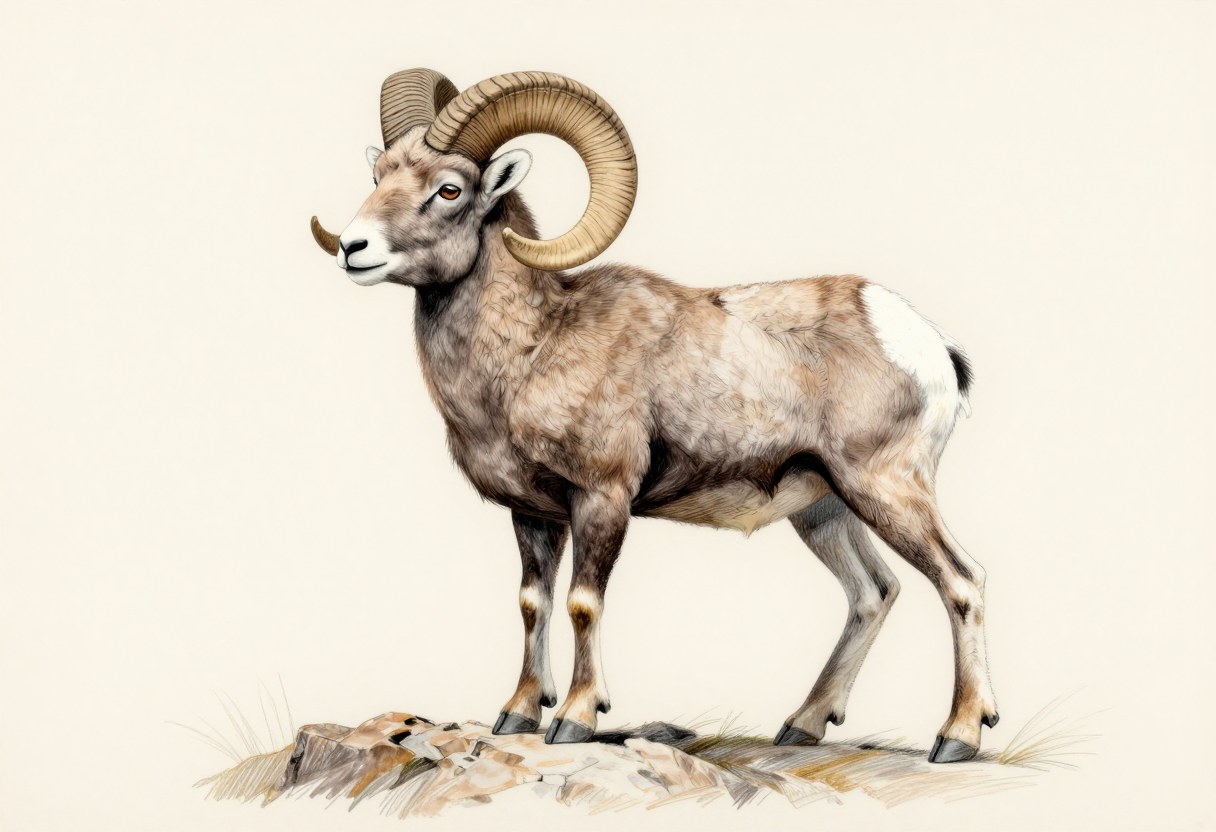
- Type
- Other Big Game
- Habitat
- Mountains, Brush & desert
- Typical size
- Rams about 200–300 lb; ewes about 120–200 lb
- Range
- The Rocky Mountains, the Sierra Nevada, and desert mountain ranges of the Southwest
- Seasons
- Tags are limited and usually awarded by lottery, with seasons in the fall
How to identify it
- A tan to brown coat with a white rump patch.
- Rams have massive, heavy horns that curl around in a spiral.
- Ewes have short, slender, slightly curved horns.
- Many states set legal-ram rules based on horn curl or age.
Tracks and sign
- Tracks are blocky, cloven, and heart-shaped, on rock and soil.
- Beds on ledges with a wide view.
- Pellet piles at bedding areas and along travel routes.
Often confused with
- Mountain goat: has a shaggy white coat and short black horns.
What it eats
- Grasses and sedges
- Forbs and shrubs
- Browse in winter
How it's hunted
- Glassing cliffs and basins to locate rams
- Stalking into range over steep, rugged ground
- Using spotting scopes for long hours
Safety: Sheep live in steep, rocky terrain where falls and bad weather are real dangers. Be physically ready, and plan your pack-out before you take a shot.
Field notes
A bighorn hunt is a once-in-a-lifetime event for most hunters, and the hunting itself is as much hiking and glassing as shooting.
Rams are judged by horn size, and many states have rules about which rams may be taken, so learn to judge horn curl before you go.
Related guides
Seasons, tag and license requirements, legal methods, and bag limits vary by state and unit and change every year. Many big-game species require a drawn or purchased tag, and some animals are protected or regulated differently in different places. Check your state's current regulations — our state resources directory links straight to each state's official hunting rules and license portal.