
Eastern Gray Squirrel
Sciurus carolinensis
A common, agile squirrel of eastern hardwood forests, with a long season and a lot of recreation value for new hunters.
- Type
- Small Game
- Habitat
- Forests
- Typical size
- About 1–1.5 lb
- Range
- The eastern United States and the Midwest, and introduced in parts of the West
- Seasons
- Seasons often start in early fall and run into winter, with generous limits
How to identify it
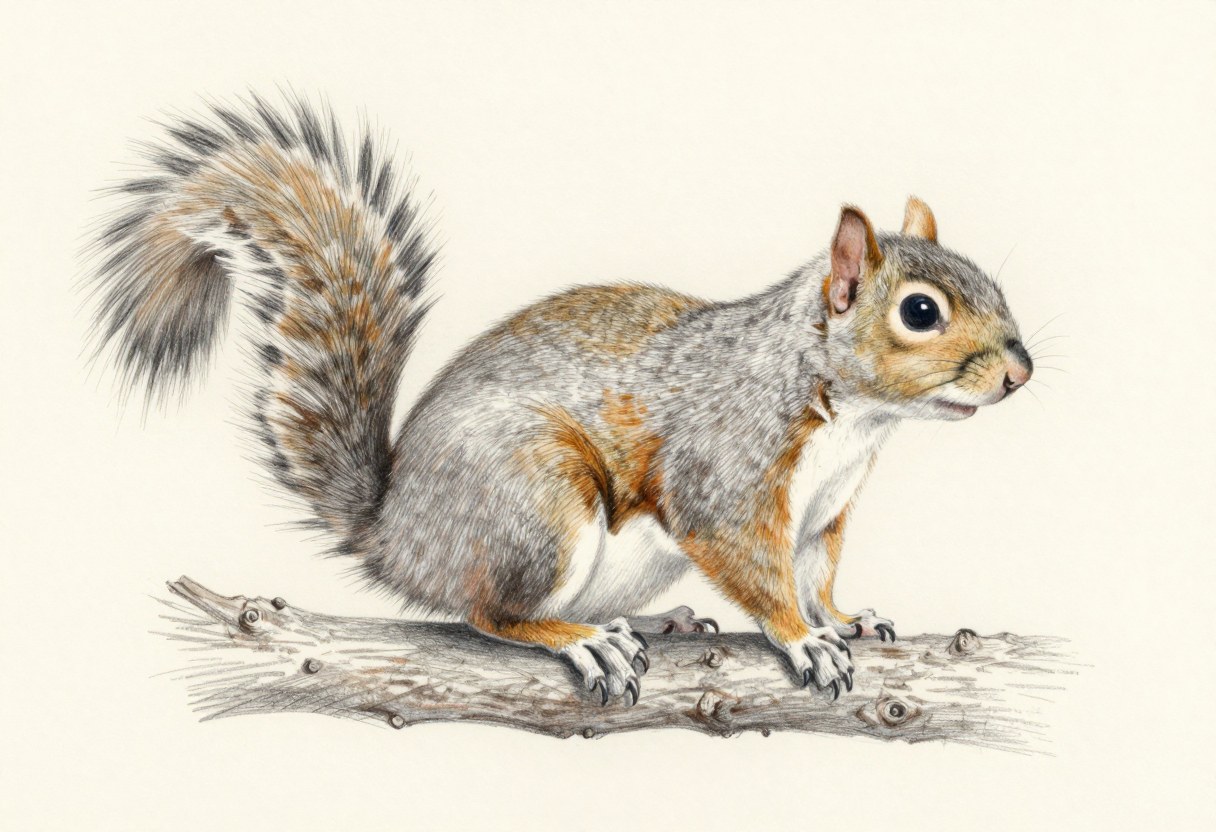
- Gray fur with a brownish tinge and a white belly.
- A bushy gray tail fringed with white.
- Smaller than a fox squirrel.
Tracks and sign
- Cut nut shells and hull piles beneath mast trees.
- Leaf nests, called dreys, high in trees.
- Small hand-like tracks on the ground and in snow.
Often confused with
- Fox squirrel: larger, with a rusty orange belly and a tail edged in orange.
What it eats
- Acorns, hickory nuts, and walnuts
- Buds, seeds, and fungi
- Bird eggs and insects
How it's hunted
- Sitting quietly under mast trees at first light
- Still-hunting hardwood forests
- Hunting with squirrel dogs where legal
Safety: Do not eat squirrel brains, which can carry a risk of a rare brain disease. Wear gloves when cleaning squirrels and cook the meat thoroughly.
Field notes
Squirrel hunting is a classic way to learn woodcraft. Sit still beneath a nut-bearing tree and listen for cutting sounds and falling shells.
Mornings and evenings are best, and quiet, patient hunters see the most.
Related guides
Seasons, tag and license requirements, legal methods, and bag limits vary by state and unit and change every year. Many big-game species require a drawn or purchased tag, and some animals are protected or regulated differently in different places. Check your state's current regulations — our state resources directory links straight to each state's official hunting rules and license portal.