
Fox Squirrel
Sciurus niger
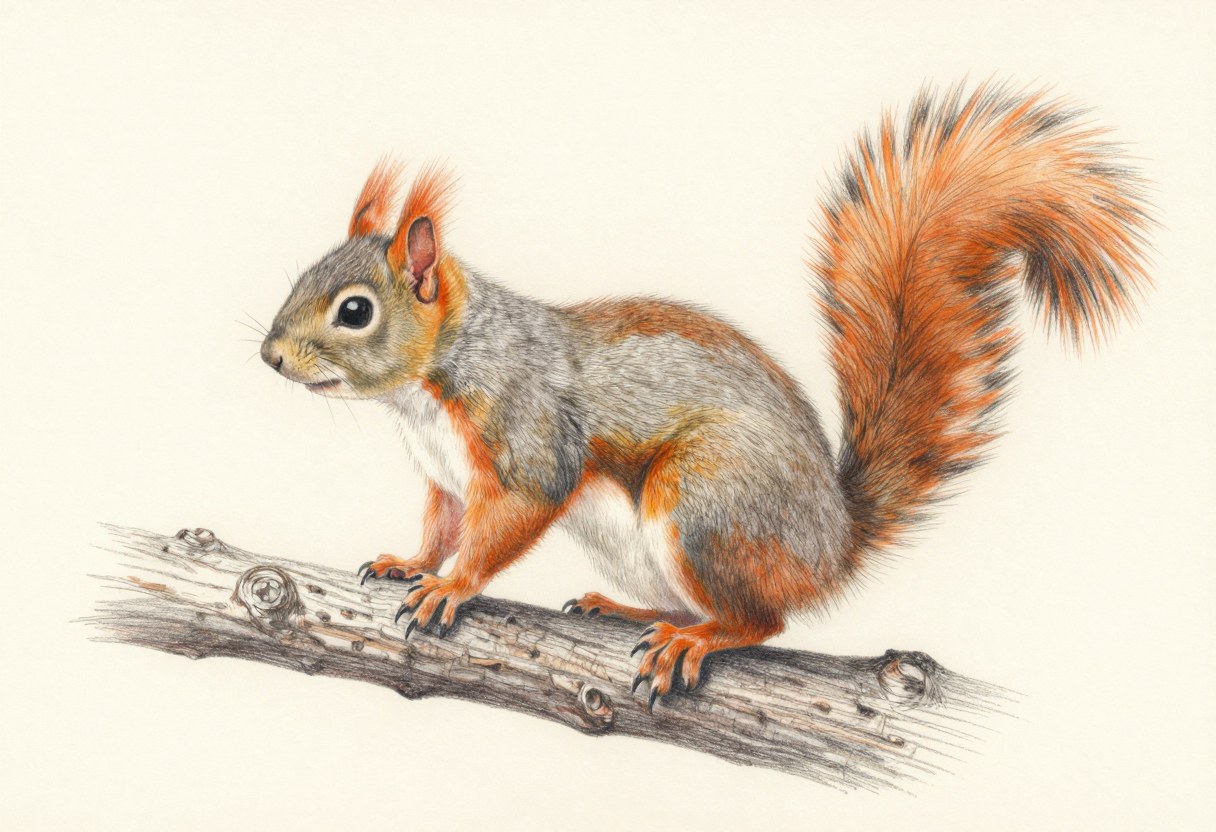
The largest tree squirrel in North America, with a rusty belly and a bushy tail edged in orange.
- Type
- Small Game
- Habitat
- Forests, Farmland
- Typical size
- About 1.5–3 lb
- Range
- The eastern and central United States, in open woodlands, fencerows, and farm country
- Seasons
- Seasons are similar to gray squirrel seasons, though a few regional subspecies are protected, so check local rules
How to identify it
- A large squirrel with a rusty orange-buff belly and a grizzled gray-brown back.
- A bushy tail edged with orange.
- Some regions have darker forms, including black-faced squirrels with white noses.
Tracks and sign
- Chewed nuts and corn, often on stumps or logs.
- Leaf nests high in trees, and feeding on the ground.
- Tracks like a gray squirrel's but larger.
Often confused with
- Eastern gray squirrel: smaller, with a gray body and a white belly.
What it eats
- Acorns, hickory nuts, and pecans
- Corn and seeds
- Buds and fungi
How it's hunted
- Hunting open pine and hardwood woods and fencerows
- Still-hunting and sitting under nut trees
- Hunting with dogs where legal
Safety: Do not eat squirrel brains, which can carry a risk of a rare brain disease. Wear gloves when cleaning squirrels and cook the meat thoroughly.
Field notes
Fox squirrels spend more time on the ground than gray squirrels, so they are often seen in open woods and along fencerows.
They are larger and slower than gray squirrels, which makes them a bit easier to spot.
Related guides
Seasons, tag and license requirements, legal methods, and bag limits vary by state and unit and change every year. Many big-game species require a drawn or purchased tag, and some animals are protected or regulated differently in different places. Check your state's current regulations — our state resources directory links straight to each state's official hunting rules and license portal.