
Coyote
Canis latrans
A clever, adaptable predator found across almost the entire country, hunted for sport and to protect livestock and game.
- Type
- Predators & Hogs
- Habitat
- Prairie & plains, Brush & desert, Forests, Farmland
- Typical size
- About 20–50 lb
- Range
- Every state except Hawaii, including towns and cities
- Seasons
- Many states allow year-round hunting of coyotes, but rules on methods, night hunting, and bait vary
How to identify it
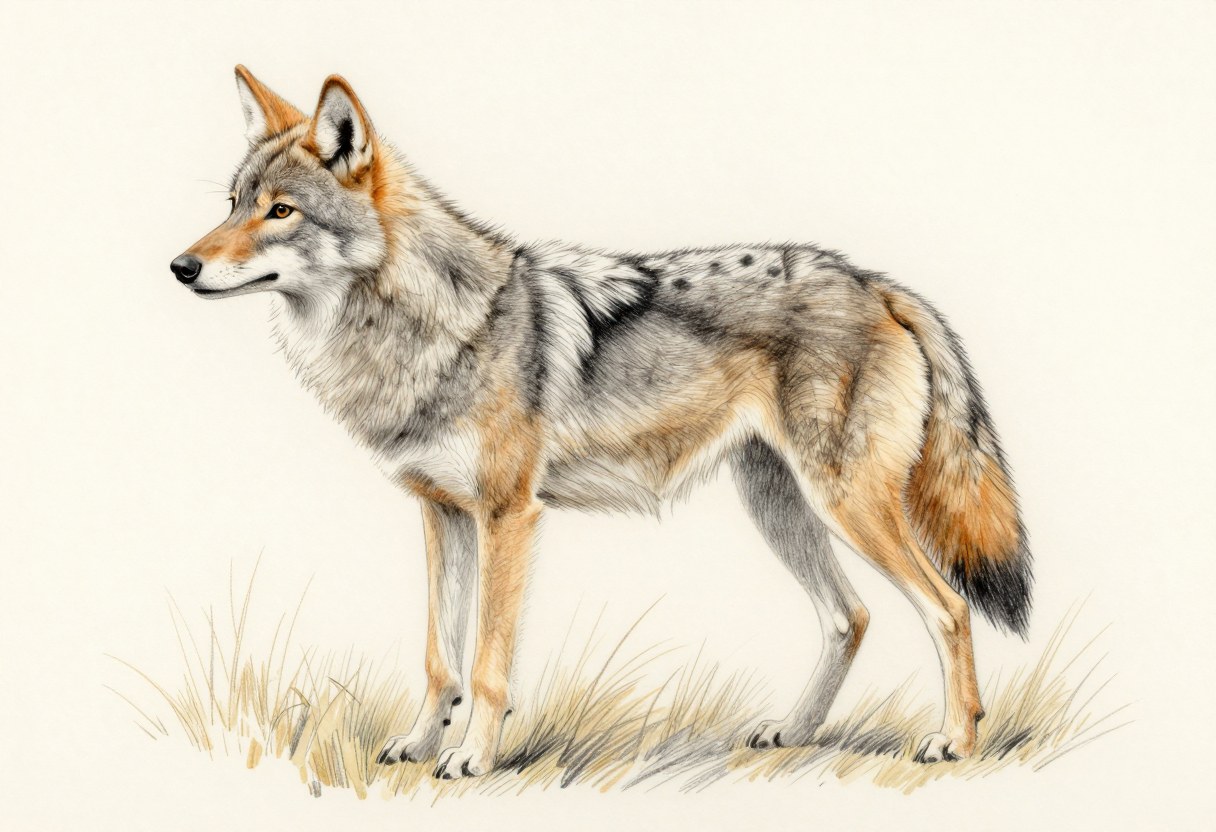
- Gray-tan fur with a rusty tint on the ears and legs.
- A narrow, pointed muzzle and large upright ears.
- A bushy tail that hangs low and has a black tip.
- Coyotes run with the tail down, unlike many dogs.
Tracks and sign
- Tracks are oval, with four toes and claw marks, longer than wide.
- Scat is twisted and ropey, often full of hair.
- Trails along fencelines, creek beds, and field edges.
Often confused with
- Gray wolf: much larger, with a broader snout and bigger feet. It is protected in many areas.
- Red fox: much smaller, with a rusty-orange coat and a white-tipped tail.
What it eats
- Rabbits, mice, and other rodents
- Carrion and deer fawns
- Fruit and insects
How it's hunted
- Calling with rabbit-distress or pup-distress sounds
- Using decoys and electronic callers where legal
- Sitting downwind at dawn and dusk with a clear view
- Hunting with hounds in some regions
Safety: Wear gloves when handling carcasses, since coyotes can carry mange and rabies. In areas with wolves, be sure of your target, since wolves are protected in many places.
Field notes
Coyotes have adapted to people and now live almost everywhere. They have excellent senses of hearing and smell, so wind and concealment matter more than camouflage.
Hunters call them in with sounds that imitate a wounded rabbit or a coyote pup in trouble.
Related guides
Seasons, tag and license requirements, legal methods, and bag limits vary by state and unit and change every year. Many big-game species require a drawn or purchased tag, and some animals are protected or regulated differently in different places. Check your state's current regulations — our state resources directory links straight to each state's official hunting rules and license portal.