
Red Fox
Vulpes vulpes
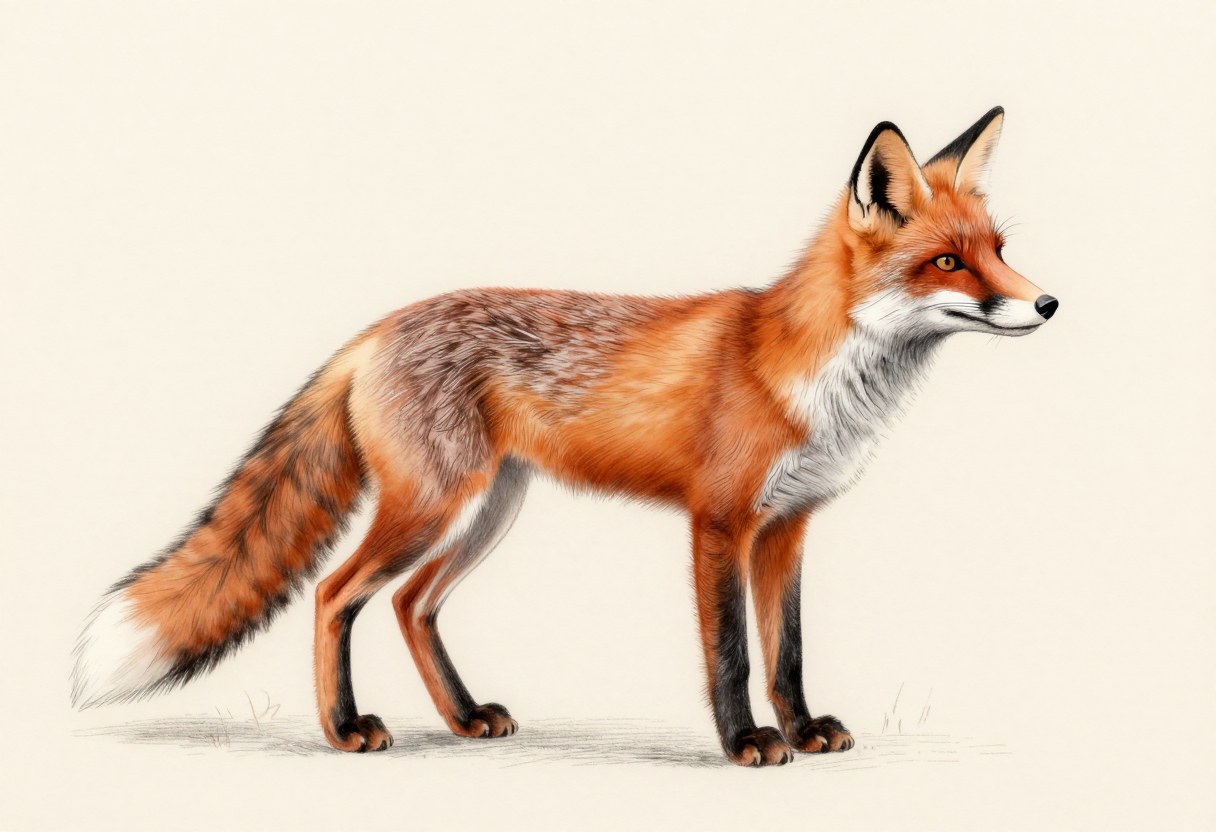
A small, bright orange-red fox with black legs and a white-tipped tail, found in woods, fields, and suburbs.
- Type
- Predators & Hogs
- Habitat
- Forests, Farmland, Prairie & plains, Brush & desert
- Typical size
- About 8–15 lb
- Range
- Most of the United States, from the Northeast to the Great Plains and the West
- Seasons
- Regulated furbearer seasons in many states, usually in fall and winter, with limits that vary by state
How to identify it
- An orange-red coat, black legs, and black backs of the ears.
- A white chest and throat, and a large bushy tail with a white tip.
- Color phases include black, silver, and cross foxes, but all have the white tail tip.
- Smaller and more slender than a coyote.
Tracks and sign
- Tracks look like a small dog's, in a neat, nearly straight line.
- Scat is twisted and tapered, often with fur or seeds.
- Dens in banks and under buildings, with a musky odor.
Often confused with
- Gray fox: grayer, with a black stripe along the top of the tail, and able to climb trees.
- Coyote: much larger, with a gray-tan coat and a black-tipped tail.
What it eats
- Mice, voles, and rabbits
- Birds and eggs
- Fruit and insects
How it's hunted
- Predator calling at dawn and dusk
- Hunting with hounds where legal
- Trapping under furbearer rules
Safety: Foxes can carry rabies and mange, so wear gloves when handling and skinning.
Field notes
Red foxes are alert, quick animals that hunt mostly at dusk and dawn. They adapt well to farms and neighborhoods.
Rules for hunting foxes vary by state, and in some places they are protected or managed as furbearers.
Related guides
Seasons, tag and license requirements, legal methods, and bag limits vary by state and unit and change every year. Many big-game species require a drawn or purchased tag, and some animals are protected or regulated differently in different places. Check your state's current regulations — our state resources directory links straight to each state's official hunting rules and license portal.