
Timber Rattlesnake
Crotalus horridus
Also called: canebrake rattlesnake, banded rattlesnake
A heavy-bodied rattlesnake of eastern forests and rocky ridges, calm by nature and uncommon or protected across much of its range.
- Kind
- Venomous
- Typical length
- 3 to 5 feet
- Range
- Much of the eastern half of the U.S., though rare or gone in many northern areas
- Regions
- Northeast, Southeast, Midwest & Plains
- Habitat
- Woods & forest, Desert & rocky ground
- When active
- Spring through fall, shifting between dens and summer ranges
Note: Timber rattlesnakes are protected in several states, and killing one may be illegal. A bite is a medical emergency.
How to identify it
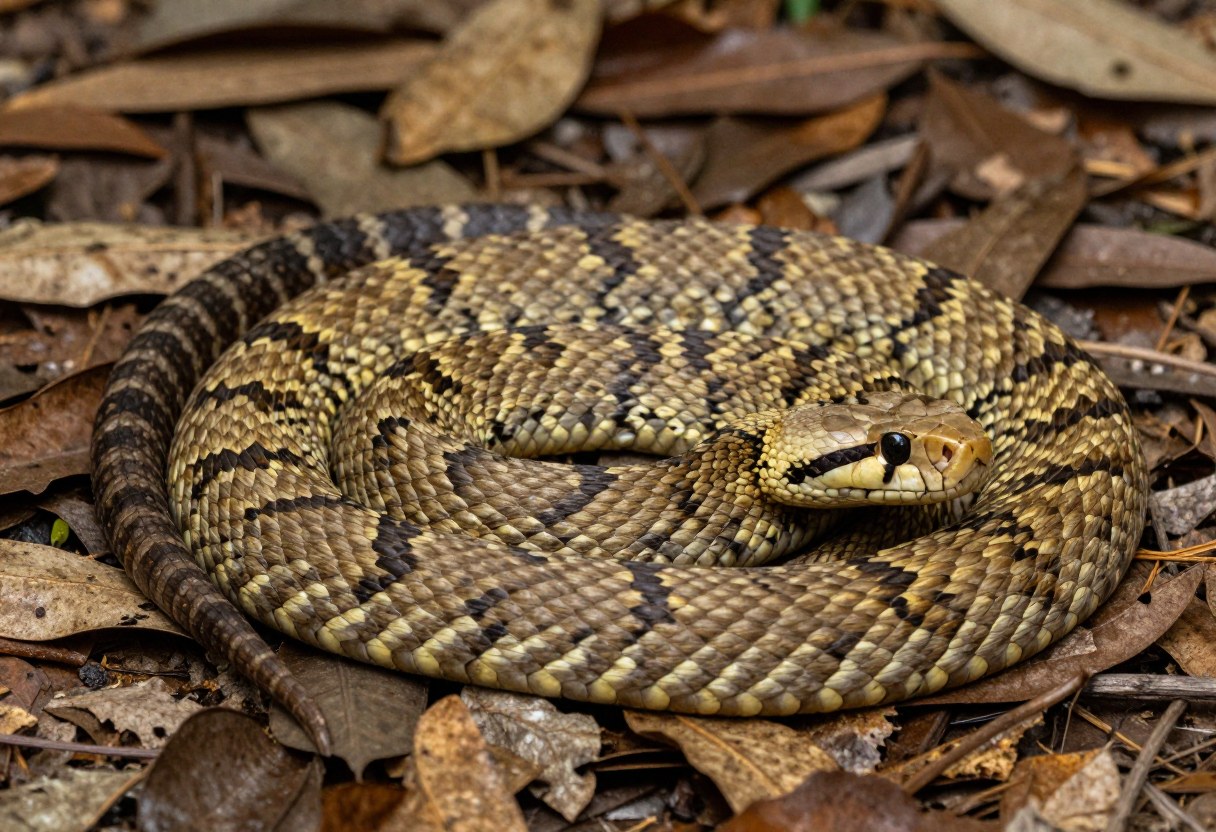
- Dark, V-shaped or chevron crossbands run along a body that may be yellow, tan, gray, or nearly black.
- The tail is black and unbanded, ending in a rattle.
- Southern snakes often have a rusty stripe down the back.
- The head is broad and triangular.
Often confused with
- Copperhead: also banded, but the bands are hourglass-shaped and the tail has no rattle.
- Black Ratsnake: young ratsnakes are blotched gray and often mistaken for rattlers, but they have a slender head and no rattle.
- Northern Water Snake: banded near the neck and dark, but it lives near water and has no rattle.
If you meet one
- Stop and look before you step. Check where your feet and hands will land, especially near logs, rocks, and brush.
- Back away slowly and give the snake plenty of room, at least several body lengths. It wants to leave, not fight.
- Do not try to kill, catch, move, or photograph it up close. Most bites happen to people doing exactly that, and a dead snake can still bite by reflex.
If someone is bitten
- Move away from the snake and call 911 right away.
- Keep the person calm and as still as possible. Take off rings, watches, and tight clothing near the bite before swelling starts.
- Keep the bitten area still and about level with the heart, and get the person to a hospital. Antivenom is the treatment.
- Do not cut the bite, suck out venom, use a tourniquet, apply ice, or give alcohol. These make things worse.
- In the U.S., Poison Help (1-800-222-1222) can advise while you wait for help. Do not wait to see whether symptoms develop.
Field notes
Timber rattlesnakes den communally on rocky, south-facing slopes, then spread out through forest in summer. They tend to lie still and rely on camouflage, so people often walk right past them.
Related guides
This page is a general reference, not medical advice and not a substitute for identifying a real snake with an expert. Many snakes are protected by state law, and rules about killing or handling them vary, so check your state wildlife agency; our state resources directory links to each one. For any bite, get emergency care.