
Northern Water Snake
Nerodia sipedon
Also called: common water snake, water snake
A common, harmless snake of ponds, rivers, and lakes in the East and Midwest, often killed by mistake because it looks like a cottonmouth or copperhead.
- Kind
- Harmless Lookalikes
- Typical length
- 2.5 to 4 feet
- Range
- The eastern and central U.S., from Maine and southern Canada south to the Carolinas and west to the Great Plains
- Regions
- Northeast, Southeast, Midwest & Plains
- Habitat
- Water & wetlands
- When active
- Spring through fall, active by day
Note: Water snakes are not venomous, but they will bite hard, flatten their bodies, and smear a foul-smelling musk if handled. A bite can bleed freely, which is not a sign of venom.
How to identify it
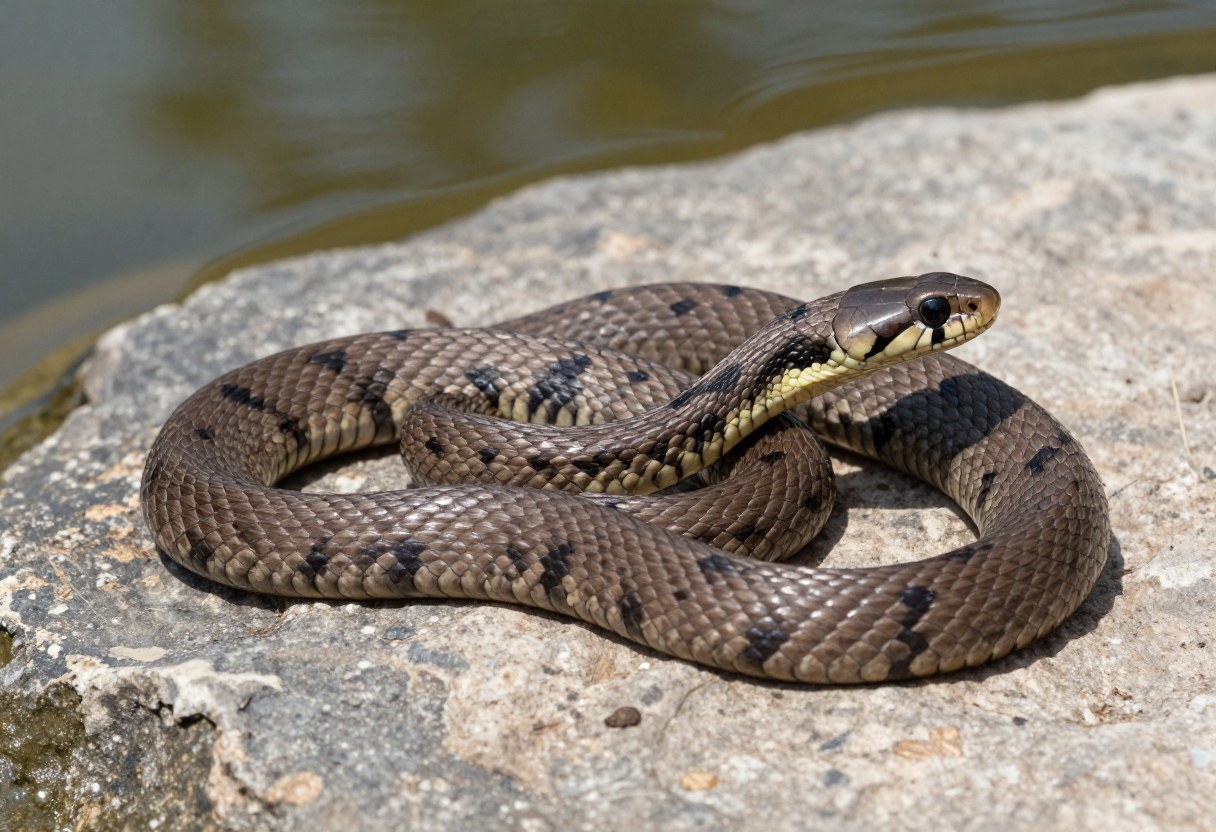
- Dark crossbands appear on the neck, breaking into blotches farther down the body, on a brown or gray background.
- Older snakes can look nearly uniformly dark brown.
- The head is only slightly wider than the neck, and the eyes are set high on the head.
- It swims with much of its body under the surface and dives when frightened.
Often confused with
- Cottonmouth: heavier, with a blocky head and a dark eye band; found only in the South.
- Copperhead: hourglass-shaped bands and a plain copper head; usually found in woods rather than in the water.
If you meet one
- Leave it alone. Harmless snakes eat rodents and are useful neighbors, and many are protected by state law.
- Give it room and let it move on. Handling or cornering a snake is how most bites happen, even from harmless ones.
- If you cannot tell for sure what it is, treat it as venomous and walk around it.
Field notes
Water snakes eat fish, frogs, and crayfish and bask on rocks and branches over the water. Anglers see them often, so knowing the difference from a cottonmouth helps in the South and removes a needless worry in the North.
Related guides
This page is a general reference, not medical advice and not a substitute for identifying a real snake with an expert. Many snakes are protected by state law, and rules about killing or handling them vary, so check your state wildlife agency; our state resources directory links to each one. For any bite, get emergency care.