
Prairie Rattlesnake
Crotalus viridis
Also called: western rattlesnake, plains rattlesnake
The rattlesnake of the Great Plains and the interior West, common in grassland, sagebrush, and rocky outcrops where it dens in winter.
- Kind
- Venomous
- Typical length
- 2.5 to 4 feet
- Range
- The central and western U.S., from the Great Plains through the Rockies and Great Basin
- Regions
- Midwest & Plains, Southwest, Rockies & West
- Habitat
- Grass & prairie, Desert & rocky ground
- When active
- Spring through fall, with dusk and night activity in summer heat
Note: A bite is a medical emergency. Prairie rattlesnakes den in groups, so where you see one you may find more.
How to identify it
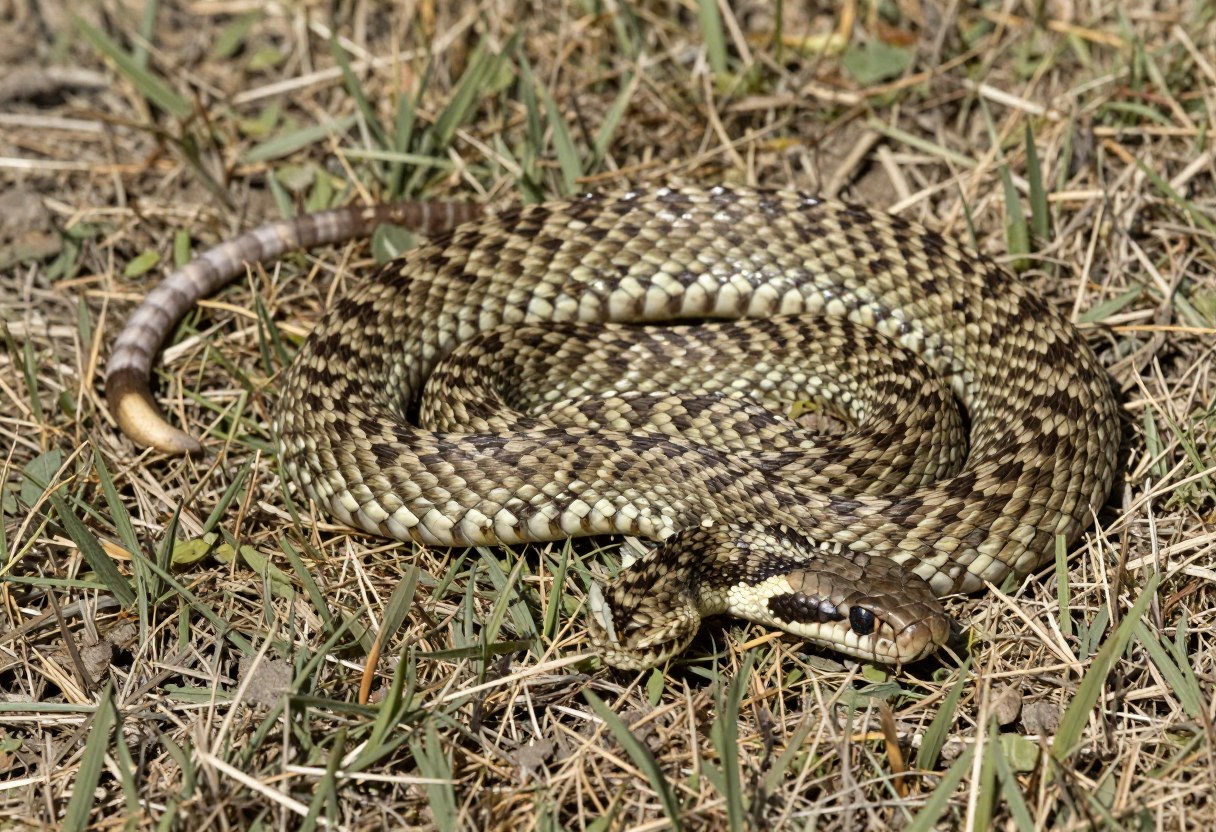
- A row of dark oval blotches with pale borders runs down a green, tan, or olive-brown body.
- Two pale stripes mark each side of the face, one above and one below the eye.
- The tail has a rattle and faint bands, with no bold black and white banding.
- The head is wide and triangular.
Often confused with
- Bullsnake: blotched and bluffs by hissing and rattling its tail in grass, but it has no rattle and a narrow head.
- Western Diamondback Rattlesnake: larger, with diamond blotches and bold black and white tail bands.
If you meet one
- Stop and look before you step. Check where your feet and hands will land, especially near logs, rocks, and brush.
- Back away slowly and give the snake plenty of room, at least several body lengths. It wants to leave, not fight.
- Do not try to kill, catch, move, or photograph it up close. Most bites happen to people doing exactly that, and a dead snake can still bite by reflex.
If someone is bitten
- Move away from the snake and call 911 right away.
- Keep the person calm and as still as possible. Take off rings, watches, and tight clothing near the bite before swelling starts.
- Keep the bitten area still and about level with the heart, and get the person to a hospital. Antivenom is the treatment.
- Do not cut the bite, suck out venom, use a tourniquet, apply ice, or give alcohol. These make things worse.
- In the U.S., Poison Help (1-800-222-1222) can advise while you wait for help. Do not wait to see whether symptoms develop.
Field notes
Prairie rattlesnakes spend winter in rock dens, sometimes with many others, and disperse across grassland in summer. They often shelter in rodent burrows and under sagebrush.
Related guides
This page is a general reference, not medical advice and not a substitute for identifying a real snake with an expert. Many snakes are protected by state law, and rules about killing or handling them vary, so check your state wildlife agency; our state resources directory links to each one. For any bite, get emergency care.