
Eastern Hognose Snake
Heterodon platirhinos
Also called: hognose, puff adder, blowing viper
A stout, harmless snake that puts on a fearsome show, flattening its neck, hissing, and then rolling over and playing dead.
- Kind
- Harmless Lookalikes
- Typical length
- 2 to 3 feet
- Range
- The eastern and central U.S. east of the Great Plains, mostly on sandy or loose soil
- Regions
- Northeast, Southeast, Midwest & Plains
- Habitat
- Woods & forest, Grass & prairie
- When active
- Spring through fall, active by day
Note: Hognose snakes rarely bite. They have a mild venom that works on the toads they eat, and it is not a danger to people.
How to identify it
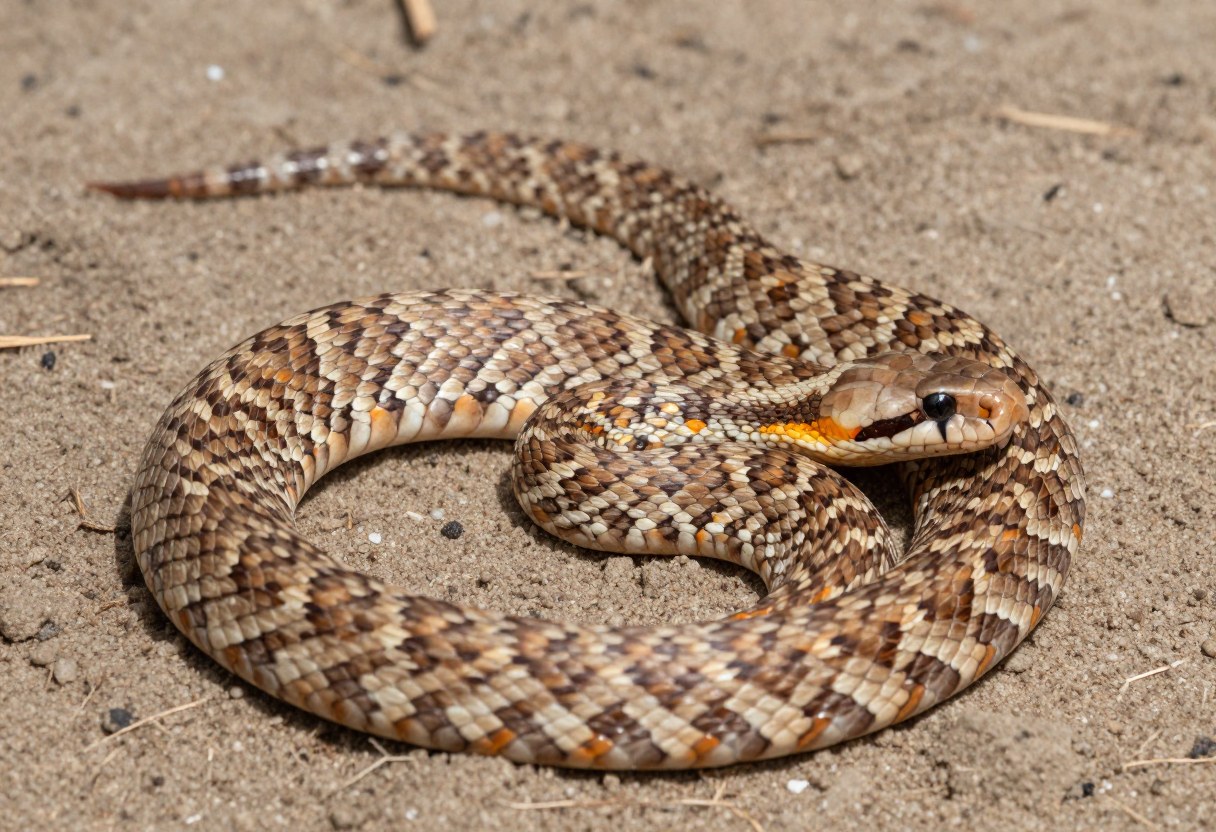
- The nose is upturned and pointed, like a small shovel.
- The body is stout, with blotches of brown, tan, orange, or yellow, though some are plain black.
- When threatened it flattens its head and neck like a cobra, hisses loudly, and may flop over and play dead.
- It has no rattle, and the tail is short and thin.
Often confused with
- Timber Rattlesnake: blotched and heavy-bodied, but with a rattle and a different head shape.
- Copperhead: hourglass bands; no upturned snout.
If you meet one
- Leave it alone. Harmless snakes eat rodents and are useful neighbors, and many are protected by state law.
- Give it room and let it move on. Handling or cornering a snake is how most bites happen, even from harmless ones.
- If you cannot tell for sure what it is, treat it as venomous and walk around it.
Field notes
Hognose snakes eat mostly toads, which they dig from loose soil. The act of rolling over and playing dead, even with its tongue hanging out, is a bluff and ends as soon as the threat leaves.
Related guides
This page is a general reference, not medical advice and not a substitute for identifying a real snake with an expert. Many snakes are protected by state law, and rules about killing or handling them vary, so check your state wildlife agency; our state resources directory links to each one. For any bite, get emergency care.