
Common Garter Snake
Thamnophis sirtalis
Also called: garter snake, garden snake
The most widespread snake in North America, a small striped snake of gardens, meadows, and shorelines that is harmless to people.
- Kind
- Harmless Lookalikes
- Typical length
- 18 inches to 4 feet (most are 2 to 3 feet)
- Range
- Across most of the U.S. and Canada, absent from the driest deserts
- Regions
- Northeast, Southeast, Midwest & Plains, Southwest, Rockies & West
- Habitat
- Grass & prairie, Water & wetlands, Woods & forest
- When active
- Spring through fall, and one of the first snakes out in spring
Note: Garter snakes may bite and release a musky smell if grabbed, but they are not dangerous to people.
How to identify it
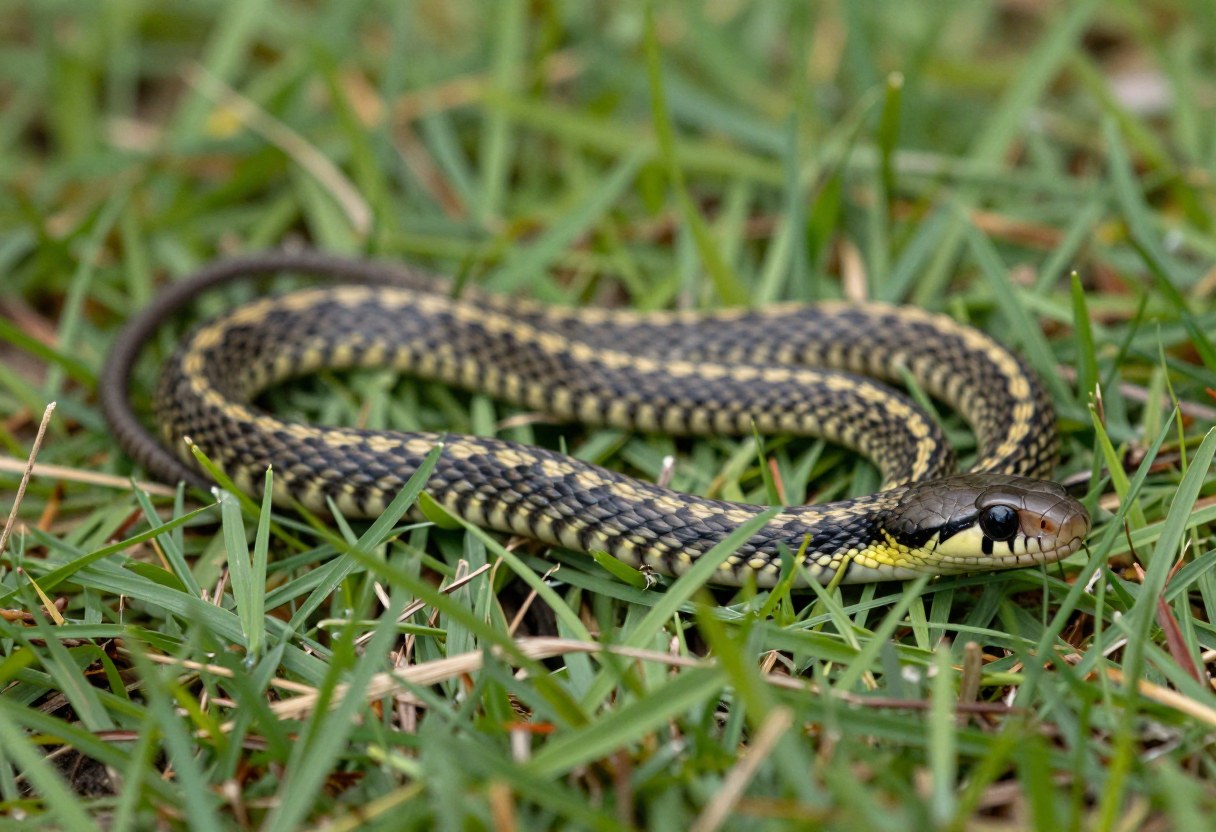
- Three pale stripes run the length of a dark body, one down the back and one on each side.
- Stripe color ranges from yellow to white, blue, or orange, and some snakes are checkered.
- The head is small and only slightly wider than the neck.
- It is often seen near water, in grass, or in woodpiles.
Often confused with
- Black Racer: plain black and much faster; no stripes.
If you meet one
- Leave it alone. Harmless snakes eat rodents and are useful neighbors, and many are protected by state law.
- Give it room and let it move on. Handling or cornering a snake is how most bites happen, even from harmless ones.
- If you cannot tell for sure what it is, treat it as venomous and walk around it.
Field notes
Garter snakes eat worms, frogs, and small fish. In some regions they gather by the hundreds at winter dens and mate in spring.
Related guides
This page is a general reference, not medical advice and not a substitute for identifying a real snake with an expert. Many snakes are protected by state law, and rules about killing or handling them vary, so check your state wildlife agency; our state resources directory links to each one. For any bite, get emergency care.