
Black Racer
Coluber constrictor
Also called: racer, northern black racer
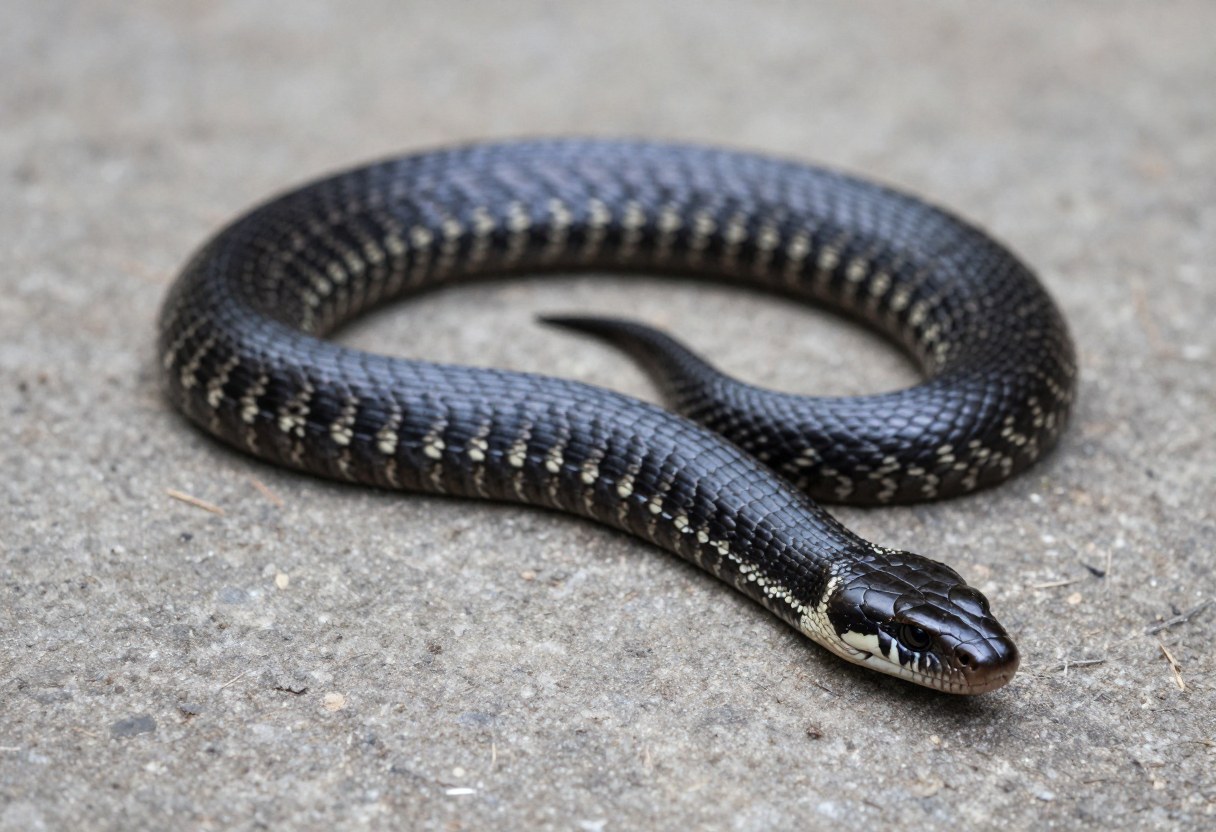
A fast, slender, harmless snake that raises its head to look around and flees at speed, and can be mistaken for a venomous snake when it turns and defends itself.
- Kind
- Harmless Lookalikes
- Typical length
- 3 to 5 feet
- Range
- Most of the U.S. east of the Rockies, with related racers in the West
- Regions
- Northeast, Southeast, Midwest & Plains, Southwest, Rockies & West
- Habitat
- Woods & forest, Grass & prairie
- When active
- Spring through fall, active by day
Note: Racers will bite and vibrate their tails if cornered, but they are not venomous.
How to identify it
- The body is slender and glossy, uniformly black in the East, with a white chin and throat.
- Racers hold their heads high above the grass while hunting.
- They move very fast and rarely coil.
- They have large eyes and a slim head only slightly wider than the neck.
Often confused with
- Black Ratsnake: thicker, with a checkered belly, and it climbs and moves more slowly.
- Common Kingsnake: glossy black with narrow white chain-like bands.
If you meet one
- Leave it alone. Harmless snakes eat rodents and are useful neighbors, and many are protected by state law.
- Give it room and let it move on. Handling or cornering a snake is how most bites happen, even from harmless ones.
- If you cannot tell for sure what it is, treat it as venomous and walk around it.
Field notes
Racers hunt by sight, eating insects, lizards, frogs, and small rodents. When one flees through leaves it can sound like something much larger.
Related guides
This page is a general reference, not medical advice and not a substitute for identifying a real snake with an expert. Many snakes are protected by state law, and rules about killing or handling them vary, so check your state wildlife agency; our state resources directory links to each one. For any bite, get emergency care.