
Lyrids
Also called: April meteors
A modest spring shower with fast meteors and occasional bright fireballs, best in the hours before dawn.
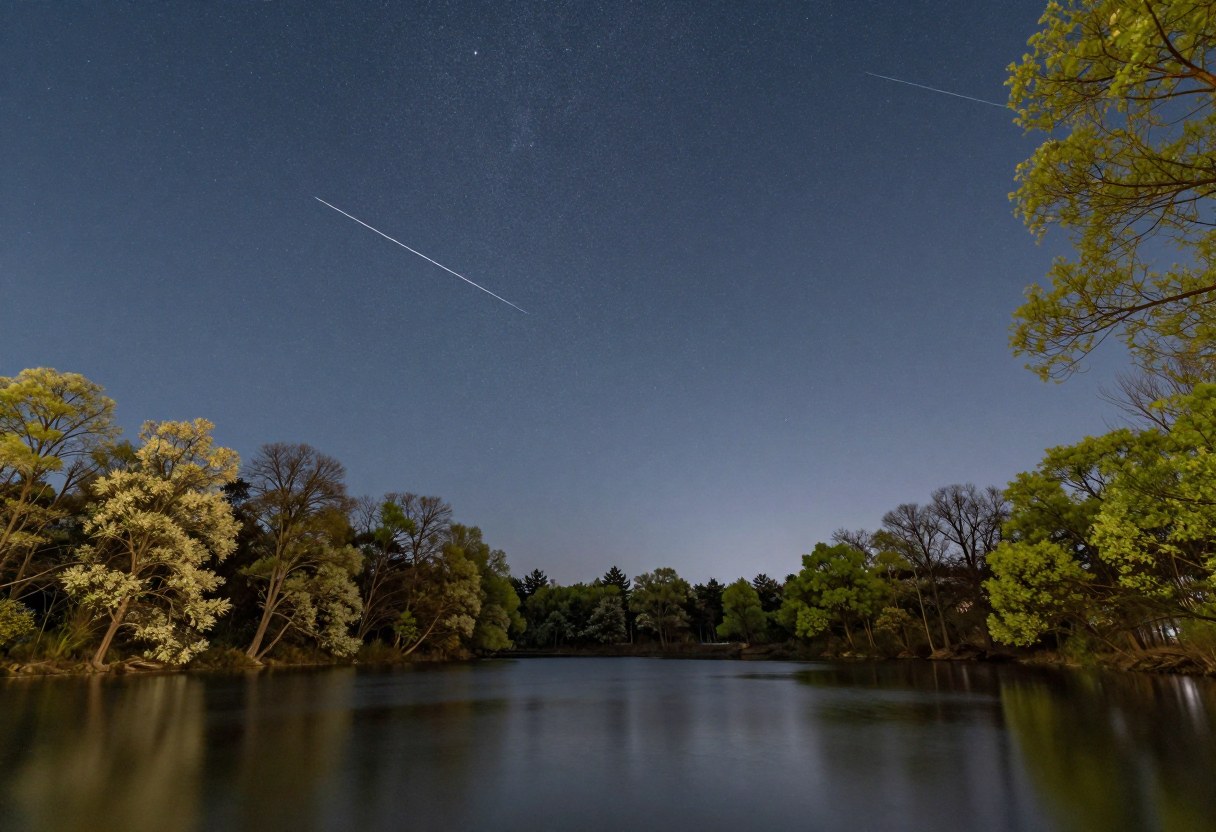
- Type
- Meteor Showers
- Best season
- Spring
- Gear
- Naked eye
- When to look
- Peak around April 22; active from about April 16 to 25
- Typical rate
- About 15–20 meteors an hour at the peak, with rare surges
- Source
- Comet Thatcher (C/1861 G1)
- Radiant
- Near the bright star Vega, in Lyra
- Best for
- Before dawn, from a dark site
What you will see
- Fast, thin meteors, some leaving glowing trails.
- Occasional bright fireballs.
- A steady, gentle show rather than a downpour.
How to watch
- Get away from city lights to a dark site with a wide view of the sky, and lie back in a reclining chair or on a pad.
- Let your eyes adapt to the dark for 20 to 30 minutes and keep white light and phone screens off.
- Look at the whole sky rather than staring at one spot, since meteors can appear anywhere.
- Plan to watch in the hours before dawn, when Lyra is high.
- Check the Moon: a bright Moon around the peak washes out the fainter meteors.
Constellations to know
Field notes
The Lyrids have been recorded for more than 2,000 years. Most years they are modest, but they have produced short bursts of much higher rates.
Related guides
Dates and times repeat from year to year but shift slightly, and the Moon's phase and the planets' positions are different every year. Check a current source such as NASA, the American Meteor Society, or a stargazing app before you plan a night out, and check the weather forecast for clear skies.