
Lyra
The Harp
A small summer constellation dominated by brilliant blue-white Vega, with a little parallelogram of stars hanging below it.
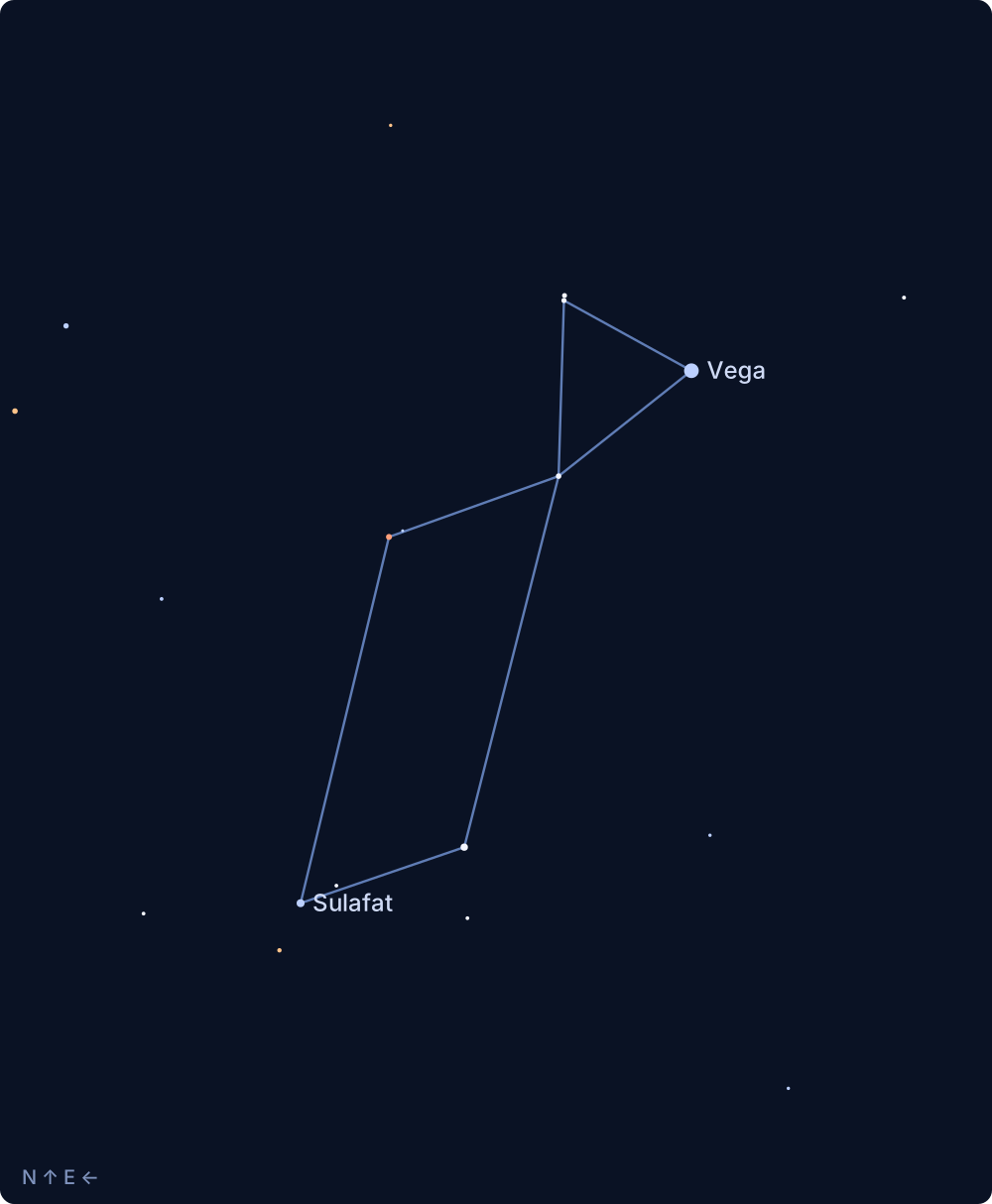
- Best season
- Summer
- Best months
- June through October, high overhead on summer evenings
- Visibility
- Visible from everywhere in the United States
- Abbreviation
- Lyr
How to find it
- Look high overhead on a summer evening for a brilliant blue-white star: that is Vega.
- Below Vega, a small parallelogram of four stars forms the harp.
Brightest stars
- Vega (blue-white, one of the brightest stars in the sky)
- Sheliak
- Sulafat
What to look for
- The color of Vega, a clean blue-white.
- The Double Double (Epsilon Lyrae), which binoculars show as two stars, each of which splits again in a telescope.
Binocular and telescope targets
- Ring Nebula (M57): a small glowing ring, a classic telescope target
- Double Double (Epsilon Lyrae): a double of doubles, split in a small telescope
- M56: a modest globular cluster nearby
Using it to find other things
- Vega is one corner of the Summer Triangle, along with Deneb and Altair.
About this constellation
Lyra is small, but Vega's brightness makes it unmistakable. It is the fifth-brightest star in the night sky.
Around April 22, the Lyrid meteor shower appears to radiate from near Vega. Lyra also contains the Ring Nebula, a shell of gas blown off by a dying star, and a favorite for first-time telescope owners.
Related guides
Visibility depends on your latitude, the date, and the time of night. The months above assume a typical evening from the contiguous United States, so use a planetarium app to confirm what is up tonight. Never look at the Sun through binoculars or a telescope without a proper solar filter.
Star positions: Hipparcos and Bright Star catalogues via d3-celestial (BSD-3-Clause, © 2015 Olaf Frohn).