
Eta Aquariids
Also called: Halley's meteors in May
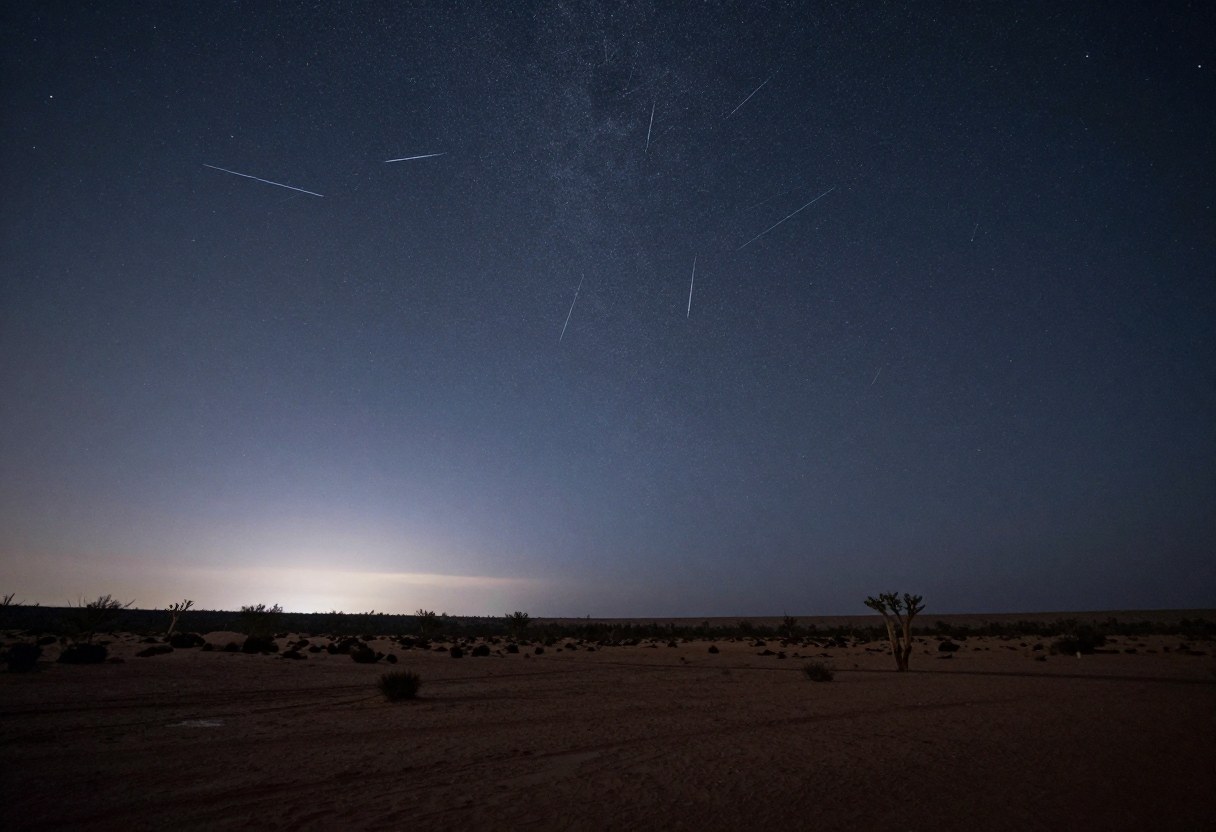
A pre-dawn shower in early May made of dust from Halley's Comet. It is better from the southern states than from the far north.
- Type
- Meteor Showers
- Best season
- Spring
- Gear
- Naked eye
- When to look
- Peak around May 5–6; active from late April to late May
- Typical rate
- Up to about 50 an hour in the Southern Hemisphere and fewer in the northern states
- Source
- Halley's Comet
- Radiant
- Near Aquarius, which rises low in the east before dawn
- Best for
- Southern states, in the last hour or two before dawn
What you will see
- Fast meteors, many with persistent glowing trails.
- Long, low trails skimming the horizon as Aquarius rises.
- Best rates only in the last hours before dawn.
How to watch
- Get away from city lights to a dark site with a wide view of the sky, and lie back in a reclining chair or on a pad.
- Let your eyes adapt to the dark for 20 to 30 minutes and keep white light and phone screens off.
- Look at the whole sky rather than staring at one spot, since meteors can appear anywhere.
- Set an alarm: the show is best in the last two hours before dawn.
- Find a spot with a clear eastern horizon.
- In the northern states, expect fewer meteors than in the south.
Constellations to know
Field notes
Halley's Comet leaves two streams of dust that Earth crosses each year, in May and again in October. The May stream gives the Eta Aquariids and the October stream gives the Orionids.
Because the radiant sits low, the best views come from lower latitudes.
Related guides
Dates and times repeat from year to year but shift slightly, and the Moon's phase and the planets' positions are different every year. Check a current source such as NASA, the American Meteor Society, or a stargazing app before you plan a night out, and check the weather forecast for clear skies.