
Aurora (Northern Lights)
Also called: northern lights, aurora borealis
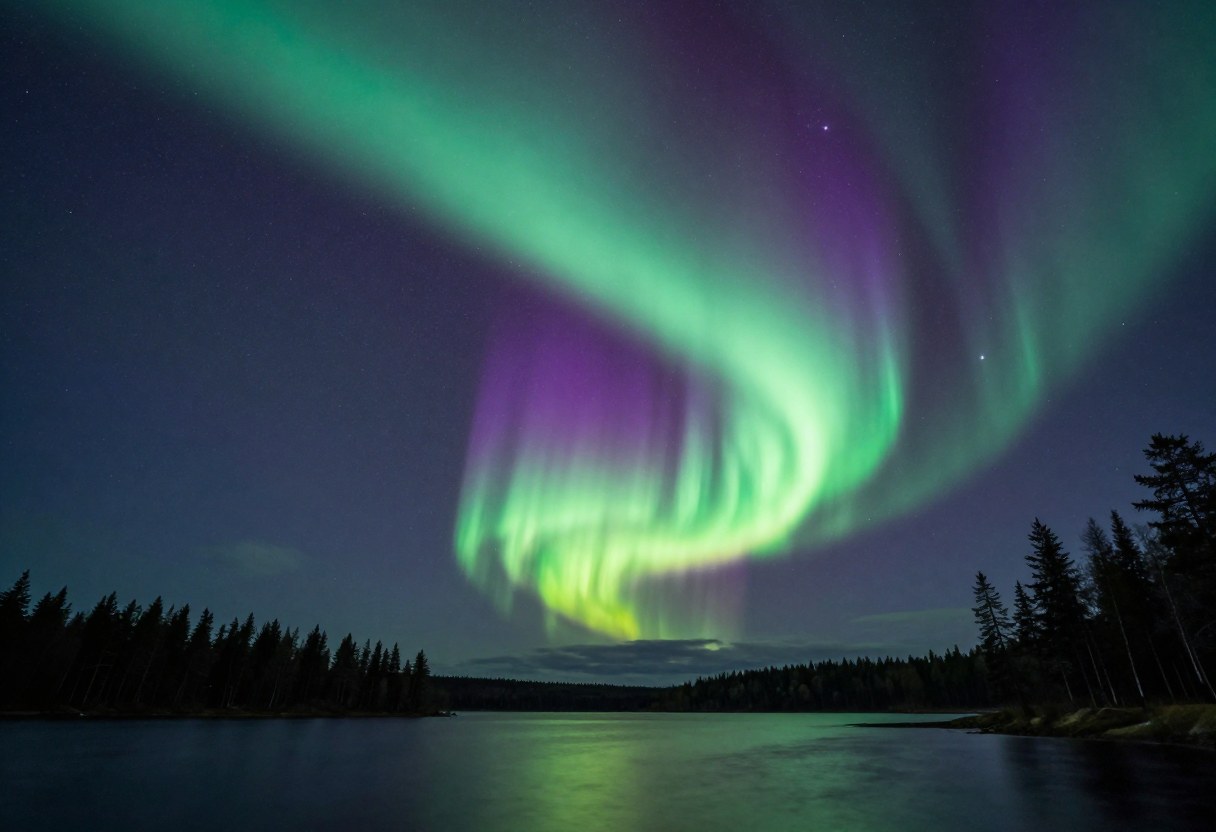
Glowing curtains of green, pink, and purple light caused by particles from the Sun striking Earth's atmosphere. They are common near the Arctic and sometimes reach the northern United States.
- Type
- Other Sky Events
- Best season
- Any time of year
- Gear
- Naked eye
- When to look
- Dark, clear nights; more likely around the equinoxes and when solar activity is high
- Best places
- Alaska, northern states such as Minnesota, Michigan, Montana, and Maine
- Forecast tool
- NOAA Space Weather Prediction Center aurora forecast
- Best conditions
- Dark sky, clear weather, and strong solar activity
- Rare reach
- During major storms, farther south
What you will see
- A pale greenish glow low on the northern horizon, sometimes rising into curtains and rays.
- Pinks, purples, and reds in stronger displays.
- Cameras and phones in night mode pick up more color than your eyes.
How to watch
- Check the NOAA forecast and the cloud forecast.
- Get to a dark site with a clear northern horizon.
- Be patient and dress warmly: displays can come and go over hours.
- Use a camera or a phone in night mode to capture faint color.
Constellations to know
Field notes
Aurora activity rises and falls with the roughly 11-year solar cycle and with individual storms on the Sun. Forecasts give you a day or two of warning.
A faint aurora can look like a gray cloud to the eye, so give your eyes time to adapt and use a camera to confirm.
Related guides
Dates and times repeat from year to year but shift slightly, and the Moon's phase and the planets' positions are different every year. Check a current source such as NASA, the American Meteor Society, or a stargazing app before you plan a night out, and check the weather forecast for clear skies.