
Red Drum
Sciaenops ocellatus
Also called: redfish, channel bass, red, puppy drum (small), bull red (large)
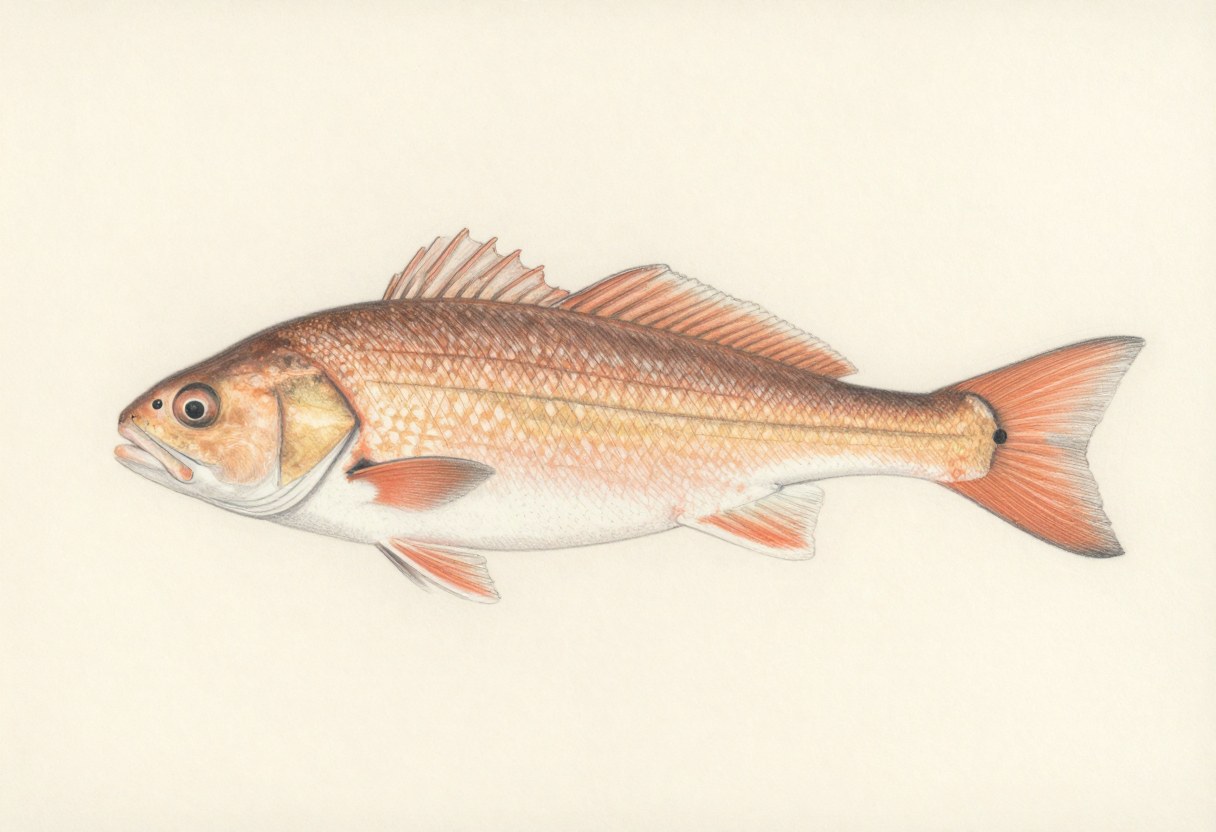
A bronze, hard-fighting inshore favorite of marshes, grass flats, and surf, easy to recognize by the black spot near its tail.
- Type
- Inshore & Flats
- Typical size
- Slot fish 18 to 27 inches, 3 to 8 lb; bull reds over 40 inches and 20 lb
- Range
- The Atlantic coast from Massachusetts south and across the Gulf of Mexico, most common from the Carolinas through Texas
- Coasts
- Northeast Atlantic, Southeast Atlantic, Gulf of Mexico
- Where
- Flats & estuaries, Surf & beaches, Reefs, wrecks & jetties
- Best seasons
- Year-round in the South; fall is peak, when bull reds gather in the surf and passes
Note: Redfish rules vary a lot by state and by size, with slot limits and special limits for large bull reds. Size limits, bag limits, and seasons for this species change often, so check current state and federal rules before you keep one.
How to identify it
- One or more black spots near the base of the tail, though some fish have none and a few have many.
- A copper to bronze back fading to a pale belly.
- A downward-pointing mouth with no chin barbels.
- A long, fairly straight body with a squared tail.
Often confused with
- Black Drum: has chin barbels, a more arched back, and often faint vertical bars, and lacks the tail spot.
- Spotted Seatrout: silvery with many small spots on the back and tail, and prominent front teeth.
Baits and lures
- Live shrimp and mud minnows
- Cut mullet and crab
- Gold and silver weedless spoons
- Soft plastic paddle-tail jigs
- Topwater plugs on calm mornings
Techniques
- Sight-cast to tailing fish on shallow grass flats and marsh edges.
- Work a spoon or soft plastic through grass and along oyster bars.
- Fish cut bait on the bottom in the surf and inlets for bull reds.
- Move with the tide, since reds feed on moving water.
Field notes
Red drum live in shallow water as juveniles and move to nearshore waters as adults. Anglers use the word 'bull red' for large fish that gather in the fall, and many states require those fish to be released.
Related guides
Saltwater size limits, bag limits, seasons, gear rules, and license requirements change often and differ by state and in federal waters. Some species are catch-and-release only or closed in certain areas. Check your state's current fishing regulations before you keep a fish; our state resources directory links to each state's official wildlife and fisheries agency.