
Kayak Fishing for Beginners
Choosing a fishing kayak, essential safety gear, and the basics of casting from a small boat.
Published August 19, 2026
Why Kayak Fishing Deserves Its Own Learning Curve
Kayak fishing combines two skill sets that don't automatically transfer from experience with either one alone — paddling/boat handling and actual fishing technique — and doing both from a low, narrow, human-powered platform introduces real considerations that shore or larger-boat fishing don't. It also opens up water that's inaccessible or impractical for other approaches: shallow, weedy, or narrow water a larger boat can't reach, at a fraction of the cost and complexity of boat ownership. This guide covers choosing the right kayak, the safety gear that matters most, and the basic technique adjustments kayak fishing requires.
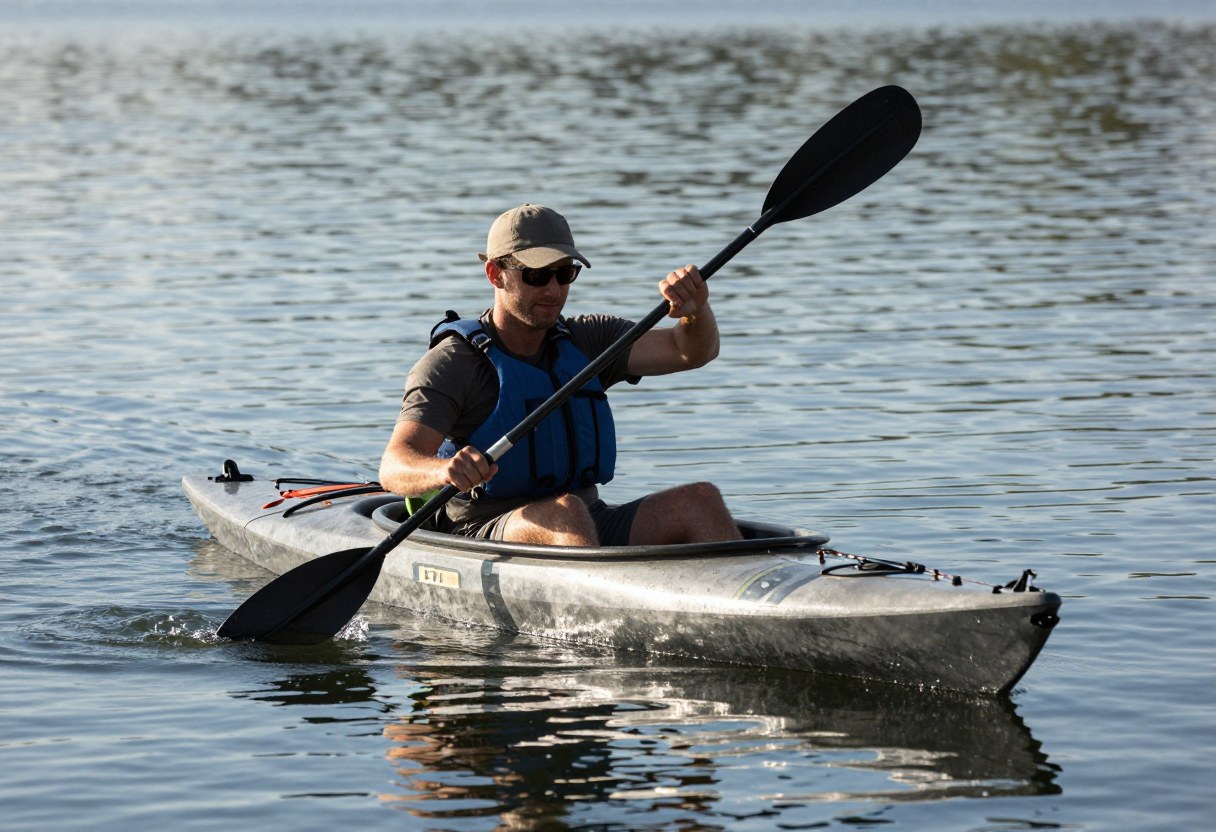
1. Sit-On-Top vs. Sit-Inside Kayaks
| Type | Pros | Cons |
|---|---|---|
| Sit-on-top | Easier to get on/off, self-draining (water drains through scupper holes rather than pooling), more stable for most fishing use, easier to re-enter if you fall off | Less protection from cold water spray/splash, slightly less efficient paddling than sit-inside |
| Sit-inside | Better protection from cold/wind, generally more efficient paddling for pure touring | Harder to re-enter if capsized, water that enters stays in the cockpit, less common for dedicated fishing use |
Sit-on-top kayaks are the standard choice for fishing specifically — the stability, easy on/off access, and self-draining design matter more for fishing use than the marginal paddling efficiency advantage of a sit-inside design, and most purpose-built fishing kayaks are sit-on-top for these reasons.
2. Kayak Stability: Width and Hull Design
- Wider kayaks (generally 30+ inches) provide more stability, which matters significantly for fishing, where you're often standing, casting, or handling fish rather than just paddling in a fixed position.
- Hull shape affects both stability and speed — flatter-bottomed hulls tend toward more "primary stability" (feels stable sitting still), while more rounded hulls tend toward better speed and secondary stability (more stable when leaned or in waves) but can feel less stable at rest to a beginner.
- For a first fishing kayak, prioritizing primary stability (a wider, flatter hull) is the more forgiving beginner choice, even at some cost to top speed and paddling efficiency — confidence and comfort while fishing matter more early on than shaving minutes off travel time.
- Standing to fish (a popular technique for better casting range and sight-fishing visibility) requires meaningfully more stability than sitting, and not all fishing kayaks are designed to comfortably support standing — check specific model stability ratings if standing to fish is a priority.
3. Pedal-Drive vs. Paddle-Only Kayaks
- Paddle-only kayaks are lighter, simpler, and less expensive — a reasonable, capable starting point for most beginners.
- Pedal-drive kayaks (propelled by a pedal mechanism, hands-free) let you fish while moving and provide a genuinely useful hands-free propulsion option, at a real cost and weight premium over paddle-only models.
- For a genuine first kayak, paddle-only is a reasonable, lower-cost way to confirm you enjoy kayak fishing before investing in the added cost and complexity of a pedal-drive system.
4. Essential Safety Gear
- A properly fitted PFD (personal flotation device) rated for the conditions you'll fish, worn at all times on the water — this isn't optional or "for emergencies only"; PFDs work by being worn, not by being accessible somewhere in the kayak, since capsizing happens suddenly and without warning.
- A whistle attached to your PFD, providing a simple, reliable way to signal for help or attention if needed.
- A leash for your paddle, preventing loss of your primary propulsion if you set it down to fish and it drifts or falls overboard.
- A bilge pump or method to remove water from a sit-inside kayak if water enters, less critical for self-draining sit-on-top designs but still worth understanding.
- A dry bag for a phone/communication device, kept accessible rather than buried, for emergency communication.
- Know how to re-enter your kayak from the water before you need to in an actual emergency — practicing this in calm, controlled conditions (not discovering you can't do it during an actual capsize) is a genuinely important, often-skipped step.
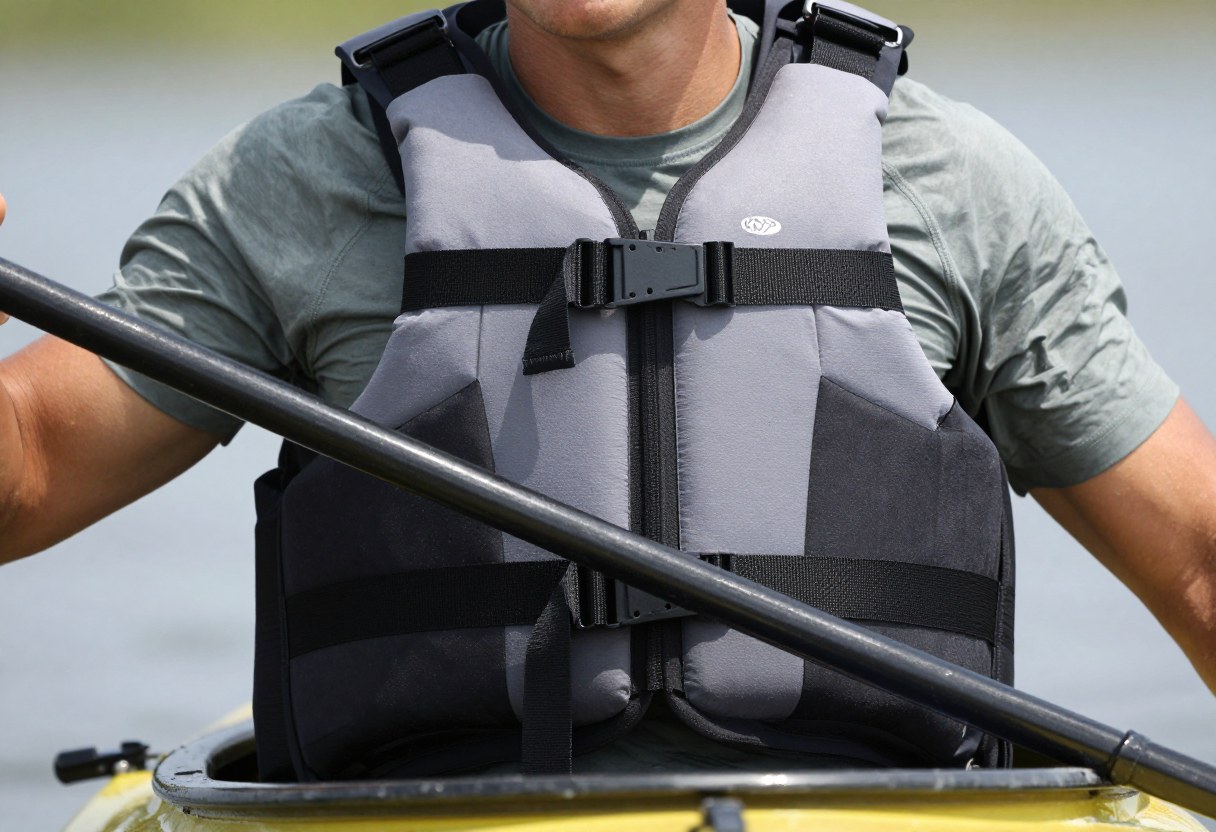
Don't Skip This: Wearing your PFD at all times, not just carrying it, is the single highest-value safety habit in kayak fishing. Capsizing can happen suddenly from a wake, an unexpected fish fight, or simple loss of balance while casting — there's rarely time to put on a PFD after the fact, which is exactly why it needs to already be on.
5. Rigging a Kayak for Fishing
- Rod holders (flush-mount or adjustable) keep rods secure and accessible while paddling or fighting a fish, freeing your hands for paddling or netting.
- An anchor system or drift chain/anchor trolley helps control position over a specific spot, particularly useful in current or wind where an unanchored kayak drifts away from a productive area quickly.
- A milk-crate or purpose-built tackle storage system, secured to the kayak, keeps gear organized and accessible without cluttering the limited deck space.
- A fish finder, while not essential for a genuine first trip, is a popular add-on for kayak anglers wanting to identify structure and fish depth similar to a traditional boat setup.
6. Casting and Fishing Technique Adjustments From a Kayak
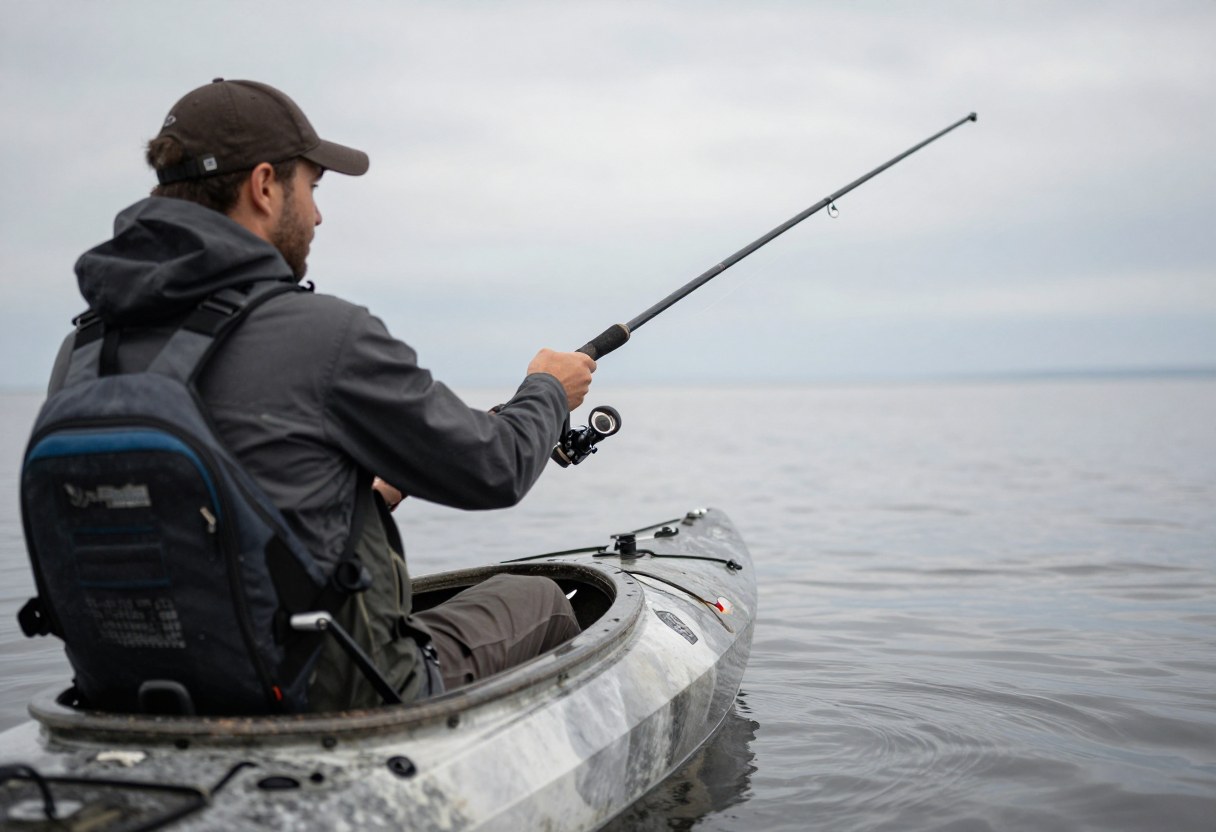
- A kayak's low profile and instability (relative to shore or a larger boat) requires a more controlled, compact casting motion — an aggressive, wide casting arc that works fine on shore can affect kayak balance in a way that's worth being deliberately aware of, especially early on.
- Fighting a larger fish from a kayak feels different than from shore or a larger boat — the kayak itself may move or turn during the fight, which is normal and not inherently dangerous, but worth expecting rather than being caught off guard by.
- Landing and handling fish requires kayak-specific technique — a landing net designed for kayak use, and bringing fish alongside rather than lifting them directly into your lap, both reduce the risk of an unstable moment during landing.
- Position relative to structure and wind/current matters more from a kayak than a larger, more powerful boat, since a kayak has less ability to fight wind or current to hold position — planning approach angles with this limitation in mind improves both fishing effectiveness and control.
7. Weather and Water Conditions
- Check wind forecasts specifically, since kayaks are meaningfully more affected by wind than larger boats — a wind speed that's a non-issue for a motorboat can make paddling genuinely difficult or unsafe in a kayak.
- Avoid kayak fishing in conditions beyond your skill level, including significant wave action, strong current, or approaching storms — the appropriate skill/condition match is worth being honest with yourself about, especially as a beginner still building experience.
- Cold water significantly increases risk if capsized, even in warm air temperature — cold water immersion can cause rapid, dangerous effects on the body, making a wetsuit/drysuit and extra caution genuinely important for cold-water kayak fishing, not just a comfort consideration.
8. Common Kayak Fishing Beginner Mistakes
- Not wearing a PFD at all times, treating it as emergency-only gear rather than something worn continuously on the water.
- Choosing a narrow, less stable kayak for cost or speed reasons, without adequately weighing the stability tradeoff for a beginner still building confidence.
- Never practicing kayak re-entry before an actual emergency, discovering the technique doesn't work for you during a real capsize instead of controlled practice.
- Ignoring wind forecasts, underestimating how much more wind affects kayak paddling compared to a larger, more powerful boat.
- Using an aggressive, wide casting motion without adjusting for kayak stability, risking an avoidable balance issue.
- Fishing in conditions beyond current skill level, particularly significant wind, waves, or current for a still-developing beginner.
Quick Decision Checklist
- I've chosen a sit-on-top kayak with adequate primary stability for my fishing style and experience level
- I've decided between paddle-only and pedal-drive based on budget and how confident I already am I'll stick with kayak fishing
- I have a properly fitted PFD and commit to wearing it at all times on the water, not just carrying it
- I have a paddle leash, whistle, and accessible dry-bagged communication device
- I've practiced kayak re-entry in calm, controlled conditions before relying on the skill in an emergency
- I check wind forecasts specifically before each trip and am honest with myself about my current skill/condition limits
- I have basic kayak-specific rigging (rod holders, anchor system) appropriate to my fishing style
Glossary
- Sit-On-Top Kayak: A kayak design where the paddler sits on an enclosed hull rather than inside a cockpit, offering easier access, self-draining design, and generally more stability — the standard choice for fishing kayaks.
- Primary Stability: A hull design characteristic describing how stable a kayak feels sitting still and upright, generally higher in wider, flatter-bottomed hulls.
- Anchor Trolley: A rigging system allowing an anchor line's attachment point to be adjusted along the kayak's length, helping control positioning relative to wind and current.
- Paddle Leash: A tether securing a paddle to the kayak, preventing loss of primary propulsion if the paddle is set down or falls overboard.
Final Takeaway
Kayak fishing rewards choosing a stable, sit-on-top kayak matched to your beginner skill level, treating PFD wear as a continuous habit rather than emergency-only gear, and practicing kayak re-entry before you actually need it. Once that safety foundation is solid, adjusting casting motion and fish-fighting technique for a kayak's lower, less stable platform — and respecting wind and water conditions relative to your current skill level — will let you access water other approaches simply can't reach.
Kayak fishing conditions and regulations vary by water body and region — check current local conditions, wind forecasts, and any specific regulations for your destination before each trip.