
Spotted Seatrout
Cynoscion nebulosus
Also called: speckled trout, speck, trout
A silvery, spotted inshore predator of seagrass flats and bays, a top target on the Gulf and South Atlantic coasts.
- Type
- Inshore & Flats
- Typical size
- 1 to 4 lb and 14 to 22 inches; trophies over 5 lb
- Range
- The Atlantic coast from the Chesapeake Bay south and around the Gulf of Mexico
- Coasts
- Northeast Atlantic, Southeast Atlantic, Gulf of Mexico
- Where
- Flats & estuaries, Reefs, wrecks & jetties
- Best seasons
- Spring and fall are strong; in summer fish early and late; in winter look for deeper holes and warm backwaters
Note: Size limits, bag limits, and seasons for this species change often, so check current state and federal rules before you keep one.
How to identify it
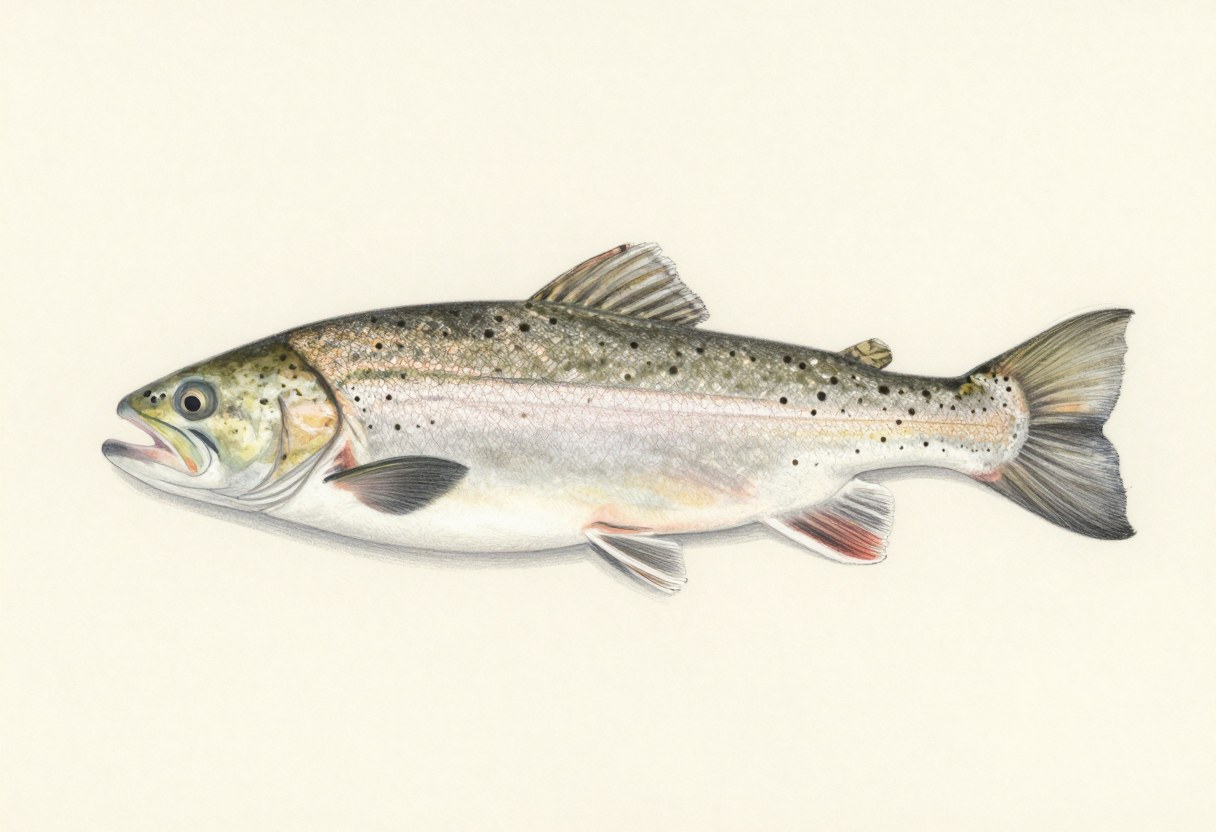
- Many round black spots on the back, the dorsal fins, and both lobes of the tail.
- A silvery-gray back, white belly, and slight yellow tinge inside the mouth.
- One or two prominent canine teeth at the front of the upper jaw.
- A slender body and a slightly forked or squared tail.
Often confused with
- Red Drum: copper-colored, with one or a few black spots at the tail base and no canine teeth.
Baits and lures
- Live shrimp under a popping cork
- Soft plastic jigs and shrimp imitations
- Topwater plugs
- Suspending twitch baits
- Live finger mullet and pinfish
Techniques
- Drift grass flats with a popping cork and live shrimp.
- Work a soft plastic along the edges of grass beds and potholes.
- Throw topwater at dawn and dusk over shallow flats.
- In cold weather, slow your retrieve and fish deeper.
Field notes
Speckled trout are ambush predators that hold in seagrass and around structure. They are sensitive to cold, and big winter kills can follow long freezes.
Related guides
Saltwater size limits, bag limits, seasons, gear rules, and license requirements change often and differ by state and in federal waters. Some species are catch-and-release only or closed in certain areas. Check your state's current fishing regulations before you keep a fish; our state resources directory links to each state's official wildlife and fisheries agency.