
Surf Fishing Basics for Saltwater Beginners
Rigging, casting distance, and reading the beach for a first saltwater surf fishing trip.
Published August 19, 2026
Why Surf Fishing Is Its Own Skill Set, Not Just "Fishing at the Beach"
Surf fishing shares some fundamentals with freshwater fishing, but the environment introduces real, specific considerations — wave action, longer casting distances often needed to reach productive water, corrosive saltwater's effect on gear, and reading a beach's underwater terrain without being able to see it directly. Approaching surf fishing as its own skill set, rather than assuming freshwater experience transfers directly, sets a beginner up for a much better first experience. This guide covers the core rigging, casting, and beach-reading fundamentals for a first saltwater surf fishing trip.
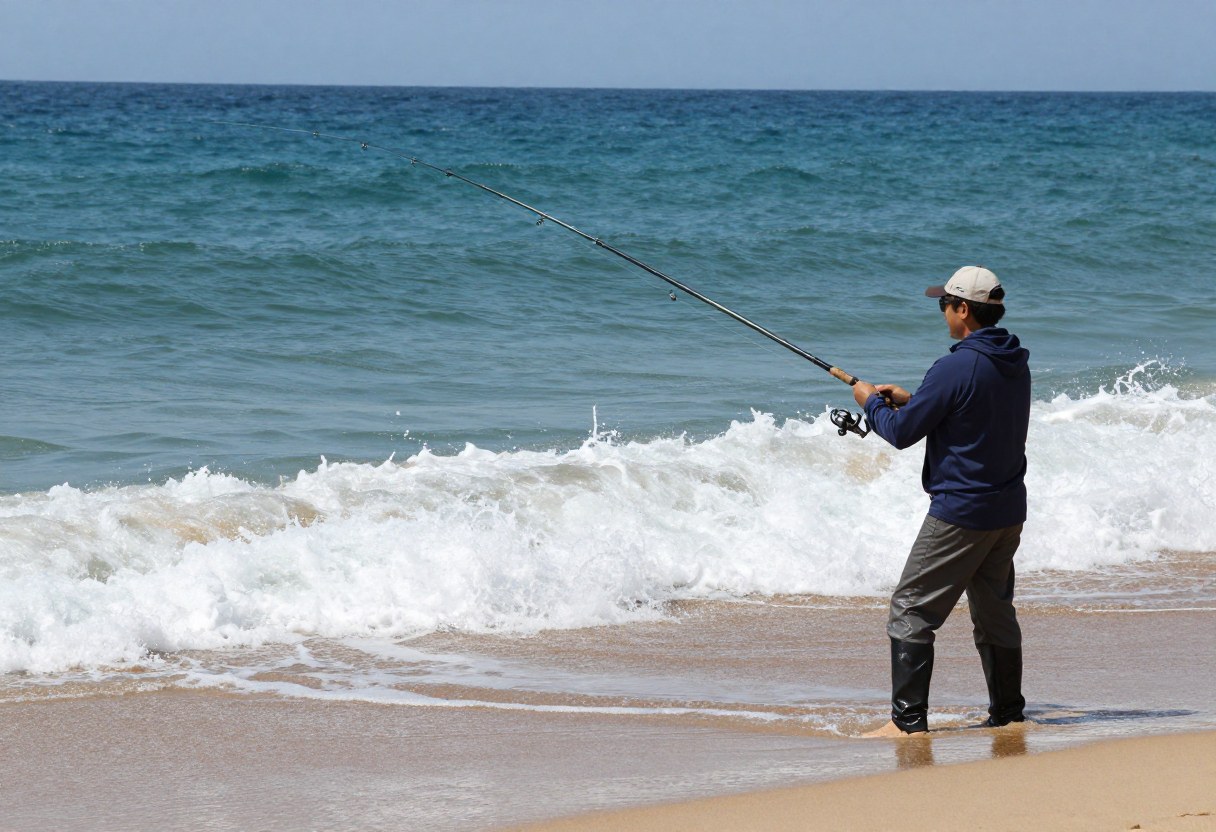
1. Basic Surf Fishing Gear
- A longer surf rod (typically 9–12 feet) provides the casting distance and leverage needed to reach productive water beyond the immediate shoreline, and to handle larger surf species and wave action better than a standard freshwater rod.
- A larger spinning reel (matched to the rod, typically a 4000–8000 size range depending on target species and rod) with adequate line capacity for both casting distance and potentially larger fish.
- Braided main line with a monofilament or fluorocarbon leader is a common, effective setup — braid's thin diameter and lack of stretch help with casting distance, while the leader provides abrasion resistance and some stretch/shock absorption near the terminal tackle.
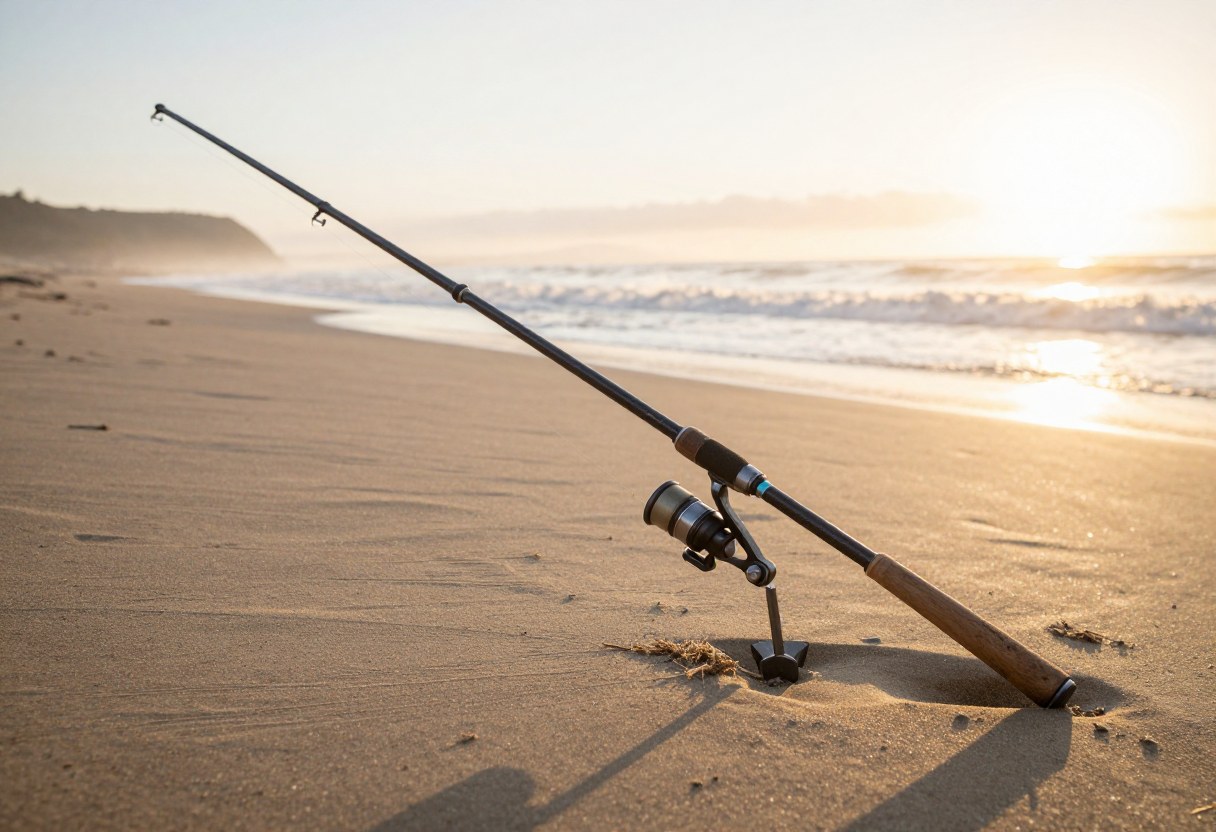
- A sand spike (rod holder that pushes into wet sand) lets you fish multiple rods or take a hands-free break between bites, a practical and widely used piece of surf fishing gear.
- A rinse-and-maintenance routine for all gear after every saltwater use — saltwater is genuinely corrosive to reels, hooks, and other metal components, and gear neglect leads to much faster deterioration in saltwater use than freshwater.
2. Common Surf Fishing Rigs
| Rig Type | How It Works | Best For |
|---|---|---|
| Fish finder rig (sliding sinker rig) | A sliding weight above a leader and hook, allowing a fish to take bait without immediately feeling resistance from the weight | General-purpose bottom fishing, versatile default for many species |
| Pompano rig (multi-hook dropper rig) | Multiple hooks on short droppers above a weight, presenting several baited hooks near the bottom simultaneously | Pompano and similar schooling surf species |
| Fireball rig | Similar to a dropper rig, using colored floating beads near hooks to add visibility/attraction | A pompano-rig variant, popular for the same target species |
A fish finder (sliding sinker) rig is the most versatile, beginner-friendly starting point — relatively simple to tie or buy pre-made, and effective across a genuinely wide range of surf species and conditions.
3. Bait Selection for Surf Fishing
- Cut bait (mullet, bunker, or other oily baitfish cut into pieces) is a versatile, widely effective option for many surf species, relying on scent to attract fish in often murky surf water.
- Sand fleas (mole crabs), often collected directly from the beach at the waterline, are a favored natural bait for pompano and several other surf species in many regions.
- Shrimp, fresh or frozen, is a broadly effective, widely available bait option across many surf-caught species.
- Bloodworms and sandworms are effective for a range of species in many regions, though availability and cost vary by location.
Local bait availability and target species preference vary significantly by region — checking with a local bait shop for what's actually working in your specific area is genuinely more useful for a beginner's first trip than a generic bait list alone.
4. Reading the Beach: Where to Actually Cast
- Sandbars and troughs — surf beaches commonly have a sandbar running parallel to shore with a deeper trough (or "gut") between the sandbar and the beach, and often another deeper trough beyond the sandbar — fish often feed in these trough areas, making them prime target zones once identified.
- Cuts and breaks in a sandbar (visible as gaps where waves don't break as consistently, or areas of slightly different water color) allow water and baitfish to move between the trough and open water, concentrating feeding activity — these are often more productive than a uniform, unbroken sandbar stretch.
- Points, jetties, and other structure create current breaks and concentrate baitfish activity, similar to structure principles in freshwater fishing, and are often worth targeting specifically rather than fishing an unremarkable, featureless beach stretch.
- Observe wave patterns to identify troughs and cuts — a trough often shows as a calmer band of water between two areas of breaking waves, while a cut shows as a gap where waves break less consistently or not at all.
Don't Skip This: Learning to read sandbar/trough structure by observing wave-breaking patterns is one of the most valuable surf fishing skills, and it doesn't require special equipment — just careful observation before you start casting. A cast beyond the first sandbar into a trough is very often more productive than a cast into the shallow water immediately at your feet.
5. Casting Distance and Technique
- Longer surf rods and thinner braided line both contribute to greater casting distance, which matters more in surf fishing than most freshwater fishing since productive water (troughs beyond the first sandbar) is often meaningfully farther from shore than the immediate shallows.
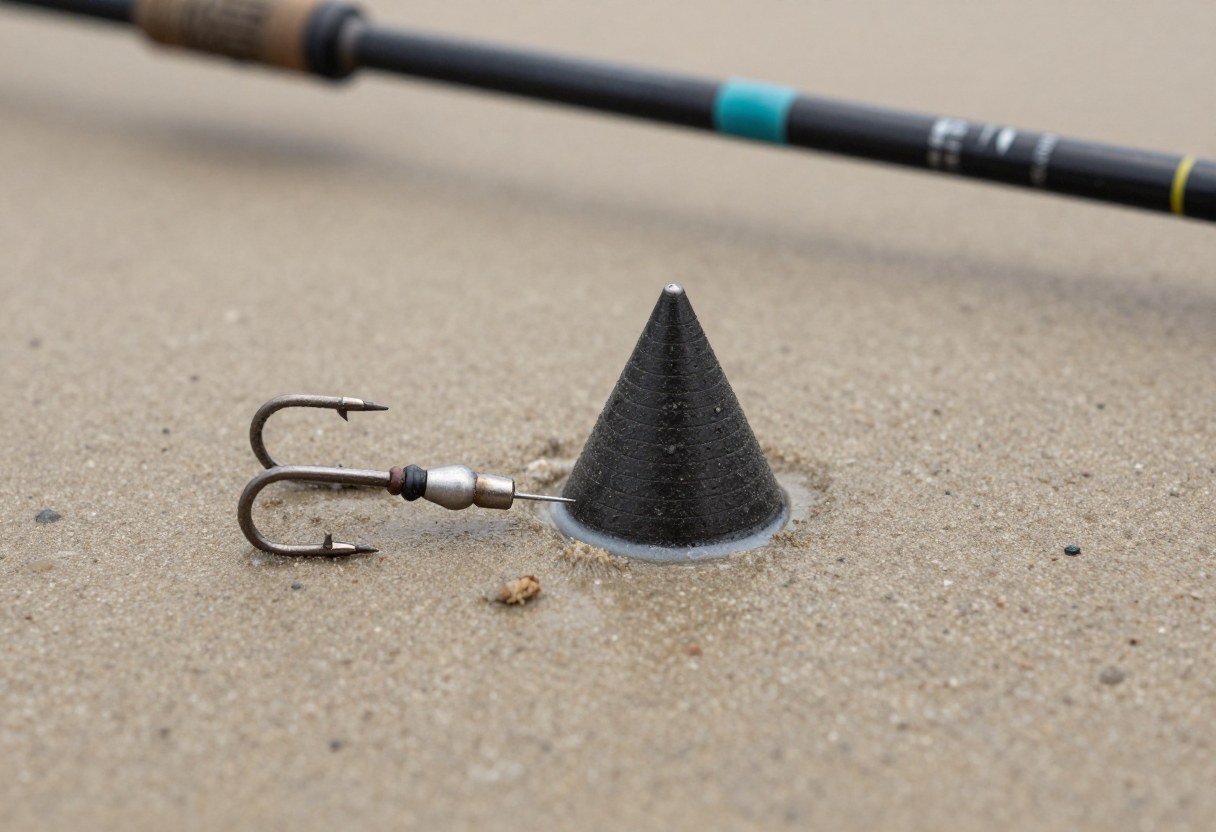
- A pyramid sinker (with flat sides that dig into sand) helps hold position against wave action and current, which is important for keeping bait in a target zone rather than being dragged around by surf movement.
- Practice your casting technique before relying on it for a real trip — a proper surf casting motion (often an overhead or pendulum-style cast optimized for distance) differs somewhat from typical freshwater casting and benefits from deliberate practice.
- Distance isn't always the priority — sometimes the most productive water (a nearby trough or cut) is within easy casting range, and maximizing distance for its own sake misses the point of reading the beach correctly first.
6. Timing: Tides and Time of Day
- Moving water (an incoming or outgoing tide) generally produces more fishing activity than slack tide (the period of minimal water movement between tide changes) — fish activity often increases as tidal current begins moving, stirring up food and creating more active feeding conditions.
- Many surf anglers favor the first few hours of an incoming tide as a particularly productive window, though local patterns vary and are worth learning for your specific beach.
- Early morning and evening (low-light periods) are often more productive than bright midday sun, similar to many other fishing contexts, both for direct feeding activity and reduced fishing pressure from other beachgoers.
- Check tide tables for your specific location before planning a trip — tide timing varies by location and date, and fishing blind to tide timing misses a genuinely significant factor in surf fishing success.
7. Basic Safety Considerations
- Rip currents are a genuine safety hazard on many surf beaches, and understanding basic rip current awareness (recognizing signs, knowing how to respond if caught in one) matters for surf fishing just as for swimming.
- Wading depth and wave conditions can change quickly — staying aware of incoming sets of larger waves and not wading deeper than genuinely necessary for your fishing approach reduces real risk.
- Check local weather and surf conditions before a trip, since surf fishing in genuinely rough or hazardous conditions carries real risk beyond just reduced fishing effectiveness.
8. Common Surf Fishing Beginner Mistakes
- Casting into the shallow water immediately at your feet rather than reading the beach for troughs and cuts beyond the first sandbar.
- Neglecting gear maintenance after saltwater use, leading to much faster corrosion and deterioration than freshwater gear neglect would cause.
- Fishing without checking tide timing, missing the significantly increased activity that often comes with moving water.
- Using freshwater-weight tackle, underpowered for surf conditions, casting distance needs, and potentially larger surf species.
- Ignoring rip current and wave safety awareness, treating surf fishing as risk-free simply because it's shore-based rather than boat-based fishing.
- Not checking with local bait shops for current, region-specific bait and technique information, relying on generic advice for a genuinely local, variable fishery.
Quick Decision Checklist
- I have appropriate surf tackle (longer rod, larger reel, braided line with a leader) rather than freshwater gear
- I have a versatile rig (fish finder/sliding sinker rig as a reasonable default) and bait appropriate to my region and target species
- I've observed wave patterns to identify sandbar troughs and cuts before casting
- I've checked tide tables and am planning around moving water rather than slack tide
- I have a gear rinse/maintenance routine planned for after saltwater use
- I'm aware of basic surf safety considerations, including rip current awareness
Glossary
- Trough (Gut): A deeper channel of water running parallel to a surf beach, typically between the beach and a sandbar, often holding feeding fish.
- Cut: A gap or break in a sandbar where water and baitfish move between a trough and open water, often a more productive target than an unbroken sandbar stretch.
- Fish Finder Rig (Sliding Sinker Rig): A versatile surf fishing rig using a sliding weight above a leader and hook, allowing a fish to take bait with minimal immediate resistance.
- Slack Tide: The period of minimal water movement between an incoming and outgoing tide, generally less productive for surf fishing than moving-water periods.
Final Takeaway
Successful surf fishing depends on treating it as its own skill set rather than beach-based freshwater fishing — appropriate longer-range tackle, a versatile rig like a fish finder rig, and genuine beach-reading skill to identify productive troughs and cuts beyond the first sandbar rather than casting into the shallows at your feet. Combine that with tide-aware timing and basic surf safety awareness, and a first saltwater surf fishing trip has a much better chance of being genuinely productive rather than a frustrating guessing game.
Surf fishing conditions, productive species, and effective bait/rig choices vary significantly by region and season — check with local bait shops or current regional fishing reports for the specific conditions at your destination.