
Tulip Tree
Liriodendron tulipifera
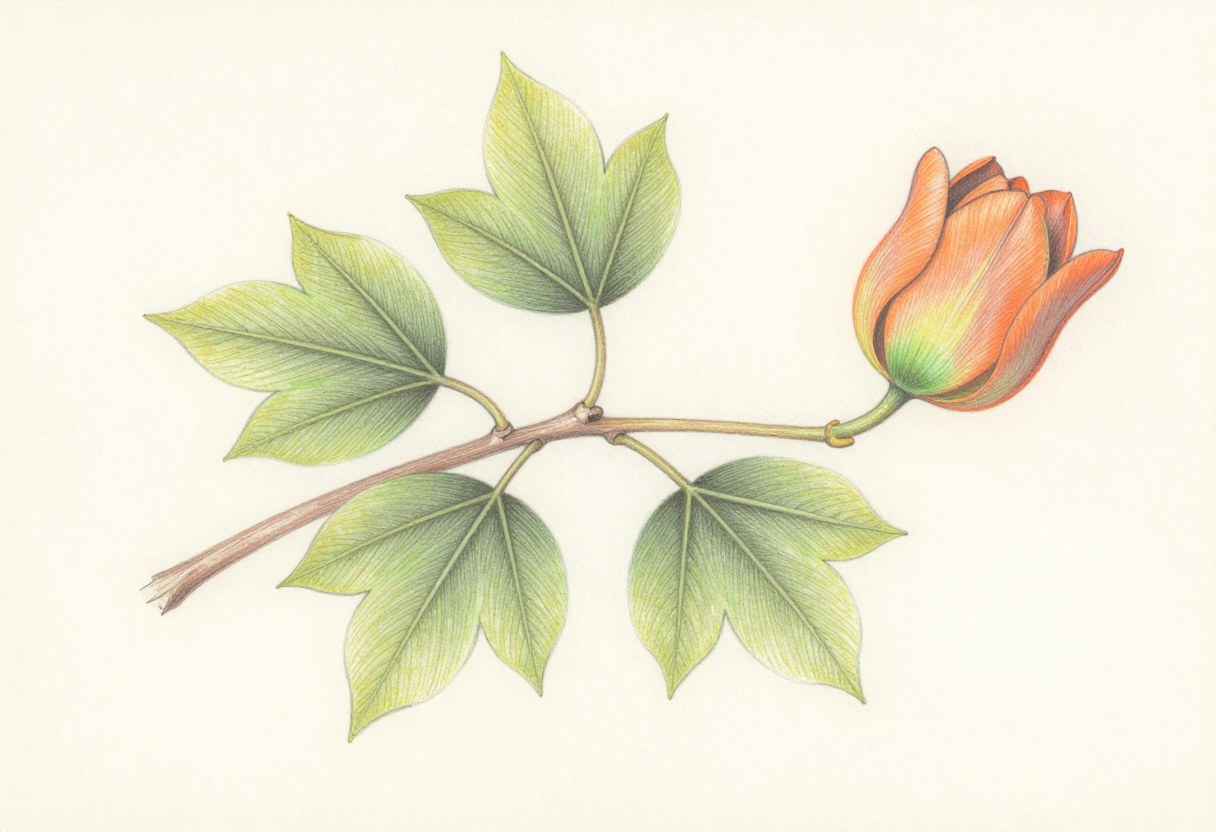
One of the tallest eastern hardwoods, with a straight trunk and unusual four-lobed leaves that look as if the tip has been cut off.
- Type
- Hardwoods
- Leaves
- Lobed leaves
- Region
- Northeast, Southeast, Midwest & Plains
- Typical size
- 70–120 ft tall, with a trunk 2–4 ft across
- Range
- The eastern United States, from New England to northern Florida
- Look for it
- Late spring, when tulip-like flowers open, and fall, when leaves turn golden yellow
How to identify it
- Leaves have four lobes and a flat or notched tip, as if cut across the end.
- Large orange, green, and yellow flowers resemble tulips in late spring.
- The trunk is tall and straight, with furrowed gray bark.
- Winter buds look like a duck's bill.
Often confused with
- Sweetgum: has star-shaped leaves and spiky balls.
Why it matters outdoors
- Hummingbirds and bees visit the flowers, and deer browse young trees.
- Medium-quality firewood.
- One of the biggest trees in eastern forests, often used as a landmark.
Field notes
Tulip trees grow tall and straight in rich, moist woods. Early settlers used the trunks for canoes, and the species is also called yellow-poplar even though it is not a poplar.
The squared-off tip of the leaf is the surest identification mark.
Related guides
This guide helps you recognize trees and avoid harmful plants. It does not teach foraging, and nothing here is advice to eat or use a wild plant. Identification from a drawing can be wrong, so check with a regional field guide or a local expert, such as your state forestry or extension service.