
Stinging Nettle
Urtica dioica
A tall plant of moist trail edges and stream banks with tiny stinging hairs that cause a burning, itchy sting.
- Type
- Plants to Avoid
- Leaves
- Unlobed leaves
- Region
- Northeast, Southeast, Midwest & Plains, Rockies & West
- Typical size
- 3–7 ft tall, with a square, hairy stem
- Range
- Found across much of the country, in moist soil along trails, streams, and woodland edges
- Look for it
- Spring through fall, when the plant is green and full of stinging hairs
Safety: The sting is painful but usually passes in a few hours. Seek medical care if you have trouble breathing, swelling of the face, or a widespread rash.
How to identify it
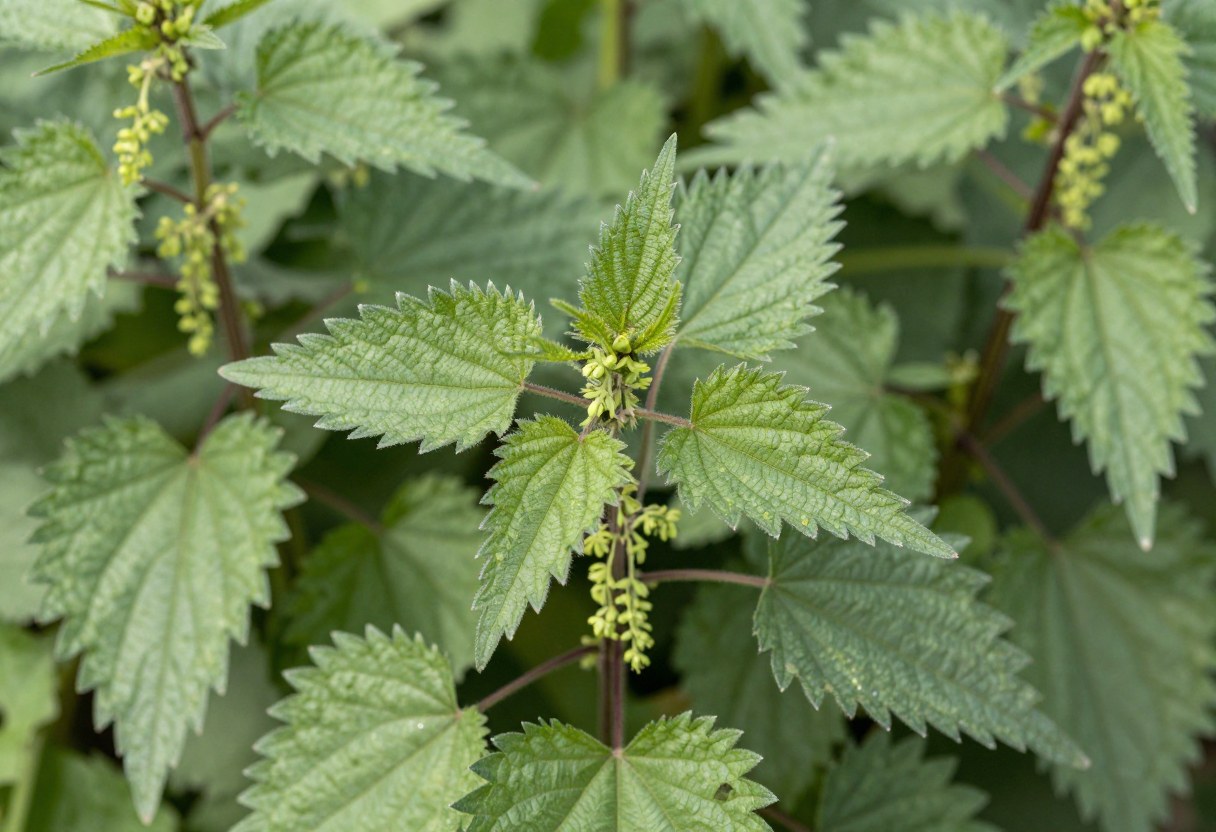
- Leaves grow in opposite pairs, are heart-shaped to oval, and have coarsely toothed edges and a pointed tip.
- The stem is square and covered in fine hairs.
- Tiny green flowers hang in drooping clusters from the leaf joints.
- Often grows in dense patches in damp, rich soil.
Often confused with
- Wood nettle: a related stinging plant with alternate leaves rather than opposite pairs.
Why it matters outdoors
- The hairs inject a mix of chemicals that cause burning and itching for minutes to hours.
- Wear long pants and sleeves when pushing through brush in wet areas.
- Rinse the skin with cool water. Avoid rubbing, and use tape to lift any hairs.
Field notes
Stinging nettle lines many creeks and trails. The sting is a nuisance rather than a danger for most people, but it can ruin a hike in shorts.
Learn the opposite, toothed leaves and the square, hairy stem, and you can steer around it.
Related guides
This guide helps you recognize trees and avoid harmful plants. It does not teach foraging, and nothing here is advice to eat or use a wild plant. Identification from a drawing can be wrong, so check with a regional field guide or a local expert, such as your state forestry or extension service.