
Shagbark Hickory
Carya ovata
A tall hickory with distinctive shaggy, peeling bark, large compound leaves, and sweet nuts that squirrels love.
- Type
- Hardwoods
- Leaves
- Compound leaves
- Region
- Northeast, Midwest & Plains, Southeast
- Typical size
- 60–90 ft tall, with a trunk 1–2 ft across
- Range
- The eastern United States, west to the Great Plains
- Look for it
- Fall, when nuts drop and leaves turn golden
How to identify it
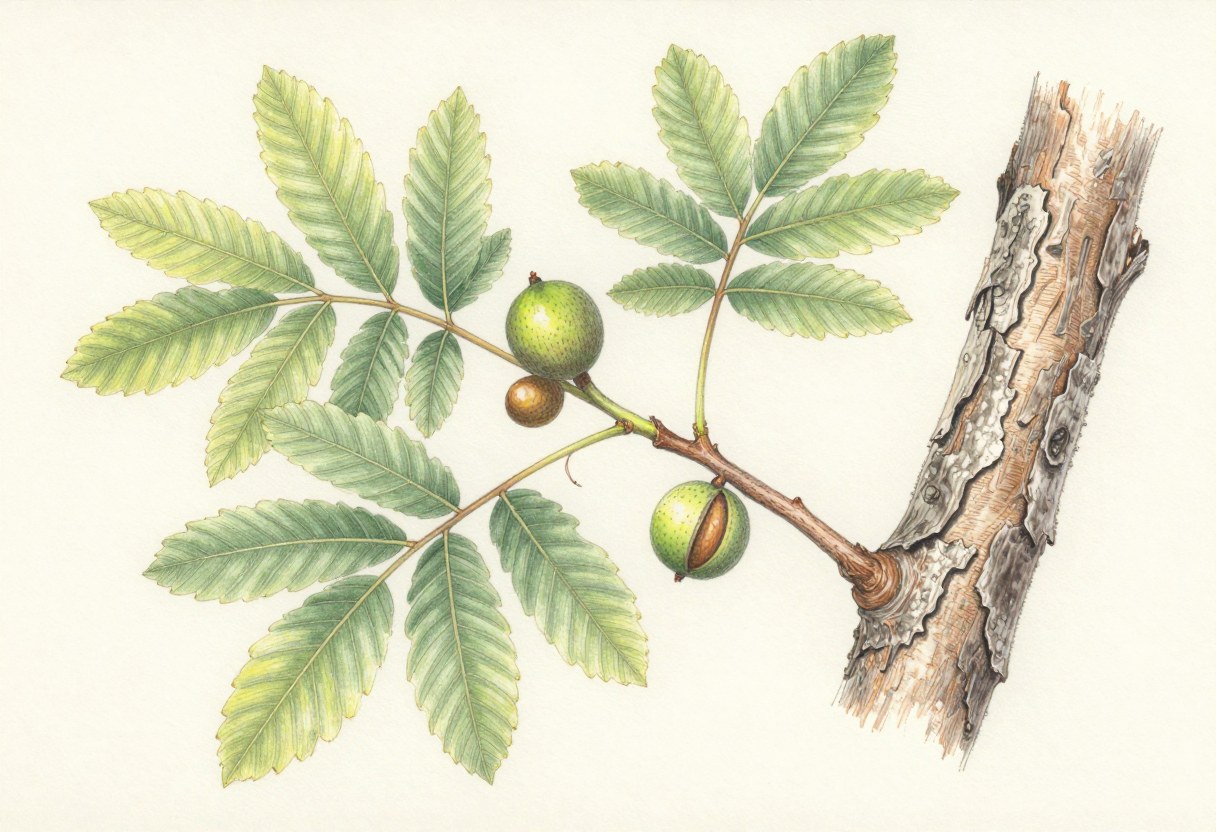
- Bark peels in long, curved plates that stick out at the ends, giving it a shaggy look.
- Leaves are compound, with five (sometimes seven) leaflets.
- Nuts have a thick husk that splits into four sections.
- The terminal bud is large.
Often confused with
- Black walnut: also has compound leaves, but with many more leaflets and dark, deeply furrowed bark.
Why it matters outdoors
- Squirrels, turkeys, and other animals eat the nuts, and squirrel hunters often hunt under hickories.
- Among the best firewood, dense and hot-burning.
- Hickory wood is widely used to smoke meat.
Field notes
Shagbark hickory is easy to identify by bark alone. The plates of bark curl away from the trunk, and even in winter you can spot the species from across a field.
The nuts are sweet and prized by squirrels, which is why hickory stands are a first stop for small-game hunters in fall.
Related guides
This guide helps you recognize trees and avoid harmful plants. It does not teach foraging, and nothing here is advice to eat or use a wild plant. Identification from a drawing can be wrong, so check with a regional field guide or a local expert, such as your state forestry or extension service.