
Black Walnut
Juglans nigra
A tall hardwood with long compound leaves and round green nuts, prized for timber and nuts.
- Type
- Hardwoods
- Leaves
- Compound leaves
- Region
- Northeast, Midwest & Plains, Southeast
- Typical size
- 60–100 ft tall, with a trunk 2–3 ft across
- Range
- The eastern and central United States, in rich bottomlands and fields
- Look for it
- Fall, when nuts drop in their green husks
How to identify it
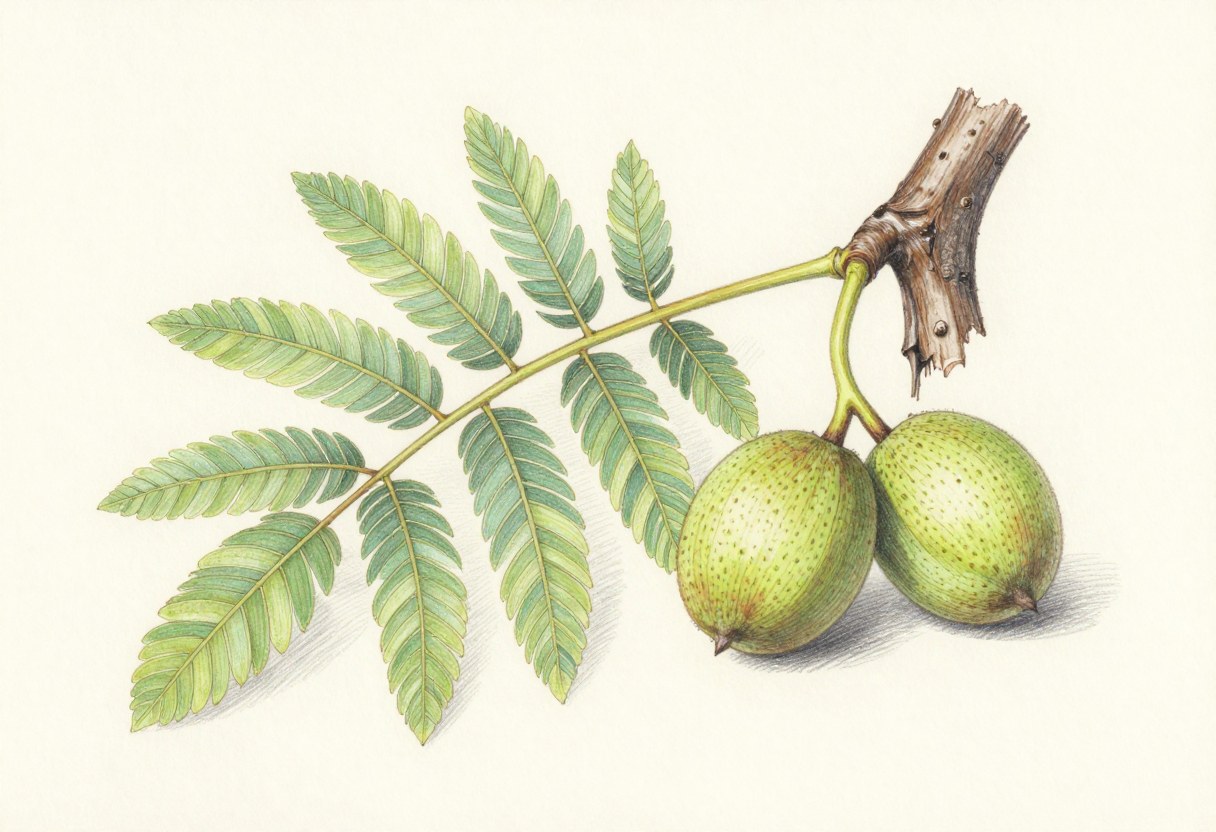
- Leaves are long and compound, with 11–23 narrow, pointed leaflets.
- Bark is dark brown to black with deep, diamond-patterned ridges.
- Nuts grow inside round, green husks about the size of a tennis ball.
- Crushed leaves have a strong, spicy smell.
Often confused with
- Butternut: a related tree with fewer leaflets and elongated, sticky nuts.
- Shagbark hickory: has only 5–7 leaflets and shaggy bark.
Why it matters outdoors
- Squirrels eat the nuts, and walnut trees are good places to find them.
- The husks stain hands and clothes dark brown, so wear gloves.
- Black walnut releases a chemical called juglone that stunts many other plants growing nearby.
Field notes
Walnuts are valuable both as timber and as a wildlife food. They grow best in rich, moist soil, so you will often find them in river bottoms and old fields.
The green husks stain skin and clothing, so wear gloves if you handle fallen nuts.
Related guides
This guide helps you recognize trees and avoid harmful plants. It does not teach foraging, and nothing here is advice to eat or use a wild plant. Identification from a drawing can be wrong, so check with a regional field guide or a local expert, such as your state forestry or extension service.