
Sassafras
Sassafras albidum
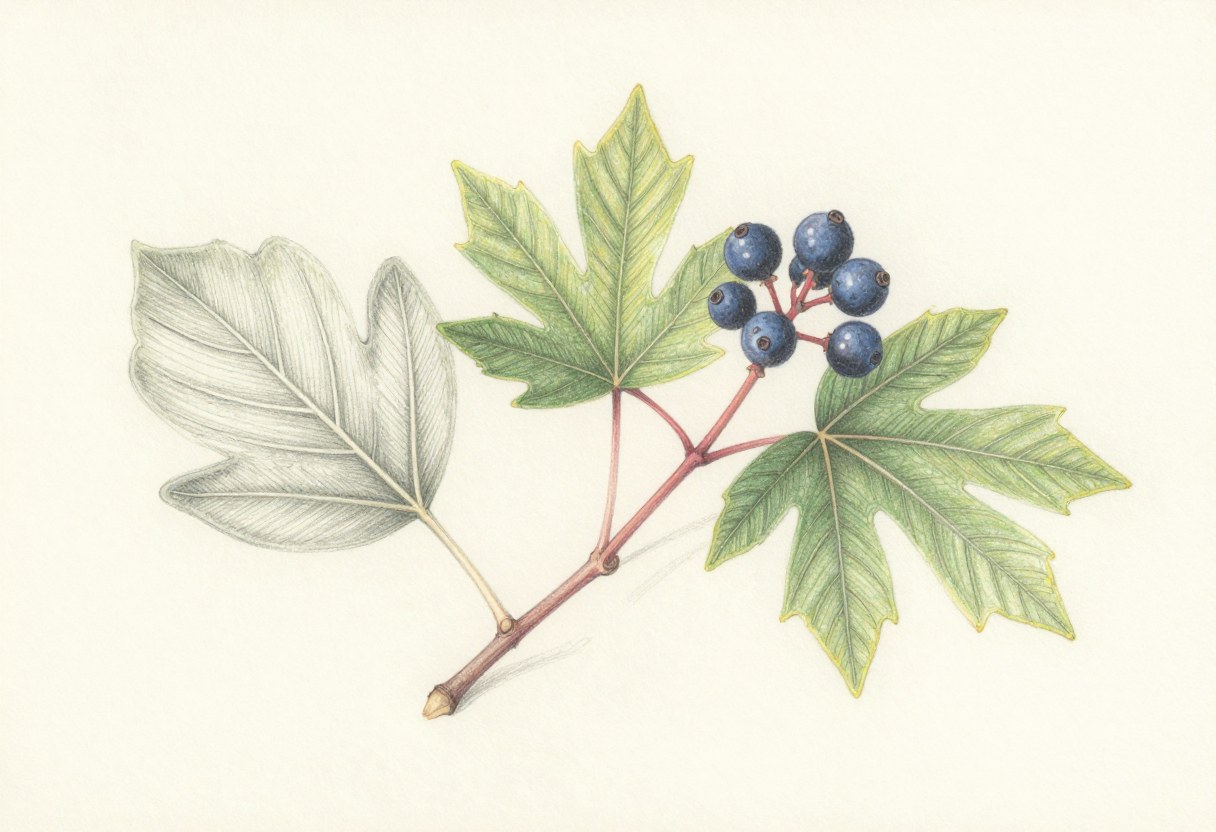
A small aromatic tree with three different leaf shapes on the same twig, including a mitten-shaped leaf.
- Type
- Hardwoods
- Leaves
- Lobed leaves
- Region
- Northeast, Southeast, Midwest & Plains
- Typical size
- 30–60 ft tall, with a trunk about 1 ft across
- Range
- The eastern United States, from New England to Florida and west to Texas
- Look for it
- Fall, when leaves turn orange, red, and yellow
How to identify it
- Three leaf shapes appear on the same tree: unlobed oval leaves, mitten-shaped leaves with a single thumb, and three-lobed leaves.
- Crushed leaves and twigs smell spicy and sweet.
- Bark is reddish-brown with deep furrows.
- Small dark blue berries sit on bright red stalks in late summer.
Often confused with
- Red mulberry: also has mitten-shaped leaves, but the leaves are toothed and have no spicy smell.
Why it matters outdoors
- Deer browse sassafras, and birds eat the berries.
- It often spreads into thickets along fencerows and old fields, which makes good deer cover.
- Do not eat or drink sassafras products: the main oil contains a compound that is considered unsafe to consume.
Field notes
Sassafras is easy to identify because of its three leaf shapes. Where you see all three on one twig, you can be certain.
It sprouts from the roots and forms thickets in old fields, which makes useful cover for deer and rabbits.
Related guides
This guide helps you recognize trees and avoid harmful plants. It does not teach foraging, and nothing here is advice to eat or use a wild plant. Identification from a drawing can be wrong, so check with a regional field guide or a local expert, such as your state forestry or extension service.