
Ponderosa Pine
Pinus ponderosa
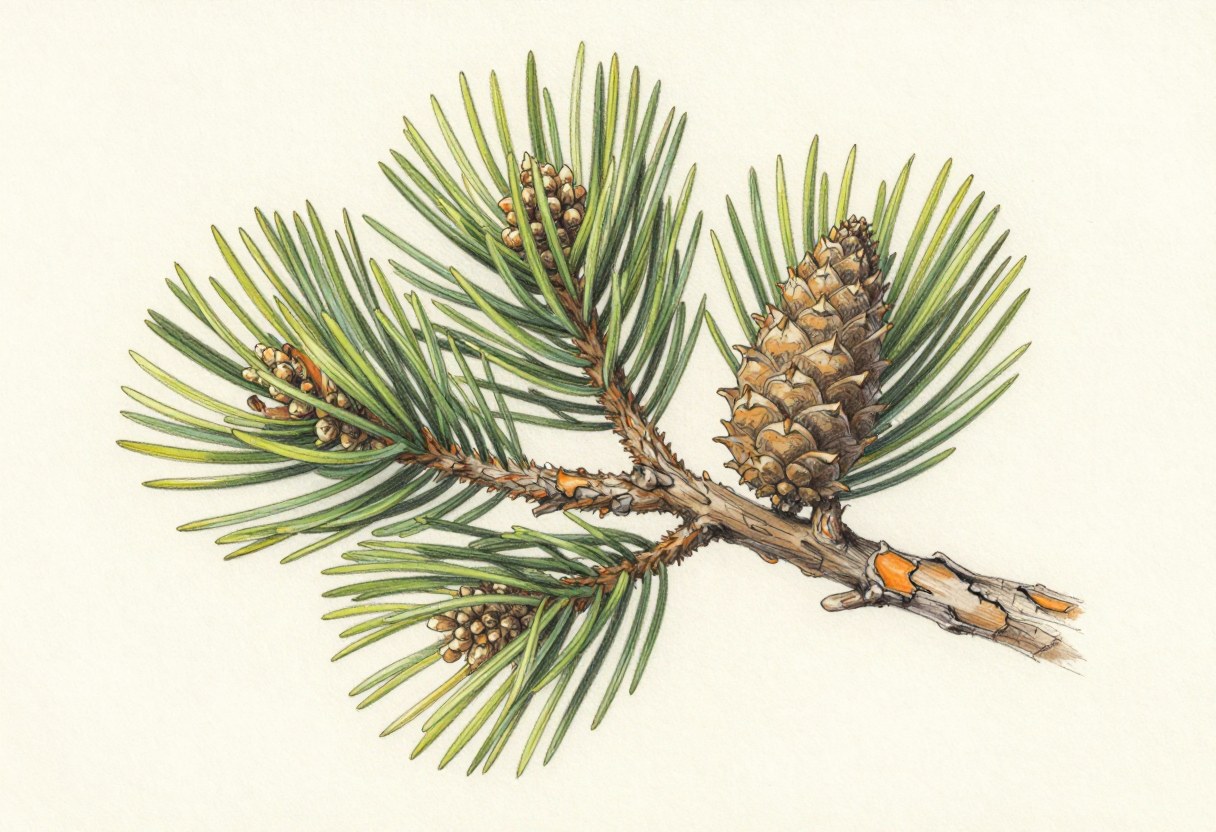
The classic pine of Western mountains, with long needles, orange puzzle-piece bark, and a sweet vanilla scent.
- Type
- Conifers
- Leaves
- Needles
- Region
- Rockies & West
- Typical size
- 60–150 ft tall, with a trunk 2–4 ft across
- Range
- The Rocky Mountains and the Western United States, from the Black Hills to the Pacific coast
- Look for it
- Year-round, since the needles stay green
How to identify it
- Needles are long, 4–8 inches, and mostly grow in bundles of three.
- Bark on older trees is orange-brown in large, puzzle-piece plates that smell like vanilla or butterscotch.
- Cones are egg-shaped with small prickles on each scale.
- Open, park-like stands with grassy ground beneath are typical.
Often confused with
- Lodgepole pine: has shorter needles in bundles of two and smaller, tight cones.
Why it matters outdoors
- Elk and deer use ponderosa stands for cover, and Abert's squirrels depend on the trees.
- Resinous, hot-burning firewood once seasoned.
- Mature stands are fire-adapted, so dead branches and bark can burn quickly in dry weather.
Field notes
Ponderosa pines define much of the mountain West. They grow in open stands where the ground is often covered with grass, which makes for easy walking.
The vanilla scent of the bark is a good field mark on a warm day.
Related guides
This guide helps you recognize trees and avoid harmful plants. It does not teach foraging, and nothing here is advice to eat or use a wild plant. Identification from a drawing can be wrong, so check with a regional field guide or a local expert, such as your state forestry or extension service.