
Poison Sumac
Toxicodendron vernix
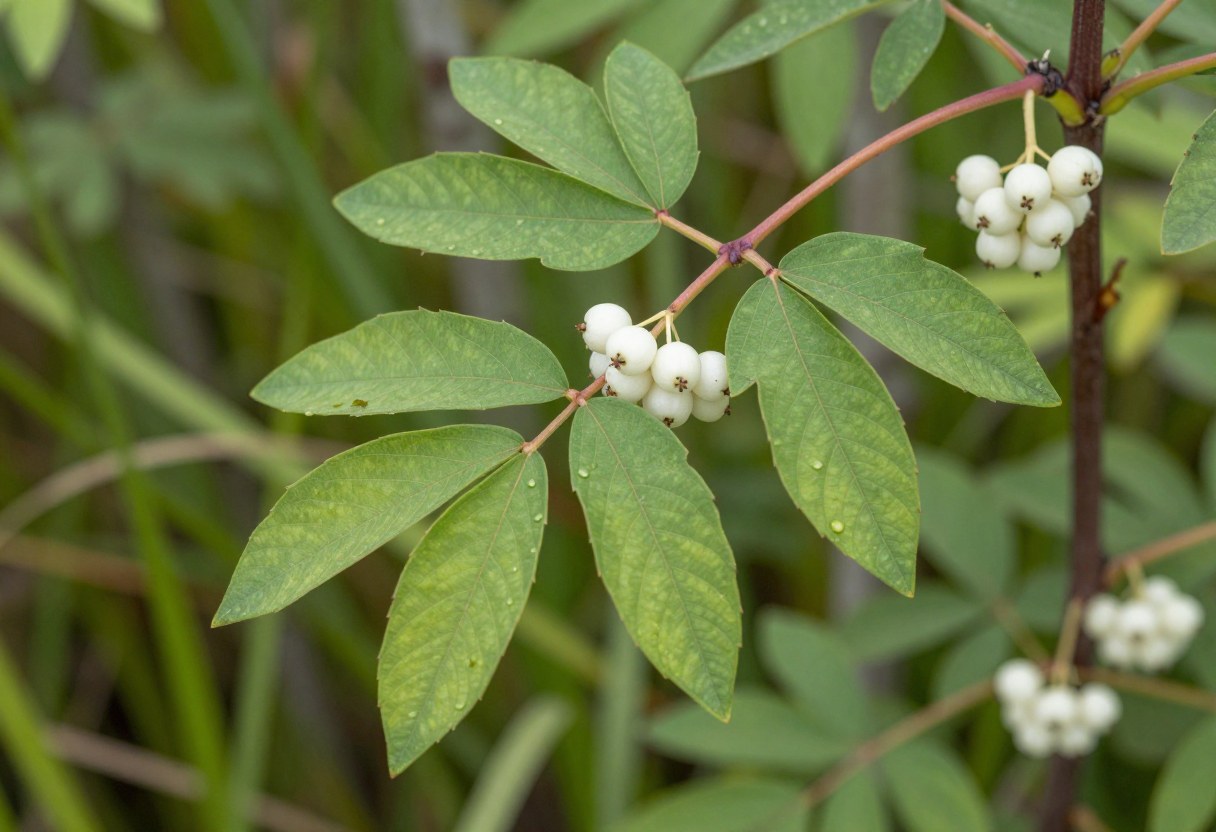
A swamp shrub with long compound leaves and drooping white berries. It causes the same rash as poison ivy, and is often more severe.
- Type
- Plants to Avoid
- Leaves
- Compound leaves
- Region
- Northeast, Southeast, Midwest & Plains
- Typical size
- A shrub or small tree, 6–20 ft tall
- Range
- Wet areas in the eastern United States, such as swamps, bogs, and wet woods
- Look for it
- Fall, when leaves turn brilliant red and orange, and winter, when white berries hang on bare stems
Safety: Urushiol is on every part of the plant, even in winter. Avoid touching it, wash skin and gear after exposure, and seek medical care for a severe rash, a rash on the face or eyes, or breathing trouble.
How to identify it
- Each leaf has 7–13 smooth-edged oval leaflets on a reddish stalk.
- White or pale gray berries hang in loose, drooping clusters.
- It grows in wet or swampy ground, not on dry hillsides.
- Leaflets are glossy and pointed, with no teeth.
Often confused with
- Staghorn sumac: a harmless sumac with toothed leaflets, fuzzy red stems, and upright red berry clusters on dry ground.
Why it matters outdoors
- The oil, urushiol, causes the same rash as poison ivy, and the reaction can be severe.
- Never burn poison sumac: the smoke can cause severe lung irritation.
- Harmless sumacs have red, upright berry clusters and toothed leaflets, and live on dry ground.
Field notes
Poison sumac is a plant of swamps and wet woods, so it is mostly a hazard for people hunting waterfowl or hiking boggy ground.
Look at the berries: white and drooping means poison sumac, while red and upright means a harmless sumac.
Related guides
This guide helps you recognize trees and avoid harmful plants. It does not teach foraging, and nothing here is advice to eat or use a wild plant. Identification from a drawing can be wrong, so check with a regional field guide or a local expert, such as your state forestry or extension service.