
Loblolly Pine
Pinus taeda
The most common pine in the southeastern United States, with long needles in bundles of three and a rapid growth rate.
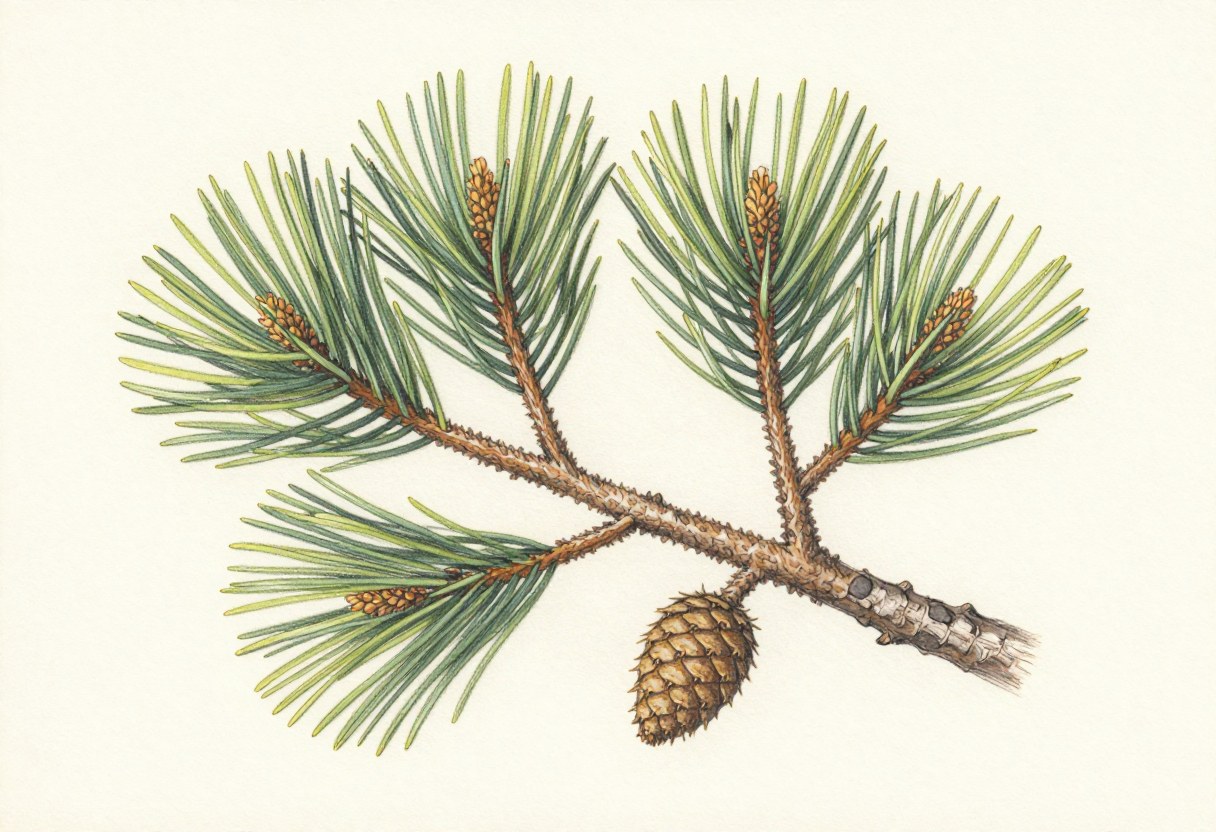
- Type
- Conifers
- Leaves
- Needles
- Region
- Southeast
- Typical size
- 80–110 ft tall, with a trunk 1–3 ft across
- Range
- The southeastern United States, from Delaware to Florida and west to Texas
- Look for it
- Year-round, since the needles stay green
How to identify it
- Needles are 6–9 inches long and grow in bundles of three.
- Cones are egg-shaped, 3–6 inches long, with a sharp prickle on each scale.
- Bark on older trees is dark and scaly, with thick plates.
- Trees grow fast and straight, often in plantation rows.
Often confused with
- Shortleaf pine: has shorter needles, in bundles of two or three, and smaller cones.
Why it matters outdoors
- Open, thinned pine stands with grass beneath support quail and turkeys.
- Resinous firewood that burns quickly and throws sparks.
- Pine forests are common hunting and camping country across the Southeast.
Field notes
Loblolly pine is the workhorse tree of southeastern forestry. Many stands are managed with thinning and prescribed fire, which opens the forest floor to grass and wildlife.
Needle length and bundles of three separate it from most other pines in the region.
Related guides
This guide helps you recognize trees and avoid harmful plants. It does not teach foraging, and nothing here is advice to eat or use a wild plant. Identification from a drawing can be wrong, so check with a regional field guide or a local expert, such as your state forestry or extension service.