
Live Oak
Quercus virginiana
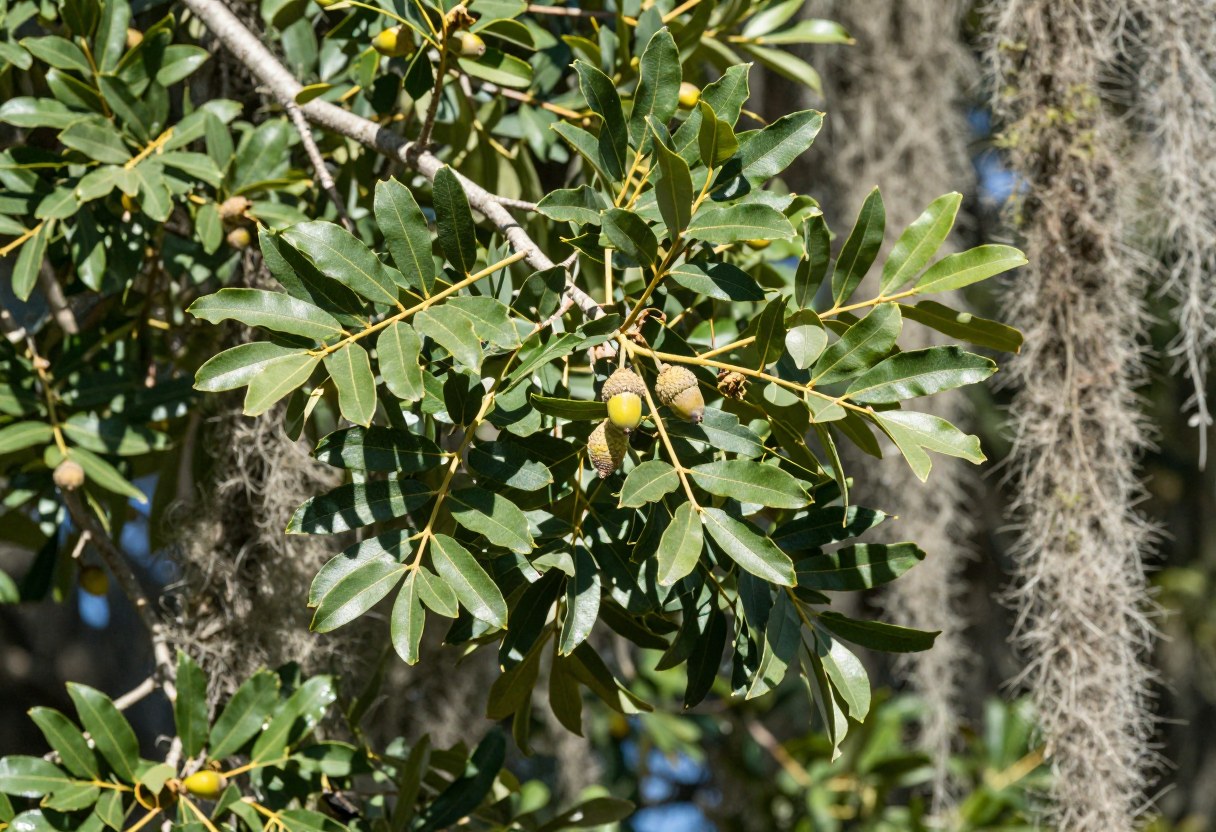
A broad, spreading evergreen oak of the Southeast, often draped in Spanish moss, with small oval leaves and no lobes.
- Type
- Hardwoods
- Leaves
- Unlobed leaves
- Region
- Southeast
- Typical size
- 40–80 ft tall, with a very wide, spreading crown
- Range
- Coastal plain from southeast Virginia through Florida and west to Texas
- Look for it
- Year-round, since the leaves stay green until new ones push in spring
How to identify it
- Small, oval, leathery leaves with smooth edges and no lobes. Young trees may show a few small spines.
- Leaves are dark green on top and paler underneath, and stay on the tree through winter.
- A short, thick trunk with long, horizontal limbs that may touch the ground.
- Acorns are long and narrow, borne on stalks.
Often confused with
- Water oak: a semi-evergreen southern oak with spoon-shaped leaves that are wider near the tip.
Why it matters outdoors
- Acorns feed deer, turkeys, hogs, and squirrels.
- Dense, heavy wood that makes very long-lasting firewood.
- Huge limbs make shade and stand sites, but heavy limbs can fall without warning.
Field notes
Live oaks anchor many southern landscapes, from coastal live oak hammocks to old farm sites. Their wide crowns create shade and cover for wildlife.
They are evergreen only in a loose sense: they drop old leaves in early spring just as new ones appear.
Related guides
This guide helps you recognize trees and avoid harmful plants. It does not teach foraging, and nothing here is advice to eat or use a wild plant. Identification from a drawing can be wrong, so check with a regional field guide or a local expert, such as your state forestry or extension service.