
Flowering Dogwood
Cornus florida
A small understory tree known for showy white spring bracts, bright red fall berries, and red fall leaves.
- Type
- Hardwoods
- Leaves
- Unlobed leaves
- Region
- Northeast, Southeast, Midwest & Plains
- Typical size
- 15–30 ft tall, with a trunk 6–12 in across
- Range
- The eastern United States, from New England to Florida and west to Texas
- Look for it
- Spring, when white bracts appear, and fall, when red berries ripen
How to identify it
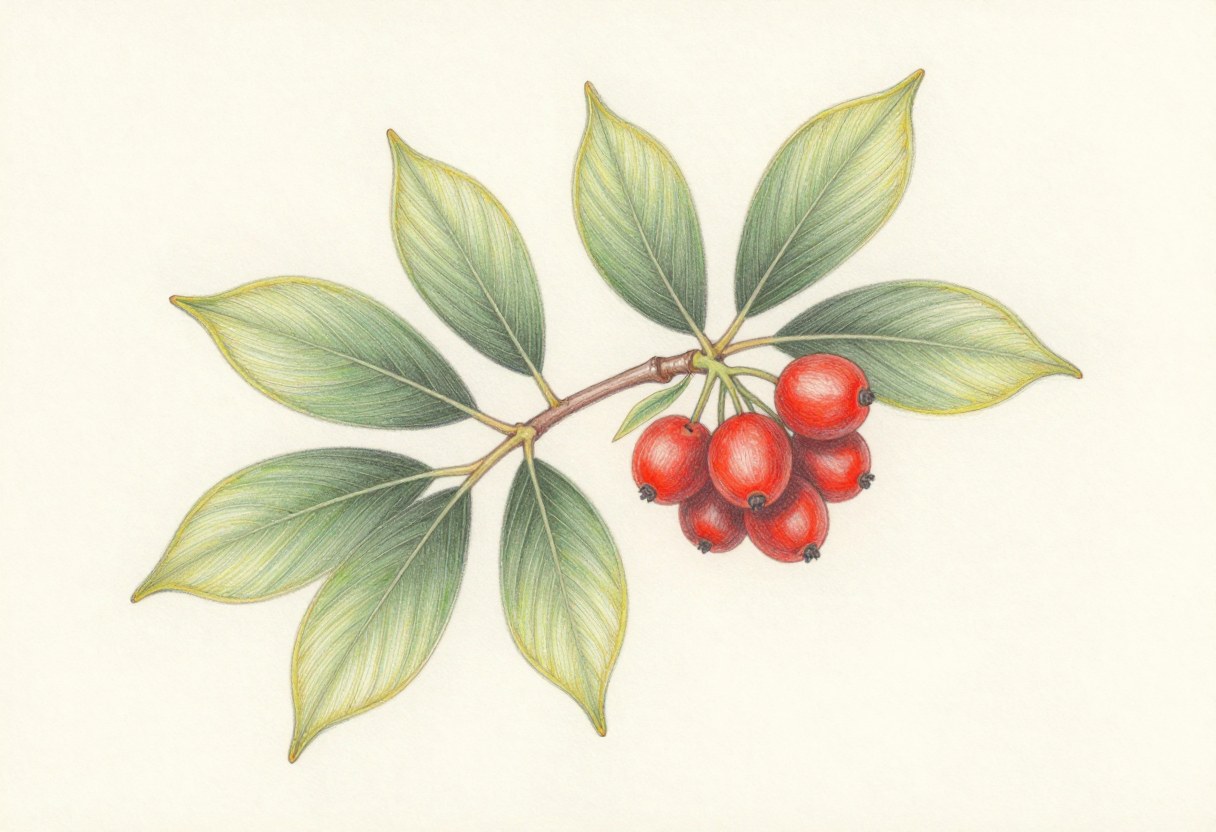
- Leaves are oval with curved veins that follow the edge of the leaf.
- Leaves and branches grow in opposite pairs.
- Bark on older trees breaks into small, square blocks like alligator skin.
- Clusters of bright red oval berries appear in fall.
Often confused with
- Redbud: a small spring-flowering tree with heart-shaped leaves and pink flowers.
Why it matters outdoors
- Birds and wildlife eat the berries, and deer browse the twigs.
- Dense, hard wood that makes a good firewood, but trees are small.
- Dogwood anthracnose has hurt many wild trees, so healthy stands are worth noting.
Field notes
Flowering dogwood is a small tree of the forest understory. In spring the white flower bracts glow in the shade, and in fall the bright red berries feed birds.
The curved veins in the leaves are a good field mark, even on small saplings.
Related guides
This guide helps you recognize trees and avoid harmful plants. It does not teach foraging, and nothing here is advice to eat or use a wild plant. Identification from a drawing can be wrong, so check with a regional field guide or a local expert, such as your state forestry or extension service.