
Eastern White Pine
Pinus strobus
A tall, soft-needled pine of the northern forests, easy to recognize by its needles in bundles of five.
- Type
- Conifers
- Leaves
- Needles
- Region
- Northeast, Midwest & Plains, Southeast
- Typical size
- 80–150 ft tall, with a trunk 2–4 ft across
- Range
- The northeastern United States, the Great Lakes states, and the Appalachians, and into Canada
- Look for it
- Year-round, since the needles stay green, though old needles drop in fall
How to identify it
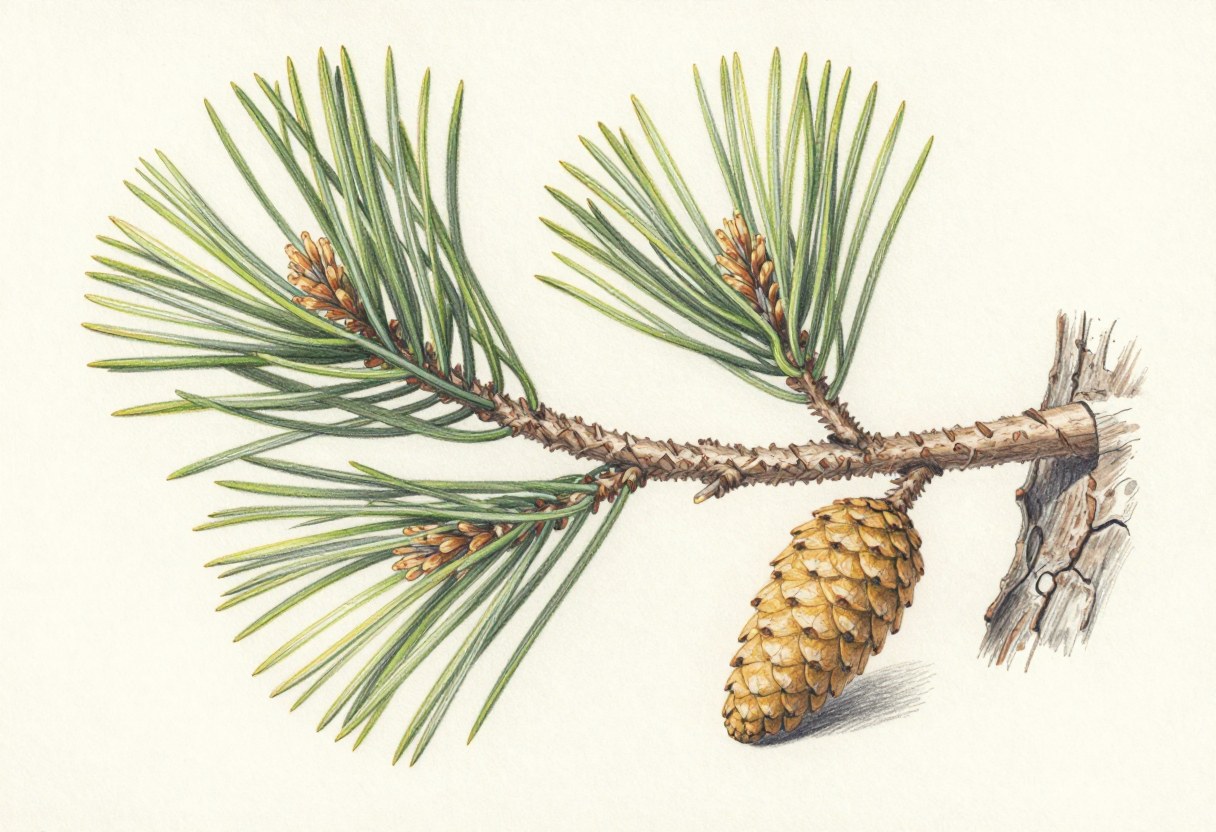
- Needles are soft, slender, 3–5 inches long, and grow in bundles of five. The word white has five letters.
- Cones are slender and curved, 4–8 inches long, and covered in sticky resin.
- Branches grow in neat whorls around the trunk, giving the tree a tiered look.
- Bark is smooth and gray-green on young trees and deeply furrowed on older ones.
Often confused with
- Red pine: has longer needles in bundles of two and reddish, plated bark.
Why it matters outdoors
- Turkeys roost in tall pines, and deer and other wildlife find cover under them.
- Soft wood that burns fast with a lot of resin, so it throws sparks.
- Tall white pines are good landmarks and can give shelter from wind and light rain.
Field notes
Eastern white pine is the tallest tree in the northeastern United States. Old stands show long, straight trunks and flat-topped crowns.
The needles are the easy clue: count five in a bundle and you have a white pine.
Related guides
This guide helps you recognize trees and avoid harmful plants. It does not teach foraging, and nothing here is advice to eat or use a wild plant. Identification from a drawing can be wrong, so check with a regional field guide or a local expert, such as your state forestry or extension service.