
Eastern Hemlock
Tsuga canadensis
A graceful shade-loving conifer with short flat needles, tiny cones, and a drooping top. It is not related to the poison hemlock plant.
- Type
- Conifers
- Leaves
- Needles
- Region
- Northeast
- Typical size
- 60–100 ft tall, with a trunk 2–3 ft across
- Range
- The Northeast and the Appalachians, in cool, shaded ravines and slopes
- Look for it
- Year-round, since the needles stay green
Safety: Eastern hemlock is a tree and is not poisonous like the poison hemlock plant, which is a weed related to carrots and parsley. The two are unrelated, and the name is the only link.
How to identify it
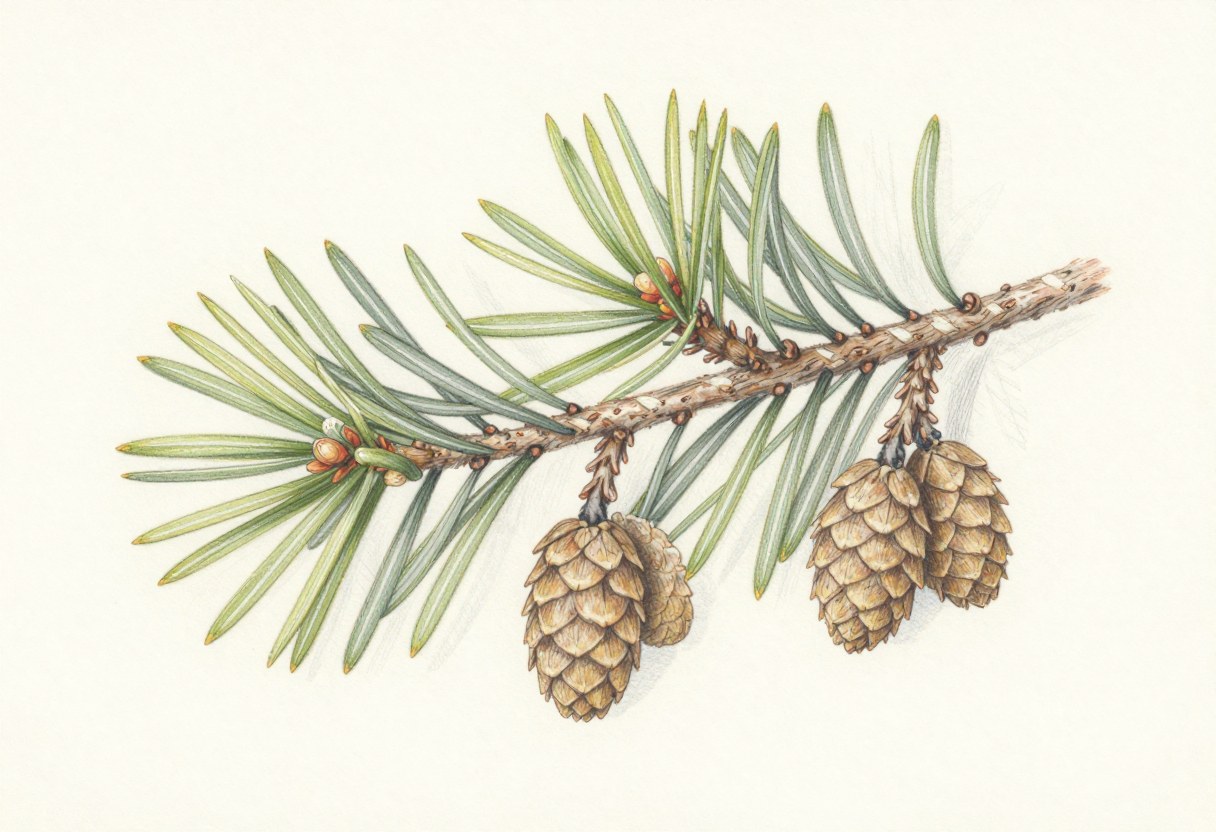
- Needles are short, flat, and of unequal lengths, in two rows, with two white lines underneath.
- Cones are tiny, under an inch long, and hang from the tips of branches.
- The top of the tree usually droops or nods.
- Bark is deeply furrowed and cinnamon-brown.
Often confused with
- Balsam fir: has longer, blunt needles of equal length and upright cones.
Why it matters outdoors
- Deer shelter in hemlock stands in winter, because the dense branches hold off snow and wind.
- Poor firewood, since it burns with a lot of popping and sparks.
- Hemlock woolly adelgid, an insect, has killed many hemlocks in the East, so healthy stands are valuable.
Field notes
Hemlock groves are dark and cool, and deer use them for shelter in deep snow. The dense branches act like a roof.
Hemlocks are in trouble in many places because of the woolly adelgid, so a healthy hemlock stand is worth noting.
Related guides
This guide helps you recognize trees and avoid harmful plants. It does not teach foraging, and nothing here is advice to eat or use a wild plant. Identification from a drawing can be wrong, so check with a regional field guide or a local expert, such as your state forestry or extension service.