
Balsam Fir
Abies balsamea
A northern conifer with flat, blunt needles and a strong, sweet scent, the classic Christmas-tree fir.
- Type
- Conifers
- Leaves
- Needles
- Region
- Northeast, Midwest & Plains
- Typical size
- 40–60 ft tall, with a trunk 1–2 ft across
- Range
- The Northeast, the Great Lakes states, and Canada
- Look for it
- Year-round, since the needles stay green
How to identify it
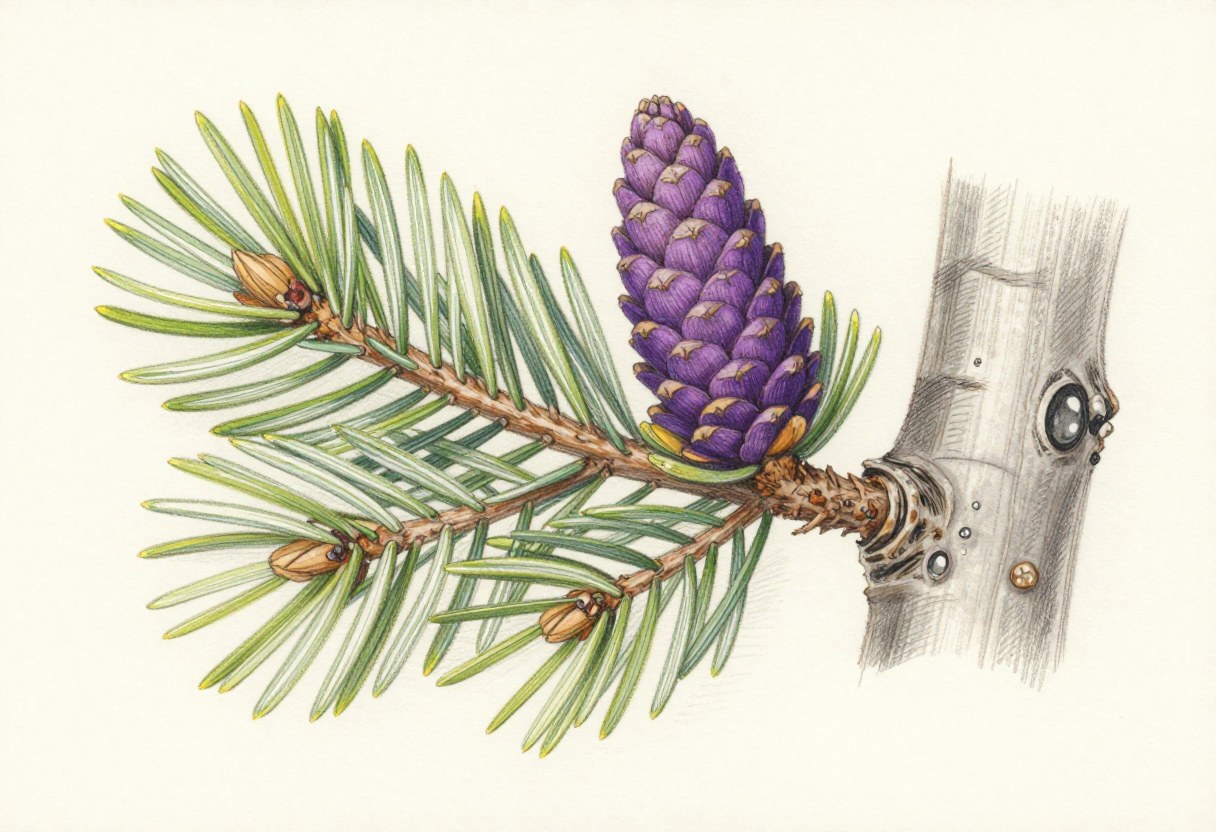
- Needles are flat, blunt, and soft, in two rows, with two pale stripes underneath.
- Cones stand upright on the branches and fall apart on the tree.
- Gray bark on young trees has resin-filled blisters that pop when pressed.
- The crown is narrow and spire-shaped.
Often confused with
- Eastern hemlock: has smaller needles of unequal length and tiny hanging cones.
- Spruce: has sharp, four-sided needles that roll between your fingers.
Why it matters outdoors
- Moose and deer use balsam fir for winter cover and browse.
- Poor firewood, since it burns fast, pops, and throws sparks.
- Fir needles are flat and soft, while spruce needles are four-sided and sharp.
Field notes
Balsam fir fills northern woods with its sweet scent. The flat needles that do not roll in your fingers are a quick way to tell a fir from a spruce.
The blistered bark of young trees is another good field mark.
Related guides
This guide helps you recognize trees and avoid harmful plants. It does not teach foraging, and nothing here is advice to eat or use a wild plant. Identification from a drawing can be wrong, so check with a regional field guide or a local expert, such as your state forestry or extension service.