
Black Cherry
Prunus serotina
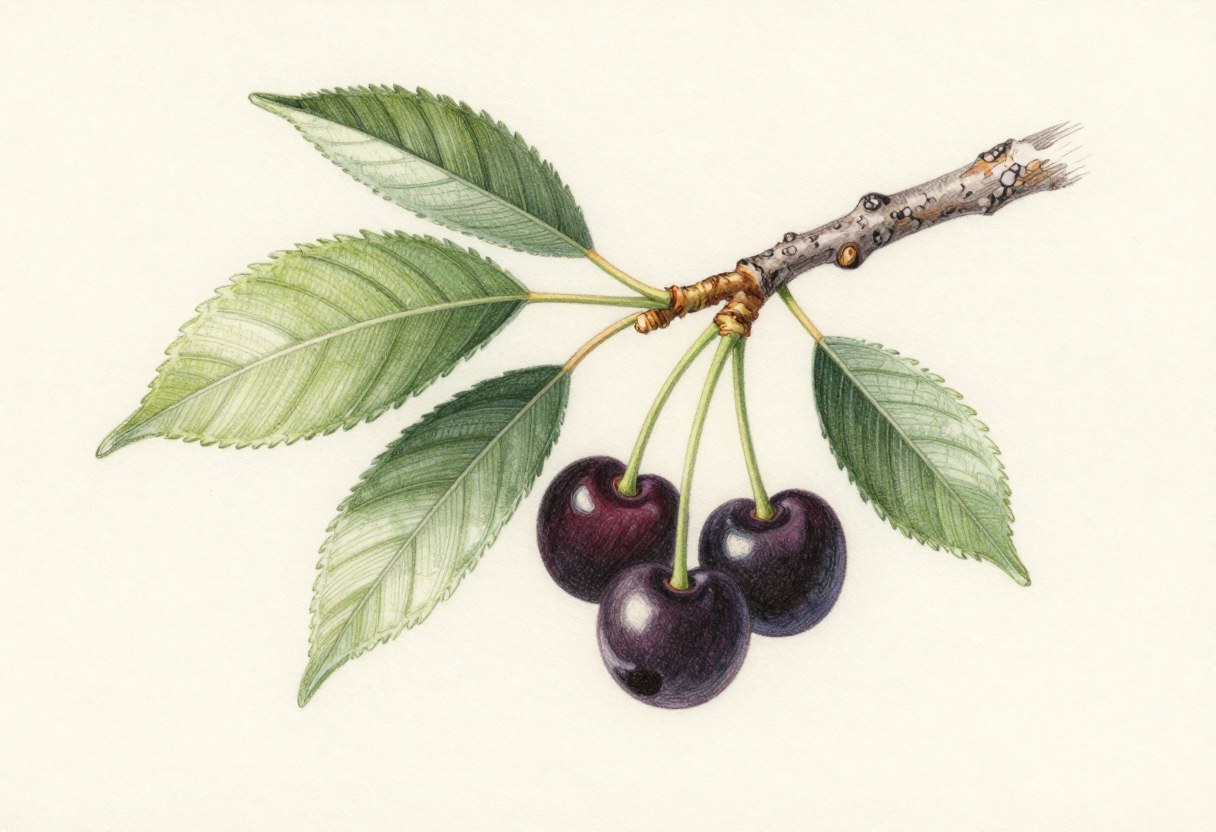
A common woodland tree with glossy, finely toothed leaves, dark scaly bark, and dark fruit that birds and bears eat.
- Type
- Hardwoods
- Leaves
- Unlobed leaves
- Region
- Northeast, Southeast, Midwest & Plains
- Typical size
- 50–80 ft tall, with a trunk 1–2 ft across
- Range
- The eastern and central United States
- Look for it
- Summer, when the dark cherries ripen
Safety: The leaves, twigs, and pits contain compounds that release cyanide, and wilted leaves are especially toxic to livestock. Do not eat the leaves or the pits, and keep horses and cattle away from fallen branches.
How to identify it
- Leaves are narrow, glossy, and finely toothed, with small rust-colored hairs along the midrib underneath.
- Bark on mature trees looks like burnt potato chips, with dark, curled, scaly plates.
- Fruits are small, dark purple-black cherries in hanging clusters.
- Crushed twigs smell like bitter almond.
Often confused with
- Chokecherry: a smaller shrubby cherry with broader leaves and smoother bark.
Why it matters outdoors
- Birds, bears, deer, and turkeys eat the fruit.
- Good firewood and a valuable timber tree.
- Deer browse the twigs and leaves, but wilted leaves are poisonous to livestock.
Field notes
Black cherry is one of the most important wildlife trees in the East, providing summer fruit for many birds and mammals.
The bark of an older tree is unmistakable: dark, scaly, and curling, like burnt potato chips.
Related guides
This guide helps you recognize trees and avoid harmful plants. It does not teach foraging, and nothing here is advice to eat or use a wild plant. Identification from a drawing can be wrong, so check with a regional field guide or a local expert, such as your state forestry or extension service.