
American Elm
Ulmus americana
A graceful, vase-shaped tree once planted along streets everywhere, now much reduced by Dutch elm disease.
- Type
- Hardwoods
- Leaves
- Unlobed leaves
- Region
- Northeast, Midwest & Plains, Southeast
- Typical size
- 60–100 ft tall, with a trunk 2–4 ft across
- Range
- The eastern and central United States
- Look for it
- Spring, when round, papery seeds appear before the leaves
How to identify it
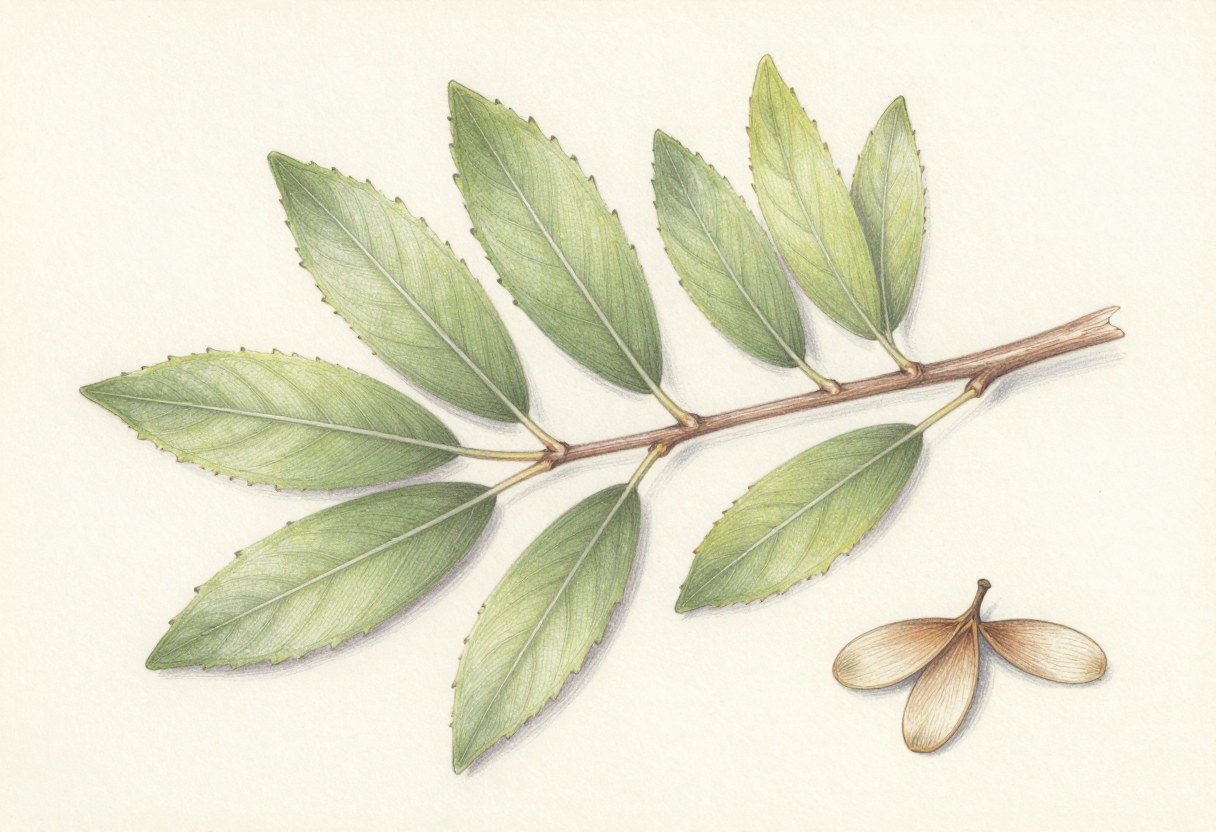
- Leaves are oval with doubly toothed edges and a lopsided, uneven base.
- Seeds are round, flat, and papery, with a notched tip.
- The crown is vase-shaped, with branches arching up and out.
- Bark is gray with interlacing ridges.
Often confused with
- Slippery elm: has rougher, sandpapery leaves and fuzzy buds.
Why it matters outdoors
- Deer browse the twigs, and the seeds feed birds.
- Hard to split, so it is a poor choice for firewood.
- Some large, disease-resistant elms survive along rivers and in old woodlots.
Field notes
American elms were once the classic street tree. Dutch elm disease killed millions, but individual trees survive, especially along rivers and in rural areas.
The lopsided base of the leaf is a reliable clue even when the tree is small.
Related guides
This guide helps you recognize trees and avoid harmful plants. It does not teach foraging, and nothing here is advice to eat or use a wild plant. Identification from a drawing can be wrong, so check with a regional field guide or a local expert, such as your state forestry or extension service.